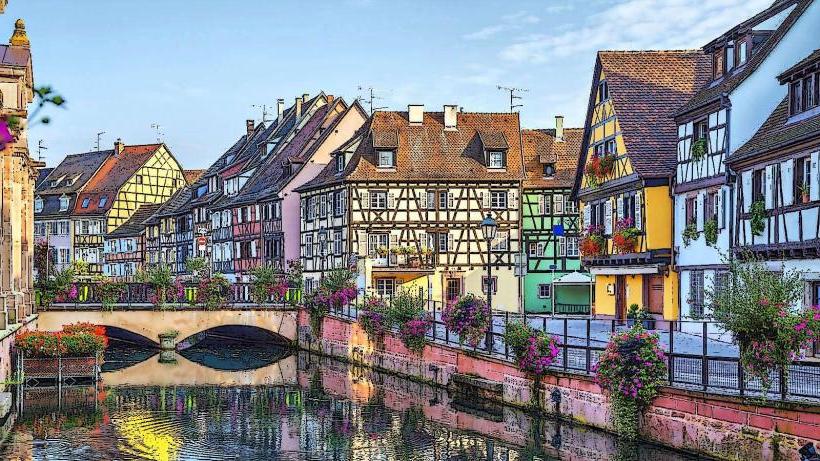
City: Colmar
Country: France
Continent: Europe
Colmar, France, Europe
Colmar is a city in the Grand Est region of northeastern France, situated along the Lauch River and a branch of the Rhine. It serves as the capital of the Haut-Rhin department and is a central hub of the Alsace Wine Route.
Visual Characteristics
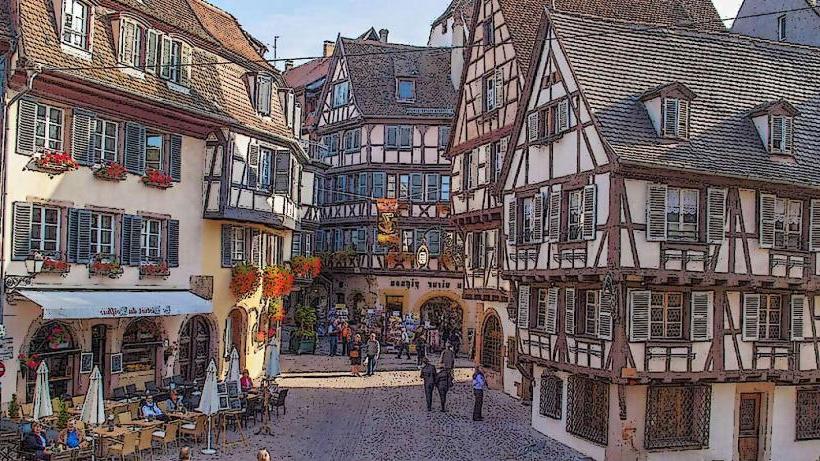
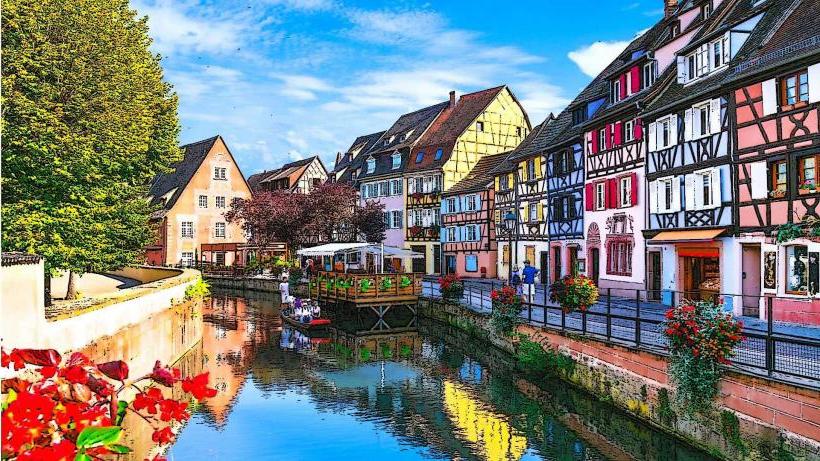
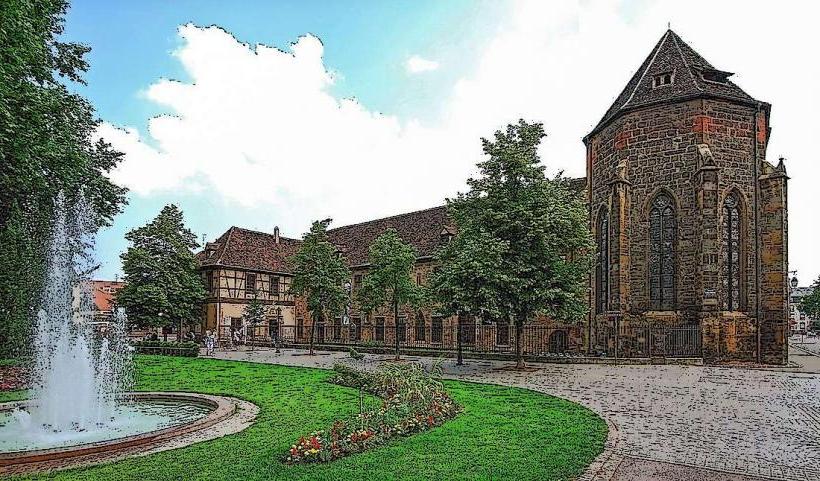
The urban landscape is defined by high-density medieval and Renaissance timber-framed houses painted in ochre, blue, pink, and yellow. Structural features include steep-pitched roofs with multi-colored Alsatian tiles and exposed dark wood beams (colombage). The "Petite Venise" district features narrow canals lined with flowering balconies and stone masonry bridges. Significant ecclesiastical buildings, such as the Saint-Martin Collegiate Church, are constructed from local yellow and red Vosges sandstone.
Location & Access Logistics
Colmar is located approximately 70 kilometers south of Strasbourg and 50 kilometers north of Basel, Switzerland. The Gare de Colmar provides high-speed TGV rail links to Paris in 2 hours and 20 minutes, as well as regional TER connections. Vehicle access is via the A35 motorway. Public transport is managed by the Trace network, while the city center is largely pedestrianized. Primary parking facilities include the Lacarre and Saint-Josse underground garages.
Historical & Ecological Origin
Founded in the 9th century, Colmar was granted the status of an Imperial Free City within the Holy Roman Empire in 1226. Geologically, it sits in a tectonic graben between the Vosges Mountains and the Black Forest, creating a unique microclimate with the lowest rainfall in France. The city remained largely undamaged during the World Wars, preserving a continuous architectural timeline from the 13th-century Gothic period through the 18th-century French neoclassical era.
Key Highlights & Activities
Visitors can traverse the Unterlinden Museum, housed in a 13th-century Dominican convent, to view the Isenheim Altarpiece. Flat-bottom boat tours operate on the Lauch River through the Petite Venise district. Walking the "Circuit des Lumières" allows for viewing 1,100 computer-controlled light points that illuminate architectural details on weekends and evenings. The Maison Pfister and the Maison des Têtes are primary sites for observing Renaissance facade ornamentation.
Infrastructure & Amenities
The pedestrian core is equipped with public restrooms near the Place de la Cathédrale and the Covered Market (Marché Couvert). High-speed 5G cellular coverage is universal. The city provides numerous "Véloparc" facilities for bicycle storage. Food services are concentrated in the historic center, with the 1865-built iron and brick Covered Market providing a permanent site for regional agricultural goods and seafood.
Best Time to Visit
The optimal months for climate and viticulture observation are May through September. December is the peak period for tourism due to the city's six distinct Christmas markets, which result in high pedestrian density. For photography, the morning light is most effective for the Petite Venise canal views, while the blue hour emphasizes the illuminated timber frames of the Quai de la Poissonnerie.
Facts & Legends
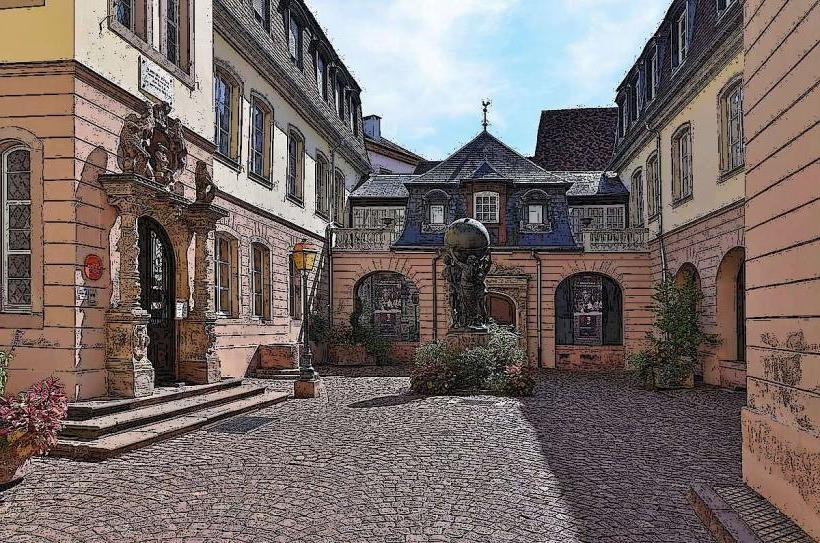
Colmar is the birthplace of Frédéric Auguste Bartholdi, the sculptor of the Statue of Liberty; a 12-meter resin replica stands at the northern entrance to the city. A historical oddity: the city changed nationality between France and Germany four times between 1871 and 1945. Legend holds that the unique colors of the houses originally signified the trade of the occupant, such as blue for carpenters or yellow for bakers.
Nearby Landmarks
Unterlinden Museum: 0.2km North of center
Saint-Martin Collegiate Church: 0.1km West
Petite Venise (Little Venice): 0.4km South
Bartholdi Museum: 0.1km West
Koïfhus (Old Custom House): 0.2km South