Information
City: DjerbaCountry: Tunisia
Continent: Africa
Djerba, Tunisia, Africa
Djerba is the largest island in North Africa, situated in the Gulf of Gabès at an elevation of 0 to 53 meters. Known as the "Island of Dreams," it is characterized by its white-washed architecture, thousands of palm and olive trees, and a unique multicultural heritage.
Historical Timeline
Djerba has been inhabited since antiquity, serving as a vital trade link for Phoenicians and Romans (Meninx). According to legend, it is the Land of the Lotus-Eaters from Homer's Odyssey. Throughout the Middle Ages, it was a focal point for battles between Normans, Spaniards, and the Ottoman Empire (notably the 1560 Battle of Djerba). The island is historically significant for its large Jewish community, which has existed there since the destruction of the Second Temple in Jerusalem.
Demographics & Population
The estimated population for 2026 is 175,000. The population is a diverse mix of Arab-Berber and Jewish communities. Djerba is one of the few places in Tunisia where the Berber language (Shilha) is still spoken daily in certain villages like Guellala and Sedouikech. The median age is approximately 31.8 years.
Urban Layout & Key Districts
The island is roughly circular and connected to the mainland by the 7 km "Roman Road" and a ferry at Ajim.
Houmt Souk: The administrative and commercial capital, famous for its vibrant markets and Ottoman-era fondouks.
Midoun: The second-largest town, located in the east near the tourist center.
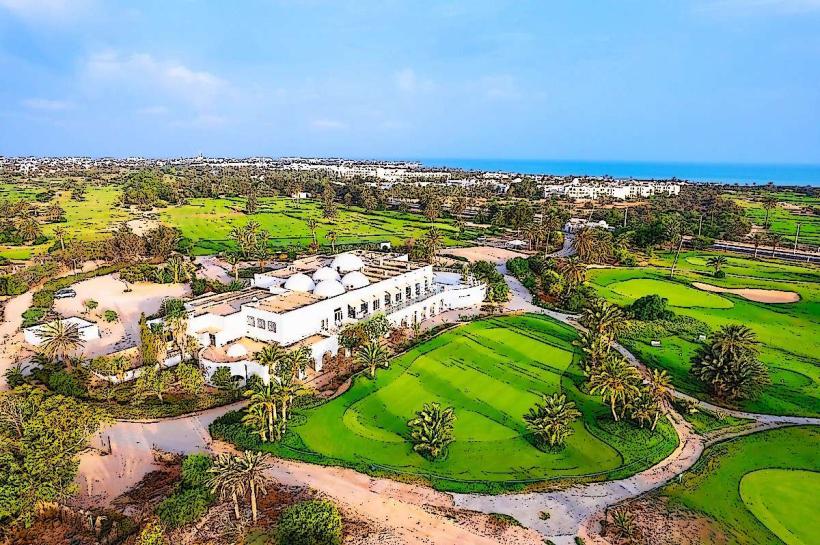
Zone Touristique (Sidi Mahrez): A 20 km stretch of northeast coastline dominated by luxury beach resorts.
Hara Sghira (Erriadh): The historic Jewish quarter and site of the "Djerbahood" art project.
Ajim: The main port for ferries to the mainland and a primary fishing hub.
Top City Landmarks
El Ghriba Synagogue: One of the oldest and most important synagogues in the world, a site of annual pilgrimage.
Djerbahood: An open-air museum in Erriadh featuring over 250 murals by international street artists.
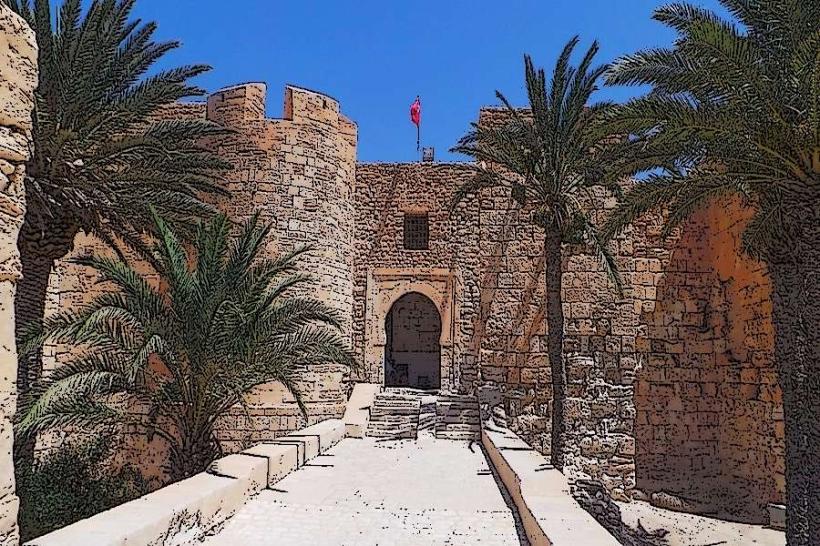
Borj El Kebir: A massive 15th-century fortress in Houmt Souk overlooking the harbor.
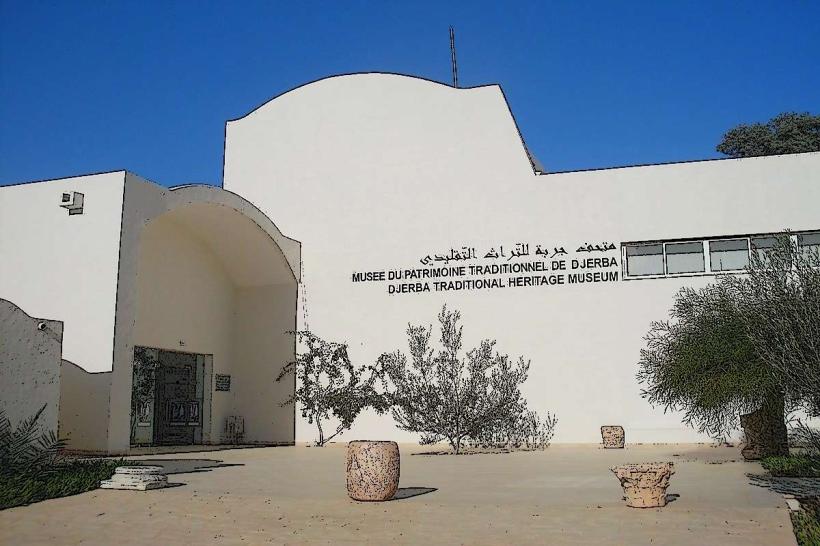
Guellala Museum: Situated on the island's highest point, dedicated to Djerbian traditions and pottery.
Djerba Explore Park: Home to a massive Mediterranean crocodile farm and the Lalla Hadria Museum.
Transportation Network
Djerba–Zarzis International Airport (DJE) handles high volumes of European charters and domestic flights. Yellow Taxis are the primary mode of transit and are strictly metered. Local buses and "louages" (shared taxis) connect the main towns. A ferry (bac) runs 24/7 between Ajim and Jorf on the mainland. The island is flat, making it ideal for bicycle and scooter rentals.
Safety & "Red Zones"
The safety level is high. Djerba is one of Tunisia’s most secure regions due to its heavy reliance on tourism and its distinct island geography. There are no "red zones." Security checkpoints are standard at the Roman Road entrance and the ferry terminals. Travelers should exercise normal caution in crowded markets.
Digital & Financial Infrastructure
Internet speeds average 30–50 Mbps. Main carriers are Tunisie Telecom, Ooredoo, and Orange. The Tunisian Dinar (TND) is the sole legal currency. ATMs are abundant in Houmt Souk, Midoun, and the Zone Touristique. Credit cards are widely accepted in resorts and larger boutiques but rare in the local souks.
Climate & Air Quality
Temperatures range from 11°C in winter to 32°C in summer. The climate is Mediterranean-arid, with over 300 days of sunshine per year. Air quality is pristine. The main weather risk is the Sirocco wind in spring, which brings Saharan dust and sudden temperature spikes.
Culture & Social Norms
Arabic, French, and Shilha are spoken. Djerba is known for its "Djerbian Exceptionalism"-a history of religious tolerance between Muslims and Jews. Conservative dress is required when visiting the Ghriba Synagogue and inland villages. Tipping (5–10%) is standard in tourist restaurants.
Accommodation Zones
Zone Touristique: Recommended for all-inclusive resorts and private beaches.
Houmt Souk: Recommended for historic fondouks (traditional inns) and market access.
Erriadh: Recommended for boutique guesthouses and an artistic atmosphere.
Local Cost Index
1 Espresso: 3.5 TND ($1.15 USD)
1 Standard Lunch (Grilled Fish/Brik): 25 TND ($8.00 USD)
1 Taxi (Houmt Souk to Zone Touristique): 10 TND ($3.25 USD)
Nearby Day Trips
Zarzis: 50 km (Mainland coastal town known for its sponges and olives).
Gabès: 100 km (Maritime oasis and henna market).
Chenini/Douiret: 120 km (Berber hilltop granaries and villages).
Facts & Legends
Djerba is often identified as the "Land of the Lotus-Eaters" from the Odyssey, where the fruit caused Odysseus's crew to forget their homes. A verified historical oddity is that the island features over 300 small, fortified mosques (mosquées-forteresses) scattered across the countryside, designed to act as watchtowers and refuges against pirate raids. The town of Ajim served as the filming location for the Mos Eisley Cantina in the original 1977 Star Wars.