Information
City: MonastirCountry: Tunisia
Continent: Africa
Monastir, Tunisia, Africa
Monastir is a major coastal city in the Tunisian Sahel, situated at an elevation of 2 meters on a peninsula in the Gulf of Hammamet. It serves as both a premier Mediterranean resort destination and a center of significant political heritage.
Historical Timeline
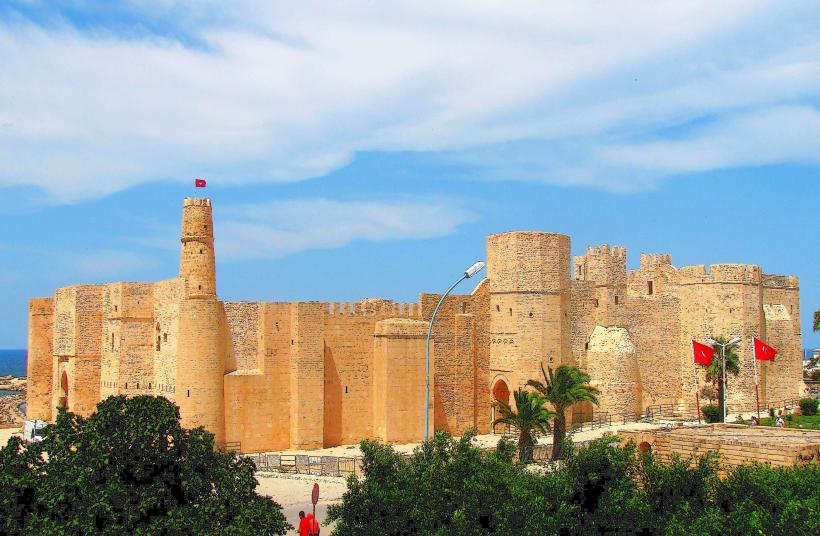
Monastir was founded on the ruins of the Punic-Roman city of Ruspina. It gained strategic importance in 796 AD when the Abbasid official Harthama ibn A'yan founded the Ribat, the oldest and most extensive fortress in the Maghreb. The city served as a defensive spiritual bastion against Byzantine and Norman incursions. Its modern urban form was radically reshaped in the 1960s by Habib Bourguiba, the first President of Tunisia and a native of the city, who transformed it into a modernized administrative and tourist center.
Demographics & Population
The estimated metropolitan population for 2026 is 110,000 (with the broader governorate exceeding 600,000). The population is predominantly Arab-Berber and overwhelmingly Muslim. As a major university town, it has a high density of students and a median age of approximately 32.5 years, aligning with Tunisia’s maturing national demographic.
Urban Layout & Key Districts
The city is structured around a vast ceremonial axis created during the Bourguiba era.
The Medina: A traditional walled core, partially cleared to create open plazas near the monuments.
The Marina (Cap Monastir): An upscale waterfront district with yachts, apartments, and international dining.
The Tourist Zone (Skanes): Located to the west, stretching toward the airport, dominated by large-scale beachfront resorts.
The Administrative Quarter: Centered on the Bourguiba Mosque and the local governorate offices.
Top City Landmarks
Ribat of Monastir: An 8th-century fortress-monastery; its Nador tower offers the city's highest vantage point. It is a famous filming location (e.g., Life of Brian).
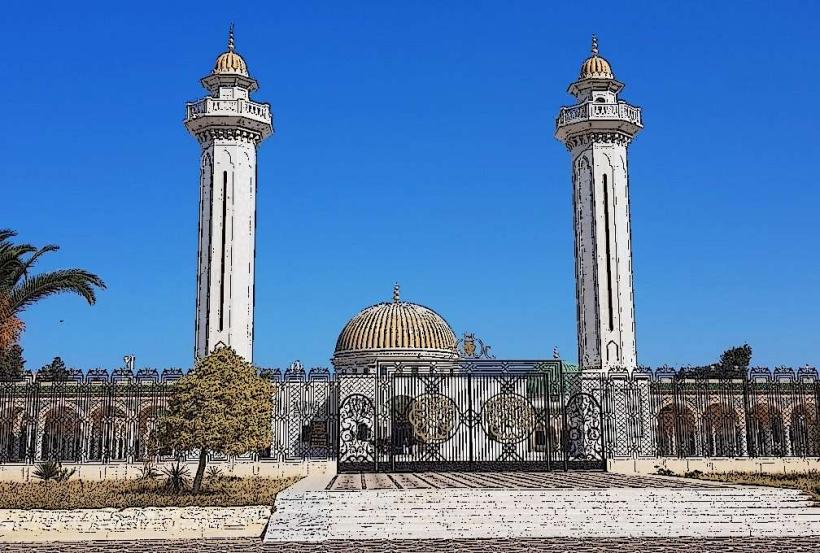
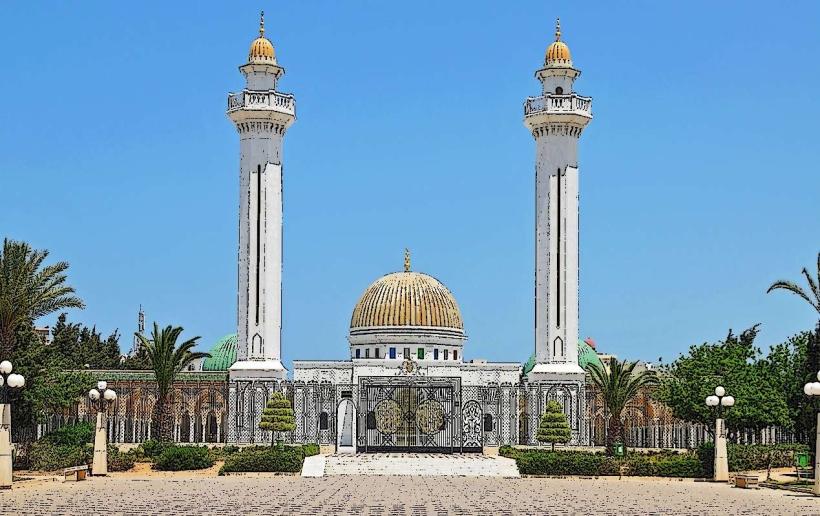
Mausoleum of Habib Bourguiba: A monumental resting place featuring a golden dome, twin minarets, and intricate marble work.
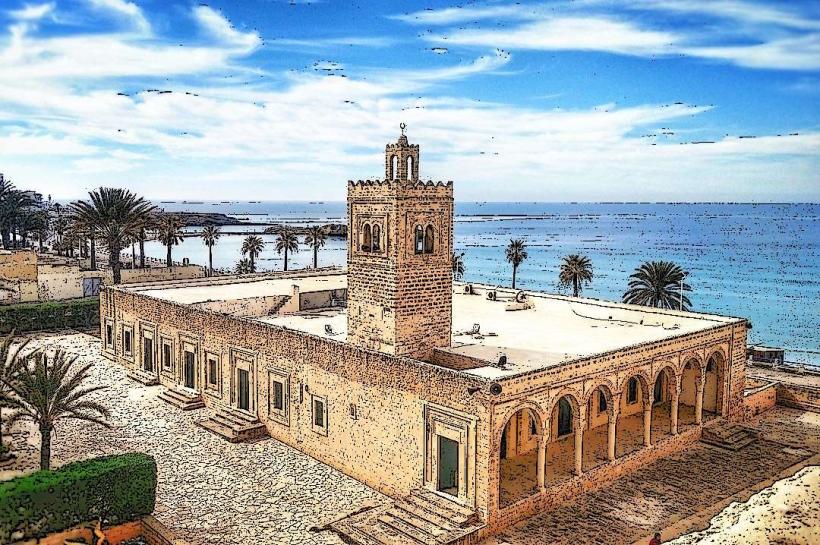
Habib Bourguiba Mosque: Built in 1963, modeled after the Mosque of Hammouda Pacha in Tunis, accommodating 1,000 worshippers.
Museum of Islamic Arts: Located within the Ribat, housing ancient astronomical instruments and manuscripts.
The Cemetery of Sidi Mezri: A vast, historic sea-facing cemetery adjacent to the Bourguiba Mausoleum.
Transportation Network
Intra-city transit is facilitated by Yellow Taxis and Blue Buses. The Métro du Sahel is a critical light rail line connecting Monastir to Sousse (20 min) and Mahdia (60 min). Monastir Habib Bourguiba International Airport (MIR) is a primary hub for charter flights from Europe. For inter-city travel, Louages (shared taxis) operate from the station near the city center.
Safety & "Red Zones"
The safety level is high, particularly in the tourist and administrative zones. Petty crime like pickpocketing occurs in the Medina souks. There are no specific "red zones," but travelers should avoid unlit beach areas at night. As of 2026, a high degree of caution is advised nationwide due to potential civil demonstrations; however, Monastir remains one of the most stable cities in the country.
Digital & Financial Infrastructure
Internet speeds average 30–50 Mbps. Main carriers are Tunisie Telecom, Ooredoo, and Orange. The Tunisian Dinar (TND) is the mandatory currency. ATMs are plentiful in the CBD and Skanes tourist zone. Credit cards are accepted in resorts and mid-to-high-range restaurants but cash is necessary for local markets and taxis.
Climate & Air Quality
Temperatures range from 8°C in winter to 33°C in summer. The climate is Mediterranean and dry. Air quality is high due to consistent sea breezes. Significant weather risks include extreme UV levels in July/August and occasional sea swells during winter storms.
Culture & Social Norms
Arabic is official, but French is the primary second language used in business. The culture is a mix of conservative Sahelian traditions and Western-influenced tourism. Modest dress is expected when visiting the Bourguiba Mosque and the Ribat. Tipping is standard at 5–10% in cafes and restaurants.
Accommodation Zones
Skanes: Recommended for all-inclusive resort stays and beach access.
Cap Monastir / Marina: Recommended for luxury apartments and proximity to the city center.
Local Cost Index
1 Espresso: 3 TND ($0.95 USD)
1 Standard Lunch (Couscous/Grilled Fish): 18 TND ($5.75 USD)
1 Short Taxi Trip: 5 TND ($1.60 USD)
Nearby Day Trips
Sousse: 20 km (UNESCO Medina and Ribat).
El Jem: 70 km (Massive Roman Amphitheater).
Mahdia: 45 km (Historic port and pristine beaches).
Facts & Legends
Monastir is often called the "City of the President." A local legend claims that spending three days in the Monastir Ribat earns a believer a place in paradise. A verified historical oddity is that the city's name is derived from the Latin monasterium, a rarity in the Islamic Maghreb, reflecting its pre-Islamic Byzantine heritage as a monastic site.