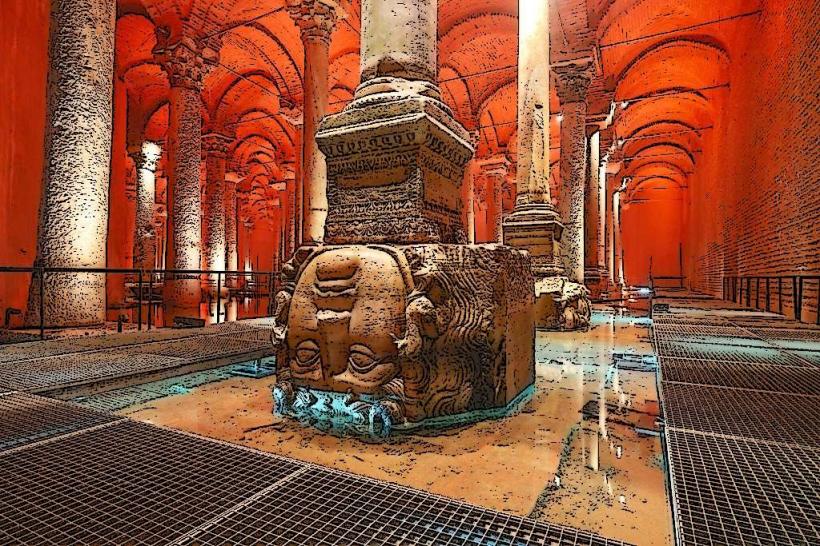
Landmark: Basilica Cistern
City: Istanbul
Country: Turkey
Continent: Asia
Basilica Cistern, Istanbul, Turkey, Asia
The Basilica Cistern is an ancient underground water storage system located in Istanbul, Turkey.
It was constructed by the Byzantine Empire to supply water to the city.
Visual Characteristics
The cistern is a large subterranean chamber supported by 336 marble columns, each approximately 9 meters high. The columns are of various styles, including Doric, Ionic, and Corinthian. The ceiling is constructed from brick and mortar, with arched vaults. Water levels typically reach about 1.5 meters, reflecting the columns and creating an atmospheric environment. Two columns at the northwestern section feature carved Medusa heads at their bases.
Location & Access Logistics
The Basilica Cistern is situated in the Sultanahmet district of Istanbul, approximately 150 meters southwest of Hagia Sophia. Access is via an entrance building on Yerebatan Caddesi. Public transport options include the T1 tram line, with the Sultanahmet stop being the closest. Metered taxis are also available. Parking is limited in the immediate vicinity; the closest public parking is at the Sultanahmet Otopark, about 500 meters away.
Historical & Ecological Origin
Construction of the Basilica Cistern began during the reign of Emperor Constantine I in the 4th century AD and was completed in the 6th century AD under Emperor Justinian I. It was built to serve the water needs of the Great Palace and surrounding structures. The cistern is an example of Roman engineering, utilizing a vast underground reservoir system to manage water resources.
Key Highlights & Activities
Visitors can walk along elevated pathways above the water level. Observation of the column bases, particularly the Medusa heads, is a primary activity. Photography is permitted. The cistern is illuminated to highlight its architectural features.
Infrastructure & Amenities
Restrooms are available at the entrance and exit points. Limited seating is provided along the pathways. Cell phone signal (4G/5G) is generally available within the cistern. Food and beverage vendors are located outside the cistern complex in the Sultanahmet area.
Best Time to Visit
The cistern is open year-round. For optimal lighting conditions for photography, consider visiting during daylight hours when the artificial lighting is most effective. Crowds are typically lower in the early morning or late afternoon. There are no tide-dependent factors affecting access or experience.
Facts & Legends
One of the Medusa heads used as a column base is positioned upside down, and the other is sideways. The exact reason for this orientation remains a subject of speculation, with theories ranging from a desire to fit the heads into the column bases to a symbolic act of neutralizing their power.
Nearby Landmarks
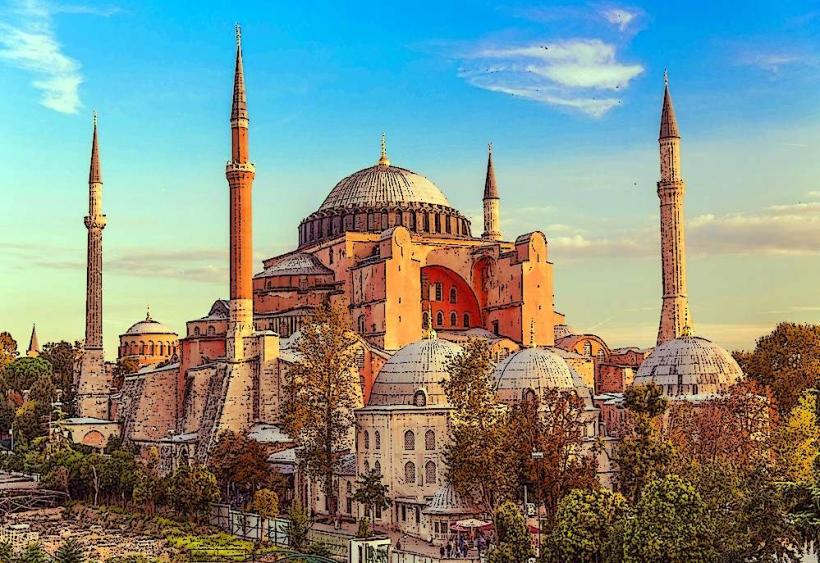
- Hagia Sophia (0.15km Northeast)
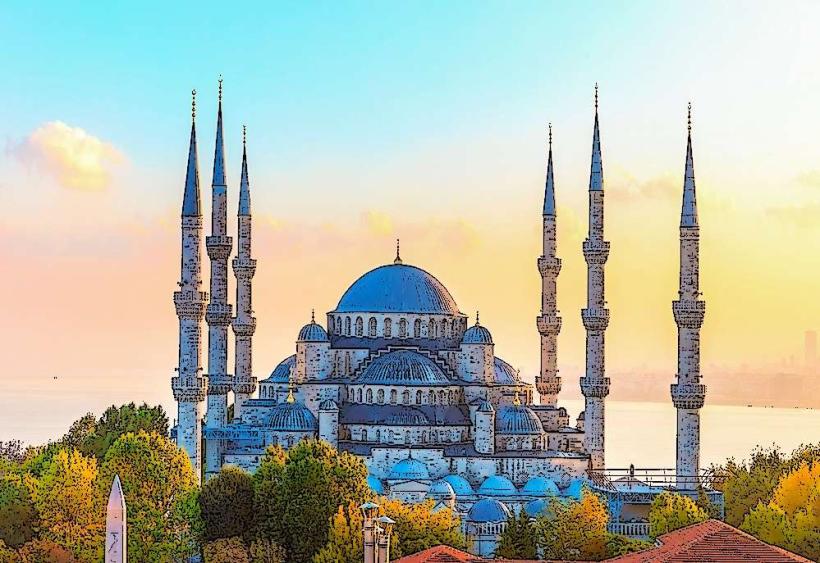
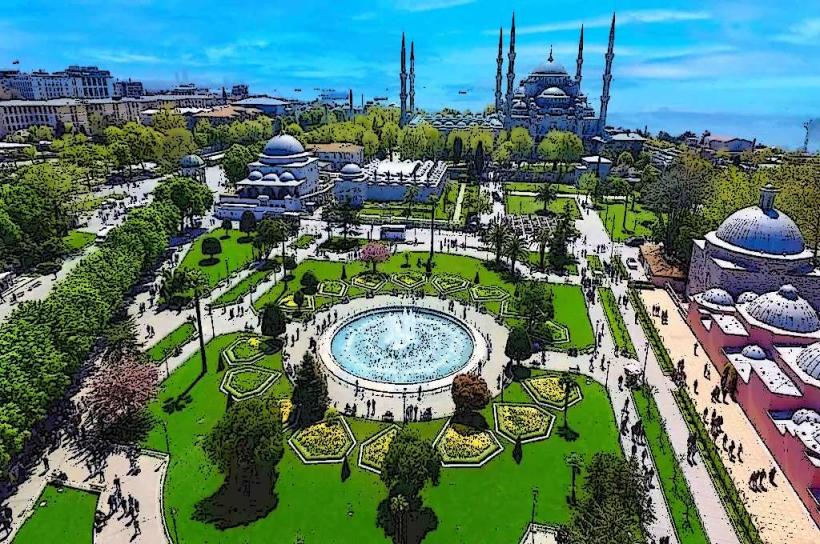
- Blue Mosque (0.4km West)
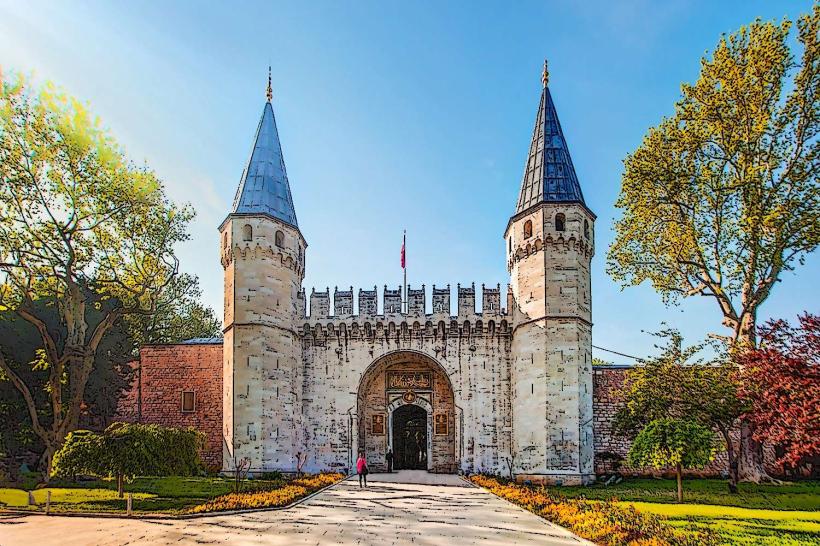
- Topkapi Palace (0.6km East)
- Grand Bazaar (0.8km Northwest)
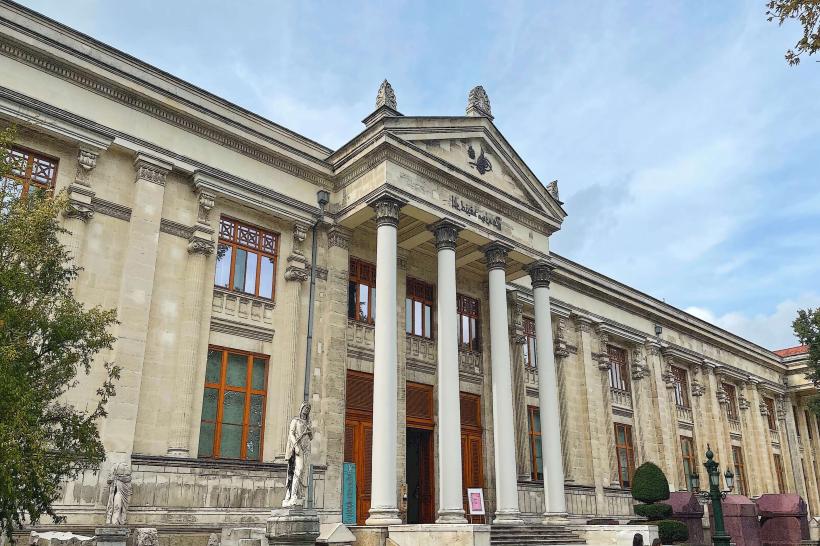
- Archaeological Museums (0.7km East)