Information
Landmark: Berlin Historic DistrictCity: Ocean City
Country: USA Maryland
Continent: North America
Berlin Historic District, Ocean City, USA Maryland, North America
The Berlin Historic District is a designated area within Ocean City, Maryland, preserving early 20th-century architecture and town planning.
This district encompasses a collection of well-maintained buildings that reflect the area's development as a coastal community.
Visual Characteristics
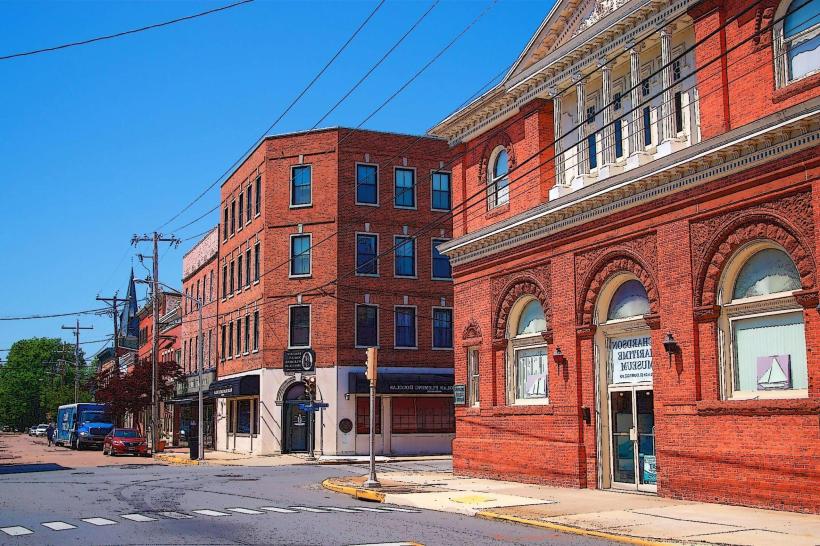
Buildings in the district are primarily constructed from wood and brick, with many featuring clapboard siding and gabled roofs. Architectural styles range from Queen Anne and Colonial Revival to simpler vernacular designs. Colors are typically muted, with white, cream, and pale pastels predominating. Structures are generally two to three stories in height, with some commercial buildings exhibiting larger footprints. Streetscapes are characterized by mature trees lining sidewalks and a consistent setback from the street.
Location & Access Logistics
The Berlin Historic District is located approximately 10 miles west of Ocean City's main boardwalk. Access from Ocean City is via US-50 West, transitioning to MD-376 West (Main Street). The district is centered around Main Street and adjacent blocks. Parking is available on-street in designated areas and in a municipal lot located at the corner of Main Street and Pitts Street. Public transport options are limited; the Ocean City Transportation bus system does not directly service the historic district, requiring a transfer to a local taxi or rideshare service from the nearest Ocean City bus stop.
Historical & Ecological Origin
The district's origins trace back to the late 19th and early 20th centuries, evolving from a small agricultural settlement into a service hub for the burgeoning tourism industry in nearby Ocean City. Development accelerated between 1900 and 1930. The area's ecological origin is coastal plain, characterized by sandy loam soils and proximity to tidal wetlands, which influenced early settlement patterns and agricultural practices.
Key Highlights & Activities
Walking tours of the district are available, focusing on architectural details and historical narratives. Several shops and art galleries operate within the historic buildings, offering local crafts and goods. Dining options include restaurants housed in former commercial establishments. Seasonal events, such as farmers' markets and holiday celebrations, occur in the town square.
Infrastructure & Amenities
Restrooms are available in public facilities located near the town square and within some commercial establishments. Shade is provided by mature trees along Main Street. Cell phone signal (4G/5G) is generally strong throughout the district. Food vendors and restaurants are present within the district itself.
Best Time to Visit
For photography, early morning or late afternoon light provides optimal illumination of building facades. The best months for visiting are April through October, offering pleasant temperatures for outdoor exploration. No specific tide requirements are applicable to this inland historic district.
Facts & Legends
A notable historical oddity is the presence of the "World's Largest Christmas Store," which operates year-round within a repurposed historic building, drawing significant visitor traffic outside of traditional holiday seasons.