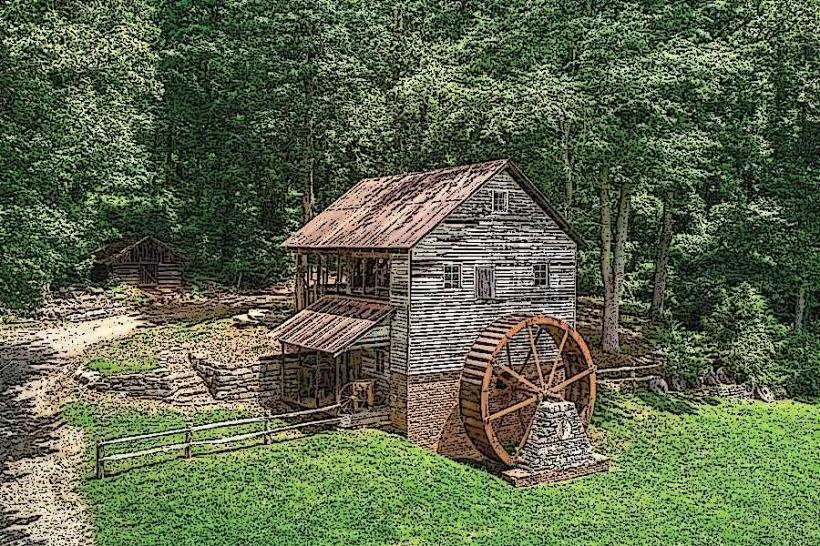
Landmark: Big South Fork National River and Recreation Area
City: Knoxville
Country: USA Tennessee
Continent: North America
Big South Fork National River and Recreation Area, Knoxville, USA Tennessee, North America
Big South Fork National River and Recreation Area is a protected natural area located within the states of Tennessee and Kentucky, USA.
This area encompasses a significant portion of the Big South Fork of the Cumberland River and its tributaries.
Visual Characteristics
The landscape is characterized by deep gorges, sandstone cliffs, and extensive hardwood forests. River water color varies from clear to brown depending on recent rainfall. Rock formations include prominent bluffs, natural arches, and boulder fields. Vegetation is dense, dominated by oak, hickory, and pine species.
Location & Access Logistics
The main access point from Knoxville, Tennessee, is via I-75 North for approximately 70 miles to Exit 29. From Exit 29, take TN-63 West for approximately 20 miles to the town of Oneida. Continue on TN-32 North for approximately 15 miles to the park entrance. Parking is available at designated trailheads and visitor centers. Public transport is not available to reach the park.
Historical & Ecological Origin
The area's geological origin is primarily sedimentary rock deposition over millions of years, followed by erosion by the Big South Fork of the Cumberland River. The region has a history of human habitation dating back to Native American tribes, followed by early European settlers involved in logging and mining. The National River and Recreation Area was established in 1974 to preserve its natural and cultural resources.
Key Highlights & Activities
Hiking is available on over 100 miles of trails, including the Twin Arches Loop Trail and the Grand Gap Trail. Whitewater paddling is possible on the Big South Fork, with Class II-III rapids. Rock climbing and bouldering are permitted at designated sites. Horseback riding is allowed on designated equestrian trails. Fishing is permitted in the river and its tributaries.
Infrastructure & Amenities
Restrooms are available at the Bandy Creek Visitor Center and several developed campgrounds. Shade is abundant throughout the forested areas. Cell phone signal is intermittent and generally unavailable in deep gorges and remote areas. Food vendors are not present within the park; visitors should bring their own supplies. Several campgrounds offer basic amenities.
Best Time to Visit
For hiking and general exploration, spring (April-May) and fall (September-October) offer moderate temperatures and fall foliage. Summer (June-August) can be hot and humid. Whitewater paddling is best in spring following snowmelt or after significant rainfall events. Photography is optimal in the early morning or late afternoon for angled light on the rock formations.
Facts & Legends
The Twin Arches, a prominent feature, are among the largest natural sandstone arches in the eastern United States. Local folklore includes tales of moonshiners using the remote gorges for illicit distilling operations during Prohibition.
Nearby Landmarks
- Ozone Falls State Natural Area (15km Southwest)
- Pogue Creek State Natural Area (20km West)
- Dale Hollow Lake State Park (35km Northwest)
- Cumberland Falls State Resort Park (40km Northwest)