Information
Landmark: Brijuni National ParkCity: Pula
Country: Croatia
Continent: Europe
Brijuni National Park, Pula, Croatia, Europe
Brijuni National Park is an archipelago consisting of 14 islands and islets situated off the southwestern coast of the Istrian peninsula, near the city of Pula, Croatia. The largest island, Veliki Brijun, is separated from the mainland by the 2-kilometer-wide Fažana Channel.
Visual Characteristics
The landscape is characterized by Mediterranean macchia, holm oak forests, and cedar groves interspersed with open grasslands and landscaped parks. Geologically, the islands are composed of horizontal layers of Cretaceous limestone covered in thick red soil (terra rossa). Coastal areas feature indented white rocky shores and pebble beaches, while the interior includes an ethno-park with zebras and llamas and a 1,600-year-old olive tree.
Location & Access Logistics
Access is primarily via a government-operated ferry departing from the village of Fažana, located 8km north of Pula city center. Public bus line 5 connects Pula to Fažana. Private vehicles must be parked in designated lots in Fažana as cars are prohibited on the islands; transportation on Veliki Brijun is limited to the tourist train, rented bicycles, or electric golf carts.
Historical & Ecological Origin
The islands were shaped into a luxury resort starting in 1893 by industrialist Paul Kupelwieser, who eradicated malaria on the site with the help of Robert Koch. Historically, the park served as the official summer residence of Yugoslav President Josip Broz Tito from 1947 to 1980. It was officially designated a National Park in 1983 due to its specific botanical and paleo-zoological significance.
Key Highlights & Activities
Visitors can view over 200 dinosaur footprints from the Cretaceous period at four distinct sites on Veliki Brijun. The ruins of a 1st-century Roman villa in Verige Bay are accessible for walking tours. Snorkeling is permitted in the educational underwater trail in Verige Bay, where Roman architectural remains are visible beneath the surface.
Infrastructure & Amenities
Veliki Brijun contains hotels, a post office, and several restaurants near the harbor. Public restrooms are available at the ferry terminal and near the Safari Park. 4G and 5G cellular signals are stable across the main island. Shade is abundant under the oak canopies, though inland grasslands are exposed; potable water stations are located at major intersections.
Best Time to Visit
The optimal months for visiting are May, June, and September to avoid peak summer temperatures and high tourist density. Morning departures (09:00 or 10:00) provide the best lighting for the Roman ruins and Safari Park. Clear water conditions for snorkeling are most consistent when the Maestral wind is light, typically before mid-afternoon.
Facts & Legends
The park is home to a Cadillac Eldorado, a 1953 gift to President Tito, which remains operational and available for rent by the hour. A local historical oddity is the presence of the ruins of a Templar church, St. Mary’s, which includes a 13th-century fortification built to protect the abbey from pirates.
Nearby Landmarks
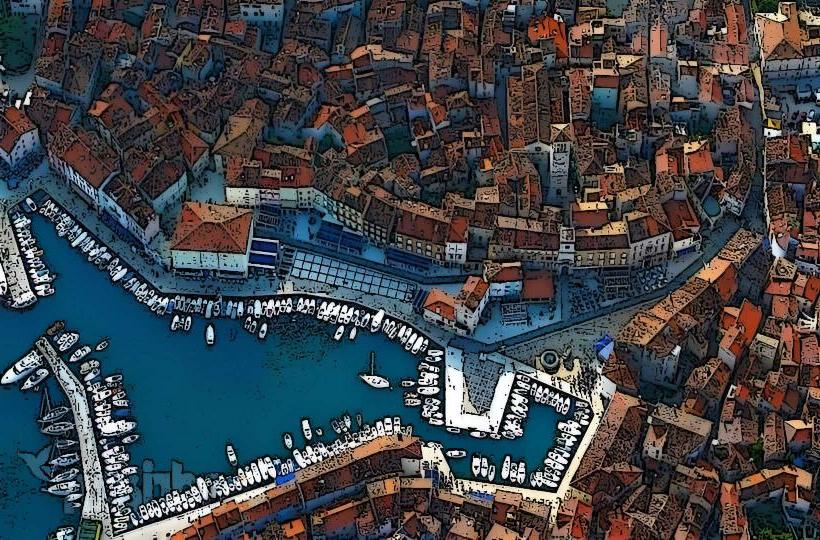
Fažana Waterfront – 2.5km East
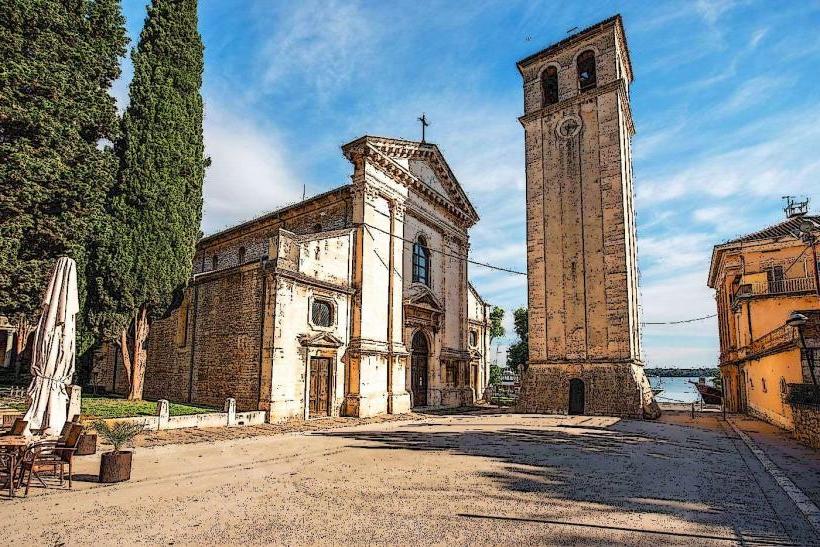
St. Nicholas Church – 2.6km East
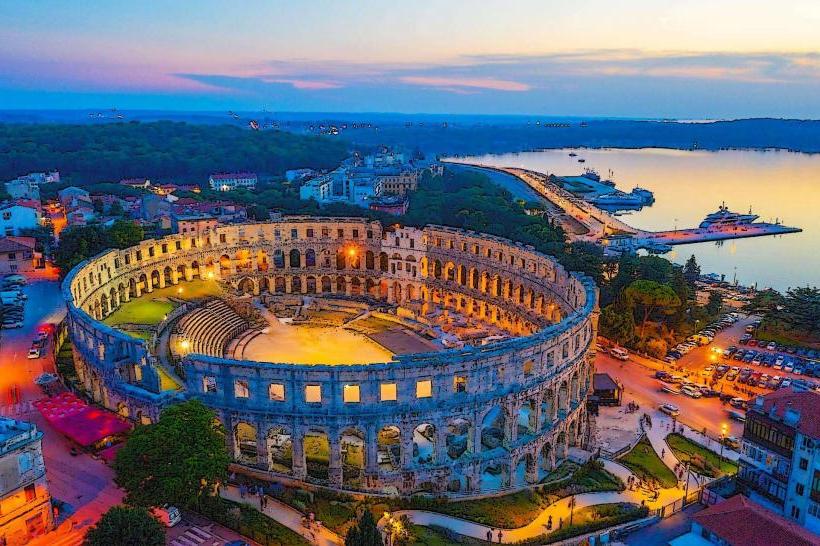
Pula Arena – 7.8km Southeast
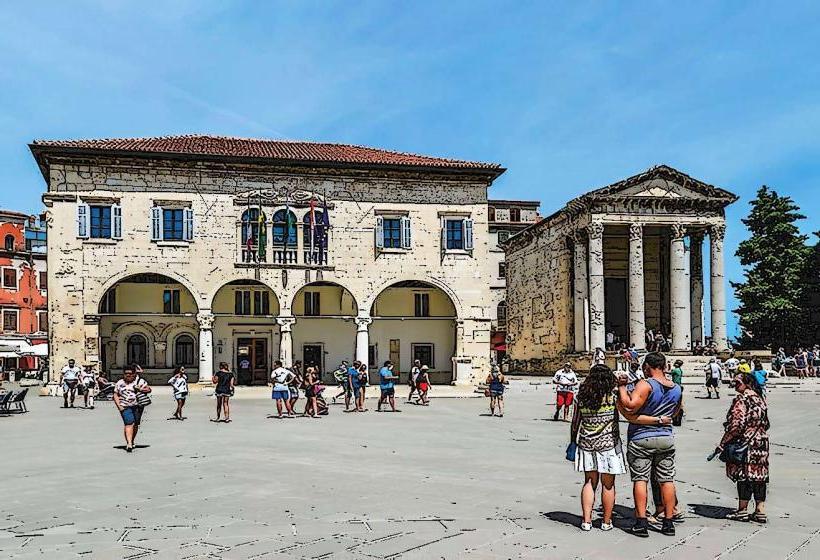
Temple of Augustus – 7.5km Southeast
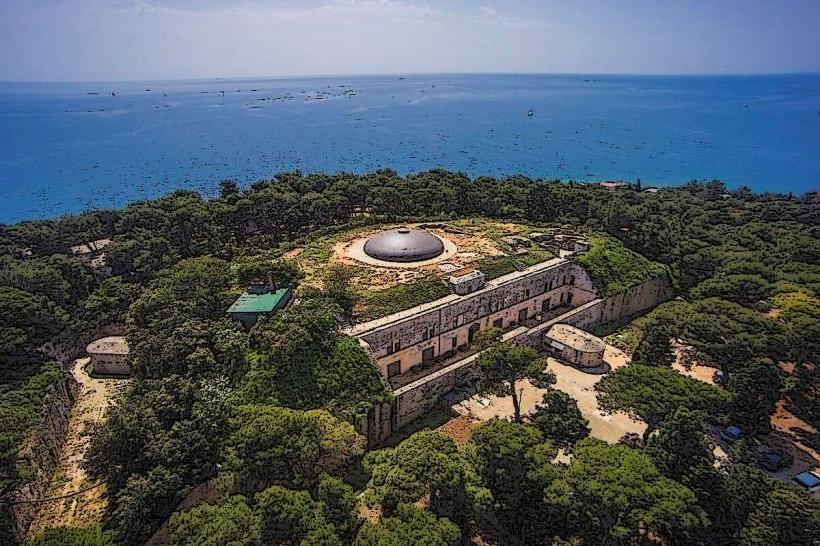
Fort Punta Christo – 4.2km Southeast