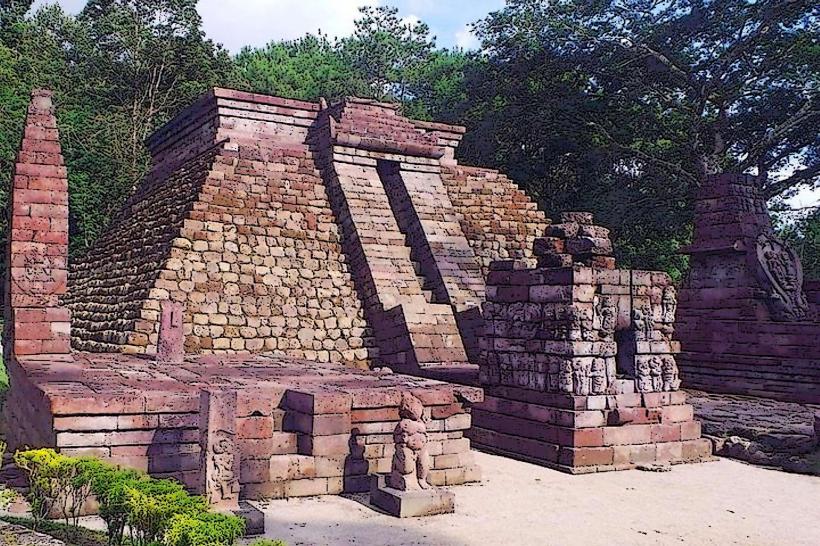
Landmark: Candi Ceto
City: Surakarta
Country: Indonesia
Continent: Asia
Candi Ceto, Surakarta, Indonesia, Asia
Candi Ceto is a Hindu temple complex located on the slopes of Mount Lawu, near Surakarta, Indonesia.
This site comprises several structures and terraces built into the mountainside.
Visual Characteristics
The primary structures are constructed from andesite stone. The temple features tiered terraces ascending the slope, with gateways and smaller shrines. The main temple area is characterized by a large, unfinished pyramid-like structure. The stone exhibits a weathered, grey-brown coloration. Vegetation, including dense forest, surrounds the temple complex.
Location & Access Logistics
Candi Ceto is situated approximately 60 kilometers northeast of Surakarta. Access is via Jalan Raya Tawangmangu. The final approach involves a steep, winding road. Parking is available at the temple entrance. Public transport to the immediate vicinity is limited; private vehicles or rented cars are the most practical means of access. Local motorcycle taxis (ojek) may be available from nearby villages.
Historical & Ecological Origin
Candi Ceto is believed to have been constructed during the Majapahit Empire, likely in the 15th century. Its exact purpose is debated, but it is thought to have served as a place of worship or a royal retreat. The site is located within a tropical montane forest ecosystem.
Key Highlights & Activities
Exploration of the temple terraces and structures. Observation of the architectural remnants. Walking the pathways between the different levels of the complex. Photography of the site and surrounding landscape.
Infrastructure & Amenities
Basic restroom facilities are available near the entrance. Some shaded areas are provided by natural tree cover and small shelters. Cell phone signal is generally weak to non-existent within the temple complex. Small food stalls selling local snacks and drinks are often present near the parking area.
Best Time to Visit
The best time of day for photography is generally in the morning, between 8:00 AM and 10:00 AM, when the light is softer and shadows are less harsh. The dry season, from May to September, offers the most favorable weather conditions with less rainfall. The site is accessible year-round.
Facts & Legends
A notable feature is the presence of large, phallic-shaped stone structures, which have led to various interpretations and local folklore regarding fertility rituals. The unfinished nature of the main pyramid is also a point of discussion among historians.
Nearby Landmarks
- Candi Sukuh: 2km Southwest
- Tawangmangu Waterfall: 5km Southeast
- Mount Lawu Summit Trailhead: 7km North
- Agro-Taman Sido Luhur: 4km East