Landmark: Cape Henlopen State Park
City: Lewes
Country: USA Delaware
Continent: North America
Cape Henlopen State Park, Lewes, USA Delaware, North America
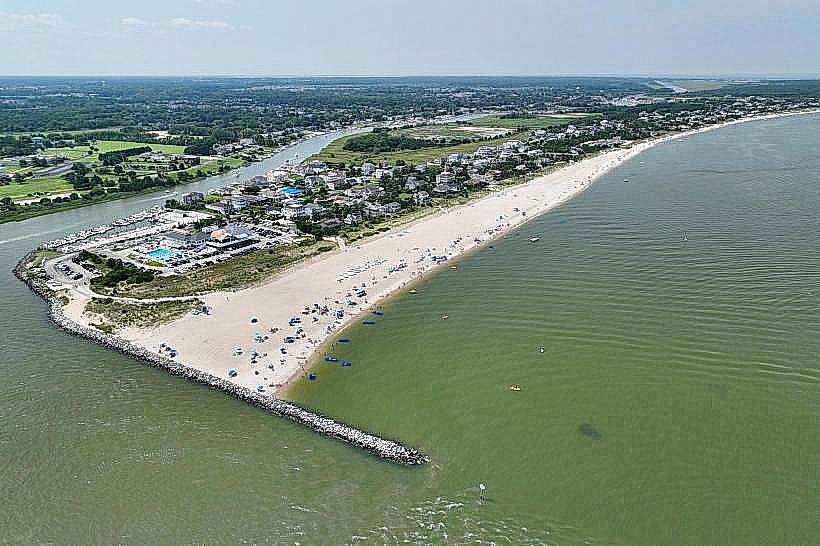
Cape Henlopen State Park is a protected coastal area situated at the southeastern tip of Delaware, USA, where the Delaware Bay meets the Atlantic Ocean.
Visual Characteristics
The park features a 5-mile stretch of Atlantic coastline with sandy beaches. Inland, the terrain includes pine forests, salt marshes, and tidal flats. The dominant geological feature is the Great Dune, a large sand dune system.
Location & Access Logistics
The park is located approximately 4 miles southeast of Lewes, Delaware. Access is via Cape Henlopen Drive, which connects to US Route 1. Ample parking is available within the park, with designated lots for beach access, trails, and the nature center. Public transport options are limited; the nearest bus service stops in Lewes, requiring a taxi or bicycle for the final segment.
Historical & Ecological Origin
Historically, the area served as a strategic defense point, with Fort Miles constructed during World War II. Ecologically, Cape Henlopen is a dynamic coastal environment shaped by ocean currents and wind, forming barrier islands and diverse habitats.
Key Highlights & Activities
Activities include swimming and sunbathing on the beaches, fishing from the pier, and birdwatching in the salt marshes. Hiking is possible on designated trails, such as the Seaside Nature Trail and the Fort Miles Historical Area Trail. Kayaking and paddleboarding are permitted in calmer bay waters.
Infrastructure & Amenities
Restrooms are available at beach access points and the nature center. Shaded areas are provided by pavilions and picnic shelters. Cell phone signal (4G/5G) is generally available throughout the park. Food vendors are present during peak season near the main beach areas.
Best Time to Visit
For beach activities, the months of June through August offer the warmest weather. For birdwatching, spring (April-May) and fall (September-October) are optimal. The best time of day for photography, particularly of the coastline and dunes, is during sunrise or sunset for softer light.
Facts & Legends
The park is home to the "Walking Dunes" of the Great Dune, which actively migrate inland. A local legend suggests that the area was once a favored resting spot for pirates.
Nearby Landmarks
- Lewes Historical Society Museum (3.5km Northwest)
- Cape May-Lewes Ferry Terminal (4.0km West)
- Fort Miles Historical Area (1.2km Southwest)
- Rehoboth Beach Boardwalk (10.0km South)