Landmark: Castillo de Jagua
City: Cienfuegos
Country: Cuba
Continent: North America
Castillo de Jagua, Cienfuegos, Cuba, North America
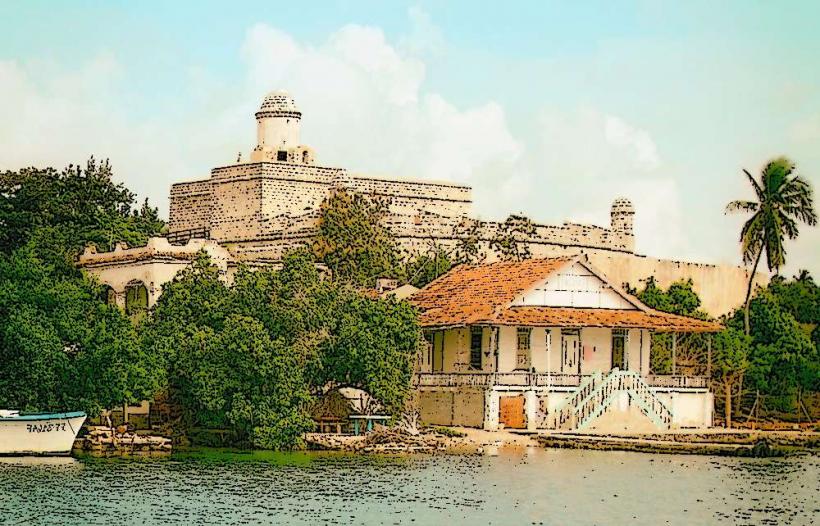
Castillo de Jagua is a 18th-century Spanish fortress located on the entrance to the Bay of Cienfuegos, Cuba.
Visual Characteristics
The fortress is constructed primarily from limestone blocks. It features thick, high walls with crenellations and bastions designed for defense. The structure is roughly rectangular with a central courtyard. Its color is a weathered grey, typical of aged stone exposed to the elements.
Location & Access Logistics
Castillo de Jagua is situated on the Punta de Guayabo, approximately 15 kilometers southwest of the city center of Cienfuegos. Access is primarily via a paved road, Carretera de Jagua, which leads directly to the fortress. Parking is available on-site, though it is limited. Public transport options are scarce; a taxi or private car is the most reliable method of arrival. Boat tours from Cienfuegos also frequently include a stop at the castle.
Historical & Ecological Origin
Construction of Castillo de Jagua began in 1738 and was completed in 1745. It was commissioned by the Spanish Crown to defend the strategically important Bay of Cienfuegos from pirates and foreign naval powers. The fortress is built on a rocky promontory of sedimentary rock.
Key Highlights & Activities
Visitors can explore the ramparts and interior of the fortress. Observation points offer views of the bay entrance. Photography of the architecture and surrounding seascape is a common activity. Guided tours are sometimes available, providing historical context.
Infrastructure & Amenities
Restrooms are available within the fortress complex. Limited shade is provided by the structure itself. Cell phone signal (3G/4G) is generally present but can be intermittent. No food vendors are located directly at the site; visitors should plan to bring provisions or dine in Cienfuegos.
Best Time to Visit
The best time of day for photography is generally mid-morning or late afternoon when the sun angle provides optimal lighting on the stone structure. The dry season, from November to April, offers the most pleasant weather conditions with lower humidity and less rainfall. There are no tide-dependent activities at this site.
Facts & Legends
A local legend suggests that the fortress was built to protect against a mythical sea monster said to inhabit the bay. More concretely, the fortress successfully repelled a British attack in 1809.
Nearby Landmarks
- Punta de Guayabo (0.1km West)
- Bahía de Cienfuegos (0.5km North)
- Playa Inglés (3.0km Southwest)
- Cienfuegos Botanical Garden (12.0km Northeast)
- Parque José Martí (15.0km Northeast)