Landmark: Copenhagen City Hall
City: Copenhagen
Country: Denmark
Continent: Europe
Copenhagen City Hall, Copenhagen, Denmark, Europe
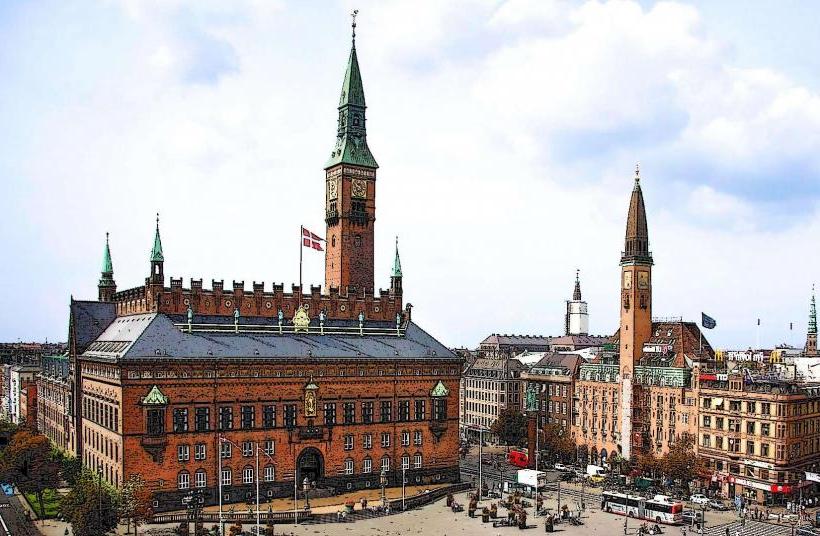
Copenhagen City Hall is the seat of the Municipal Council and the Lord Mayor of Copenhagen. It is located on Rådhuspladsen (City Hall Square) in central Copenhagen, Denmark.
Visual Characteristics
The building exhibits a National Romantic architectural style, incorporating elements from Byzantine and Medieval Danish design. Its facade is constructed from red brick. The structure is dominated by a 105.6-meter-tall clock tower. A gilded statue of Absalon is positioned above the main balcony, and the main entrance is a prominent feature. The interior includes a large central hall.
Location & Access Logistics
Copenhagen City Hall is situated at Rådhuspladsen 1, 1550 København V, placing it in the absolute center of Copenhagen. Public transport access is direct: the Rådhuspladsen Metro Station (M3 Cityring and M4 lines) is adjacent to the building. Multiple bus lines, including 2A, 5C, 6A, 12, 26, 31, 33, and 68, stop at Rådhuspladsen. Limited street parking is available in surrounding areas, with paid underground parking garages such as Industriens Hus and Axel Towers within walking distance.
Historical & Ecological Origin
Construction of Copenhagen City Hall commenced in 1892 and was completed in 1905. The building was designed by architect Martin Nyrop. Its original purpose was to serve as the primary administrative and ceremonial center for the City of Copenhagen.
Key Highlights & Activities
Visitors can ascend the City Hall Tower to access panoramic views of Copenhagen. The World Clock (Jens Olsen's Astrological Clock) is located within the building and is accessible for viewing. Guided tours of the interior are offered at scheduled times. The main hall frequently hosts public events and exhibitions.
Infrastructure & Amenities
Public restrooms are available inside Copenhagen City Hall. The building's interior provides shade, while the exterior square offers limited natural shade. Cell phone signal, including 4G and 5G, is consistently strong throughout the area. Numerous cafes, restaurants, and kiosks are located on Rådhuspladsen and the adjacent streets, providing food and beverage options.
Best Time to Visit
For photography, morning or late afternoon light provides optimal conditions for the facade. The months of May through September offer the mildest temperatures and reduced rainfall, making them ideal for a visit. Ascending the tower is best undertaken on clear days to ensure maximum visibility.
Facts & Legends
The World Clock, designed by Jens Olsen, is a highly complex astronomical clock located within the City Hall. Its construction and assembly spanned 27 years, beginning in 1948 and becoming fully operational in 1955. This mechanical marvel displays not only standard time but also calendar dates, astronomical positions, and ecclesiastical data with exceptional precision.
Nearby Landmarks
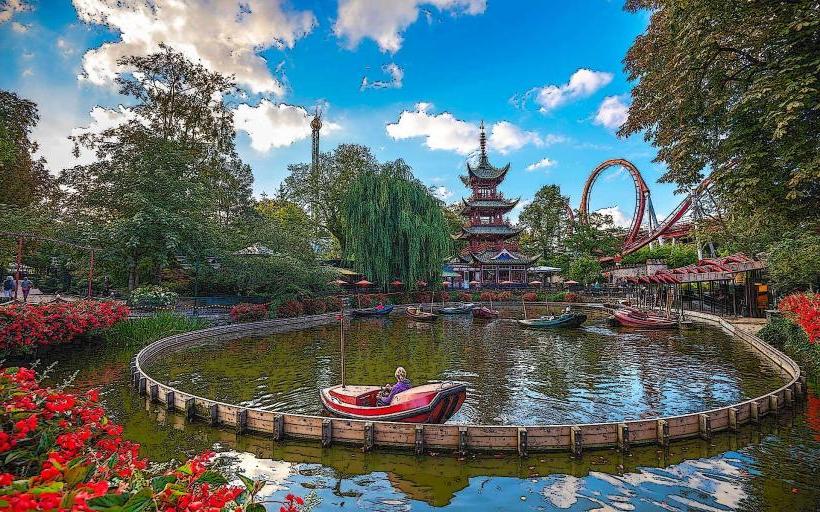
- Tivoli Gardens: 0.3km South-East
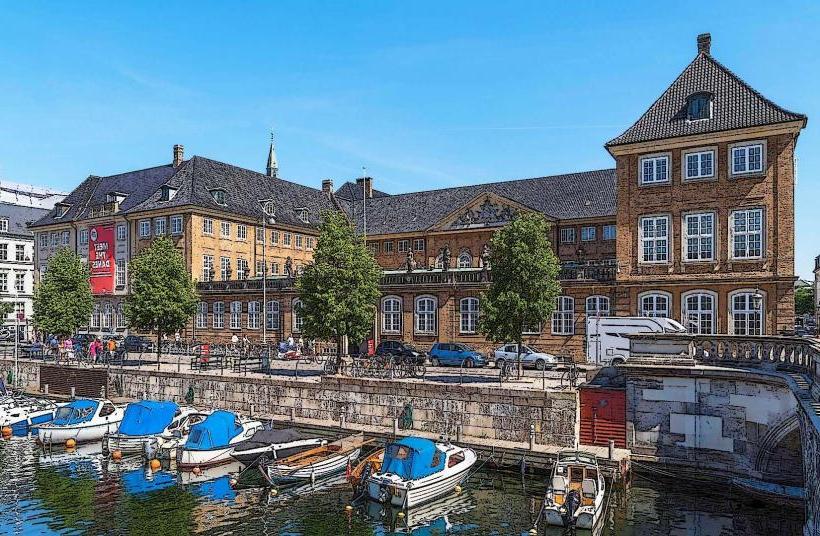
- National Museum of Denmark: 0.5km South
- Strøget: 0.1km North-East
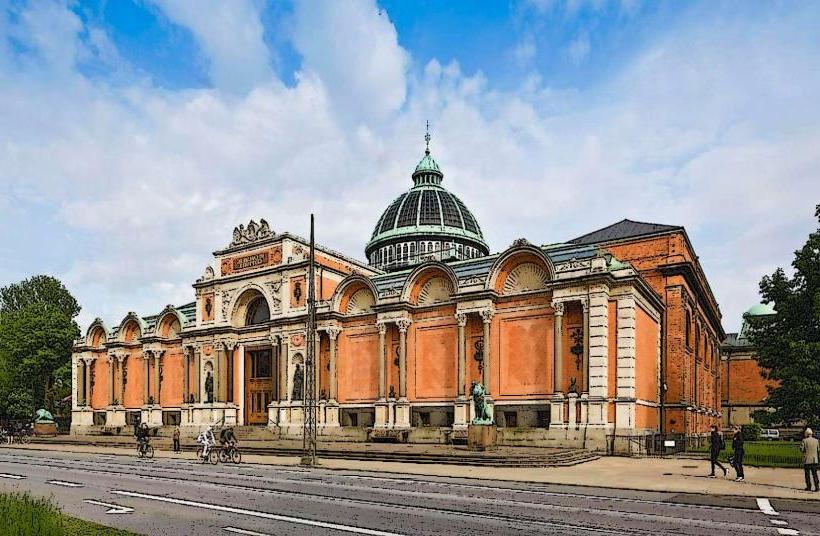
- Ny Carlsberg Glyptotek: 0.6km South-East
- Palads Cinema: 0.4km North-West