Landmark: Elisenbrunnen
City: Aachen
Country: Germany
Continent: Europe
Elisenbrunnen, Aachen, Germany, Europe
Elisenbrunnen is the architectural symbol of Aachen's spa heritage, serving as a public fountain for the city's famous sulfurous thermal waters.
Visual Characteristics
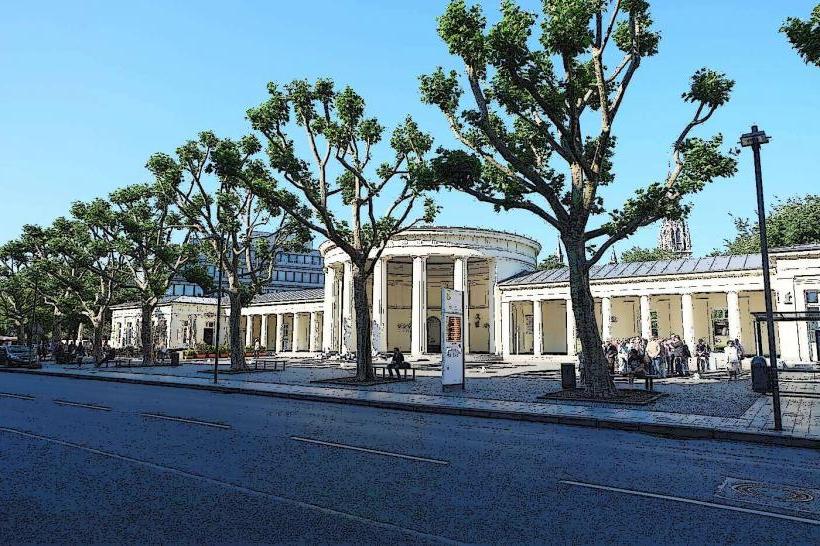
The structure is a Neoclassical open-air pavilion. It features a central rotunda and two symmetrical wings with long Doric colonnades. Two drinking fountains are located in the central hall, where thermal water flows continuously from bronze lion-head spouts.
Location & Access Logistics
Located at Friedrich-Wilhelm-Platz, 52062 Aachen.
Transit: 10-minute walk north from Aachen Hauptbahnhof; it is the central hub for local bus lines.
Access: Fully open public space.
Hours: Accessible 24/7.
Admission: Free.
Historical Origin
Completed in 1827, the building was designed by architects Johann Peter Cremer and Karl Friedrich Schinkel. It was named after the Prussian Princess Elisabeth (Elise). The structure was almost entirely destroyed in 1944 and meticulously reconstructed in 1953. It commemorates Aachen's history as a Roman spa town (Aquae Granni).
Key Highlights & Activities
Thermal Water: The water from the "Kaiserquelle" (Emperor’s Spring) is 52°C and has a distinct sulfur odor (similar to rotten eggs).
Commemorative Plaques: Stone tablets inside the rotunda list the names of famous visitors to the Aachen spa, including Peter the Great, Frederick the Great, and Giacomo Casanova.
Elisengarten: The landscaped park directly behind the pavilion, which contains archaeological windows showing Roman and medieval excavations.
Infrastructure & Amenities
The site is level and wheelchair accessible. It houses the city's main Tourist Information Office in the right wing. Several cafes and restaurants surround the plaza and the adjacent park. 5G signal is robust.
Best Time to Visit
Daylight Hours: To visit the Tourist Information Office and view the archaeological excavations in the park.
Evening: The colonnades are illuminated, providing a distinct Neoclassical backdrop for photography.
Facts & Legends
A technical oddity is that while the water is officially recognized as medicinal, the city provides a disclaimer that it should not be consumed in large quantities due to its high mineral and fluoride content. Legend states that the spring was discovered when Charlemagne's horse stumbled near the site, causing hot water to bubble up-a sign that led the Emperor to establish his palace in Aachen.
Nearby Landmarks
Aachen Cathedral – 0.4km North
Aachen Town Hall – 0.5km North
Puppenbrunnen (Doll Fountain) – 0.3km North
Theatre Aachen – 0.2km South