Landmark: Ellora Caves
City: Amravati
Country: India
Continent: Asia
Ellora Caves, Amravati, India, Asia
The Ellora Caves are a complex of rock-cut temples and monasteries located near Amravati, India.
This UNESCO World Heritage site comprises 34 caves, excavated between the 6th and 10th centuries CE, representing Buddhist, Hindu, and Jain religious traditions.
Visual Characteristics
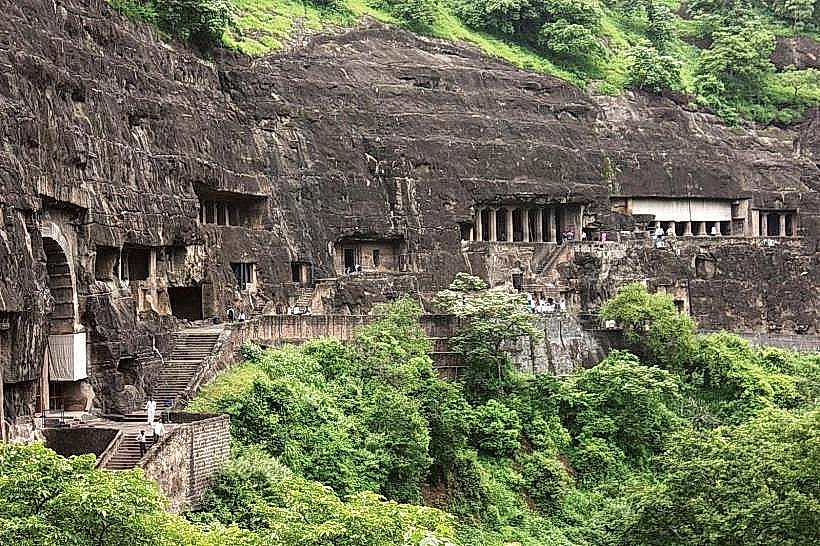
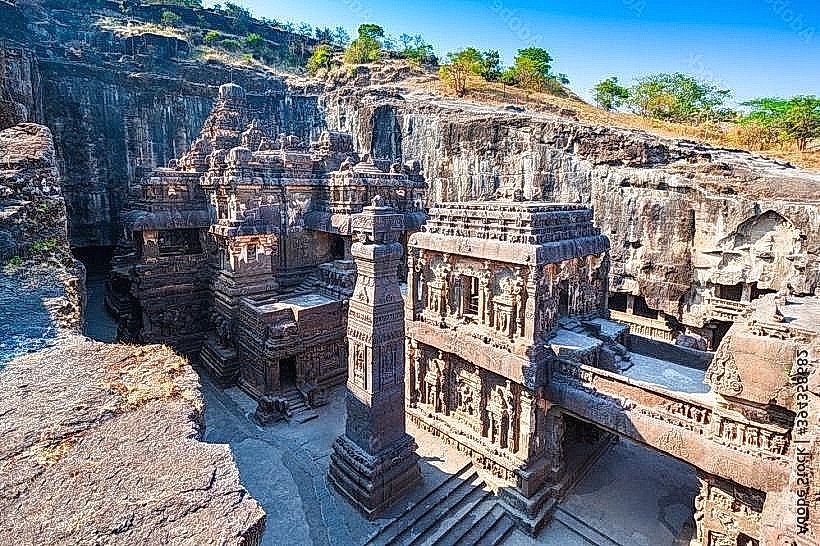
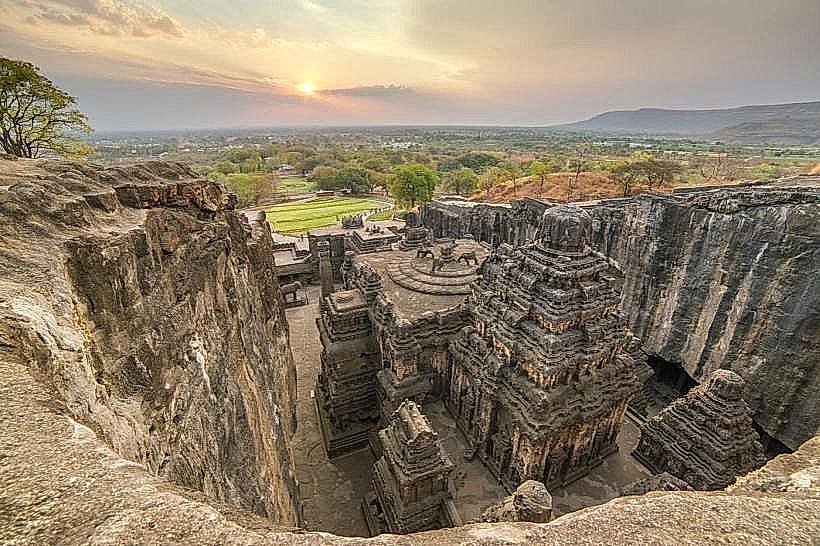
The caves are carved directly into basalt rock faces. The structures exhibit intricate relief sculptures and architectural details, including pillars, courtyards, and multi-story facades. Colors are primarily the natural grey-brown of the rock, with remnants of ancient paint visible in some areas. The scale varies significantly, from smaller monastic cells to the monumental Kailasa Temple (Cave 16), a monolithic structure carved top-down.
Location & Access Logistics
Ellora Caves are situated approximately 29 kilometers northwest of Aurangabad city. Access is via State Highway 2001 (Aurangabad-Paithan Road), then turning onto Ellora Caves Road. Amravati is not the closest major city; Aurangabad is the primary gateway. Parking is available at designated lots near the cave complex entrance. Aurangabad is served by a domestic airport and railway station. Local buses and auto-rickshaws connect Aurangabad to Ellora.
Historical & Ecological Origin
The caves were excavated during the Kalachuri, Chalukya, and Rashtrakuta dynasties. The primary purpose was to create monastic dwellings and places of worship for ascetics and monks of different religious orders. The geological origin is the Deccan Plateau's basalt rock, a result of ancient volcanic activity.
Key Highlights & Activities
Exploration of all 34 caves is the primary activity. Specific highlights include the Kailasa Temple (Cave 16), the Dashavatara Temple (Cave 15), the Indra Sabha (Cave 32), and the Jagannatha Sabha (Cave 33). Photography is permitted, though flash may be restricted in certain areas. Visitors can walk through the excavated chambers and observe the detailed carvings.
Infrastructure & Amenities
Restrooms are available at the entrance complex. Shade is provided by the rock overhangs within the caves and some artificial coverings in open areas. Cell phone signal (4G/5G) is generally available. Food vendors and small eateries are located outside the main entrance to the site.
Best Time to Visit
The best time of day for photography is generally in the morning or late afternoon when the sunlight casts longer shadows, highlighting the relief sculptures. The optimal months for visiting are from October to March, avoiding the monsoon season (June-September) and the extreme heat of April and May. There are no tide-specific requirements.
Facts & Legends
The Kailasa Temple (Cave 16) is a remarkable feat of engineering, carved from a single piece of rock. It is believed to have been constructed by a single king, Krishna I, in the 8th century CE. A local legend suggests that the temple was built in a remarkably short period, with workers excavating from the top down, completing it in just 18 years.
Nearby Landmarks
- Aurangabad Caves (18km Southwest)
- Daulatabad Fort (22km Southwest)
- Bibi Ka Maqbara (27km Southwest)
- Panchakki (29km Southwest)