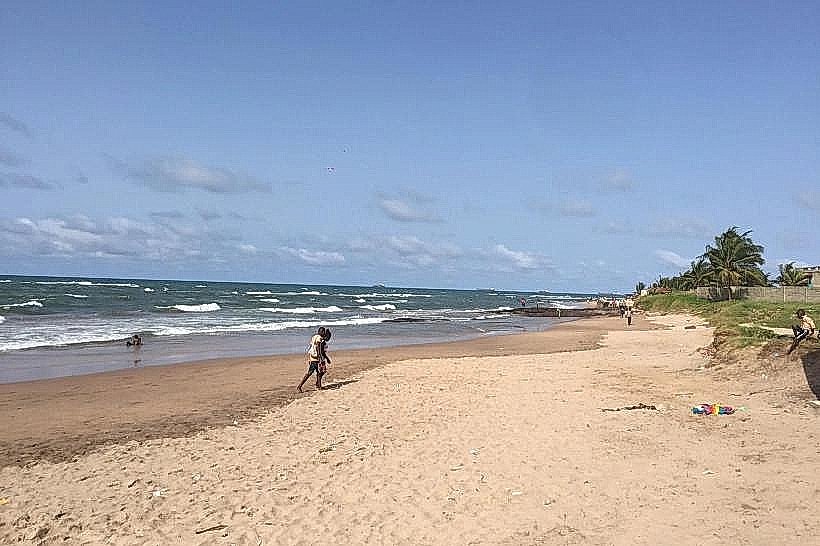
Landmark: Fort Orange (Fort Jakin)
City: Sekondi Takoradi
Country: Ghana
Continent: Africa
Fort Orange (Fort Jakin), Sekondi Takoradi, Ghana, Africa
Fort Orange (originally Fort Jakin) is a historic military fortification situated on a rocky promontory in Sekondi, Ghana. Established in the 17th century, it served as a strategic trading post and defensive structure during the colonial era and currently functions as a lighthouse and naval signaling station.
Visual Characteristics
The fort follows a classic quadrilateral plan with four bastions at the corners. It is constructed from masonry and local stone, finished with a white lime wash that contrasts with the surrounding industrial landscape of Sekondi. The structure features thick defensive walls, narrow arched gateways, and elevated platforms that provide an unobstructed view of the Gulf of Guinea. A modern lighthouse tower is integrated into the complex, projecting above the original battlements.
Location & Access Logistics
The site is located in the Sekondi Central district, positioned on a cliff overlooking the Atlantic Ocean.
Access: It is approximately 1.5km east of the Sekondi Railway Station and a 15-minute drive from the Takoradi Market Circle.
Transport: Visitors can reach the fort via taxi or "tro-tro" heading toward Sekondi "Beach."
Entry: As the building is managed by the Ghana Ports and Harbours Authority (GPHA) and used for maritime signaling, access to the interior often requires permission from the officers on duty.
Historical & Economic Origin
The fort was established by the Dutch West India Company in 1642 primarily as a trading post for gold and later as a slave dungeon.
Colonial Conflict: The site was a point of contention between the Dutch and the English, who maintained a rival trading lodge nearby.
Transfer of Power: In 1872, the fort was ceded to the British along with other Dutch possessions on the Gold Coast.
Function Shift: After the abolition of the slave trade, the fort was repurposed for administrative use and eventually became a lighthouse to guide vessels into the Sekondi roads and the later-developed Takoradi Harbour.
Key Highlights & Activities
Maritime Observation: The bastions offer a panoramic view of the Sekondi coastline, including the naval dockyards and local fishing harbors.
Architecture Study: Visitors can examine the original Dutch masonry and the structural modifications made during the British colonial period.
Historical Narrative: Local caretakers or GPHA staff provide insights into the fort's role in the trans-Atlantic slave trade and its transition into a navigational hub.
Infrastructure & Amenities
The fort is a functional government installation rather than a developed tourist park.
Facilities: There are no formal museums, gift shops, or public cafes within the walls.
Connectivity: 4G/5G cellular signal is exceptionally strong due to the elevated coastal position.
Safety: The perimeter is secure, but visitors should exercise caution on the steep cliffs surrounding the base of the fort.
Best Time to Visit
The best time to visit is during weekday business hours (09:00–16:00) when personnel are available to facilitate entry. For photography, the late afternoon (16:00–17:30) provides optimal lighting on the white walls and clear views of the ocean horizon. The dry season (November to March) is preferred to avoid coastal storms.
Facts & Legends
Local tradition suggests that the fort sits atop a network of underground tunnels once used to transport captives directly to waiting ships, though many of these have been sealed or reclaimed by the sea. A unique historical fact is that Fort Orange is one of the smaller, more compact forts on the Ghanaian coast, designed specifically for rapid defense against rival European trading companies rather than large-scale inland invasions.
Nearby Landmarks
Bisa Aberwa Museum – 1.6km West
Sekondi Railway Station – 1.5km West
Sekondi Fishing Harbour – 0.5km South
Efia Nkwanta Regional Hospital – 1.8km West
Takoradi Harbour – 9km Southwest