Information
Landmark: Fort St. AngeloCity: Birgu
Country: Malta
Continent: Europe
Fort St. Angelo, Birgu, Malta, Europe
Visual Characteristics
The fort is constructed predominantly from local limestone, exhibiting colors ranging from light ochre to greyish-white. Its structure incorporates medieval castle elements heavily modified into a bastioned fort, reflecting Renaissance military architecture. Key features include thick curtain walls, multiple bastions, cavaliers, and a surrounding ditch. The highest points of the fort reach approximately 60 meters above sea level at the Cavalier.
Location & Access Logistics
Fort St. Angelo is located at the easternmost point of the Birgu (Vittoriosa) peninsula, within the Grand Harbour. It is approximately 5 km by road from Valletta city center. Access by road is via Triq il-Mina l-Kbira in Birgu. Limited street parking is available in Birgu, with a public car park situated near the Birgu Waterfront, approximately 0.8 km from the fort entrance. Public transport options include bus routes 2, 3, or 4 from Valletta to Birgu, requiring a 10-15 minute walk from the Birgu Centre stop. A ferry service operates from Lascaris Wharf in Valletta to Birgu Waterfront, which is a 10-minute walk to the fort. Water taxis (dghajsa) are also available from Valletta's Grand Harbour.
Historical & Ecological Origin
The site of Fort St. Angelo has been fortified since Roman times. The earliest identifiable structures of the current fort date to the medieval period, specifically the 13th century. Significant rebuilding and expansion occurred from 1530 onwards under the Knights of St. John, notably by Grand Master Jean de Valette. Architects involved included Niccolò Bellavanti in the 1540s and Francesco Laparelli post-Great Siege. Its original purpose was a defensive stronghold and the headquarters for the Knights of St. John until the construction of Valletta, later serving as a British naval base.
Key Highlights & Activities
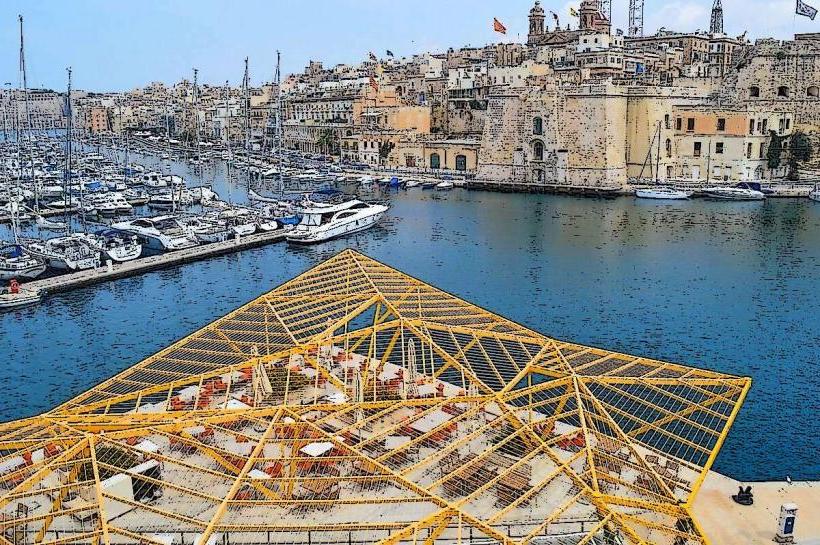
Visitors can explore the fort's upper and lower levels, including the Grand Master's House and the Chapel of the Nativity of Our Lady. Walking along the ramparts provides panoramic views of the Grand Harbour, Valletta, and the Three Cities. Specific bastions such as De Guirial Battery and St. Angelo Cavalier are accessible. The fort occasionally hosts historical re-enactments and cultural events.
Infrastructure & Amenities
Restrooms are available within the fort complex. Shade is limited in open courtyards and along the ramparts, though interior spaces offer cover. Cell phone signal (4G/5G) is generally reliable throughout the site. A small cafe operates within the fort. Additional restaurants and cafes are located at the Birgu Waterfront, approximately 0.5 km away.
Best Time to Visit
For photography, early morning or late afternoon offers softer light and reduced shadows on the harbor views. The months of April to June and September to October provide moderate temperatures and lower humidity, making them ideal for visits. July and August are typically hot. Tide requirements are not applicable for this land-based fort.
Facts & Legends
During the Great Siege of Malta in 1565, Fort St. Angelo, then known as the Castrum Maris, played a pivotal role by withstanding repeated Ottoman assaults and bombarding enemy positions, contributing significantly to the Knights' victory. A local legend recounts the presence of a "Grey Lady," believed to be the ghost of a noblewoman imprisoned and executed within the fort's walls.
Nearby Landmarks
- Inquisitor's Palace: 0.3 km West
- Malta Maritime Museum: 0.4 km West
- St. Lawrence's Church: 0.2 km West
- Birgu Waterfront: 0.5 km West
- Gardjola Gardens: 0.6 km East