Landmark: Ghent University
City: Ghent
Country: Belgium
Continent: Europe
Ghent University, Ghent, Belgium, Europe
Ghent University (UGent) is a public research university and one of the largest higher education institutions in Belgium. Founded in 1817, it consistently ranks among the top 100 universities globally.
Visual Characteristics
The university is integrated into the urban fabric of Ghent rather than being a closed campus. Key architectural sites include:
The Aula Academica: A Neoclassical landmark on Volderstraat featuring an eight-columned portico and a grand ceremonial hall.
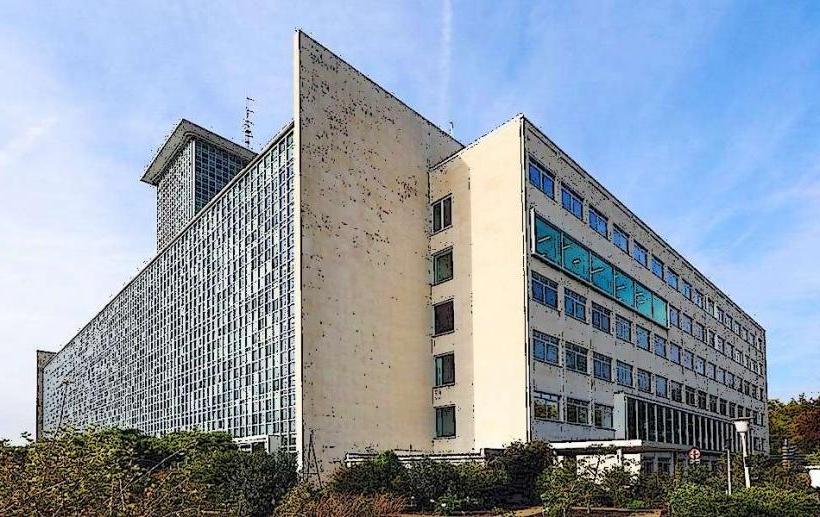
The Boekentoren (Book Tower): A 64-meter Henry van de Velde-designed Modernist concrete tower housing the university library.
The Plateau Complex: A massive 19th-century brick structure housing the Faculty of Engineering and Architecture.
UFO (Universiteitsforum): A modern, transparent glass and steel building used for large-scale lectures and administration.
Location & Access Logistics
The university facilities are concentrated in the southern and central districts of Ghent.
Central Hub: The Rectorate and Aula are located in the historic center (Volderstraat/Sint-Pietersnieuwstraat).
Science Campus: The "Ledeganck" and "Sterre" campuses are located further south near the Citadelpark and the R4 ring road.
Public Transport: Most sites are accessible via Trams T1 and T3 or city buses from Gent-Sint-Pieters railway station.
Historical Origin
Ghent University was established by King William I of the Netherlands on October 9, 1817. Following the Belgian Revolution in 1830, the university was administered by the Belgian state. In 1930, it became the first university in Belgium to adopt Dutch as its primary language of instruction, a pivotal moment in the Flemish movement.
Key Highlights & Activities
Boekentoren Library: Contains over 3 million volumes and offers a panoramic view of Ghent from the "Belvedere" top floor (restricted access).
GUM (Ghent University Museum): A science museum located in the Botanical Garden featuring eclectic botanical, medical, and ethnographic collections.
Research Output: The university is a leading hub for biotechnology, veterinary medicine, and photonics.
Student Life: With over 50,000 students, the university drives the city's economy and evening culture, particularly in the Overpoort district.
Infrastructure & Amenities
The university operates multiple student restaurants (Resto) and cafes across its campuses. High-speed "eduroam" Wi-Fi is available in all buildings. Most modern facilities are fully wheelchair accessible, though some historic buildings (like the Plateau) have restricted access. 5G signal is consistent across all urban campus sites.
Best Time to Visit
The exterior of the Aula and Boekentoren can be viewed 24/7. The GUM and Botanical Garden are open daily (except Thursdays) from 10:00 to 17:00. To experience the academic atmosphere, visit during the semester (September–December and February–May).
Facts & Legends
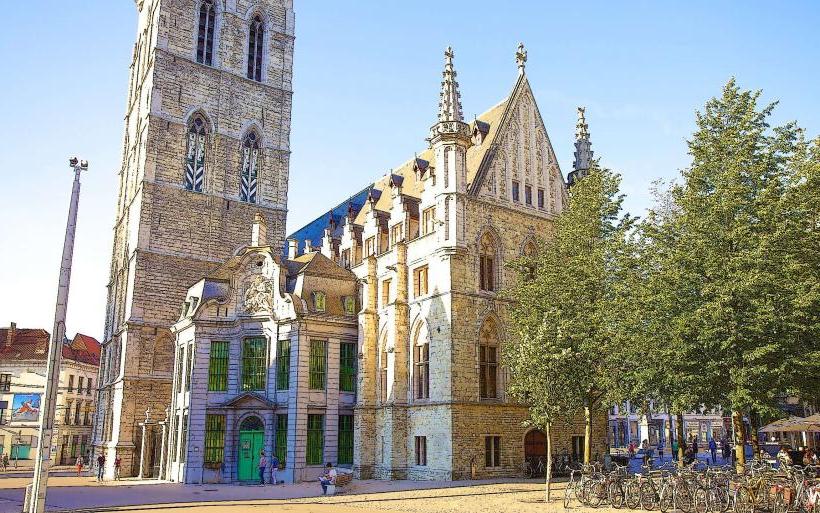
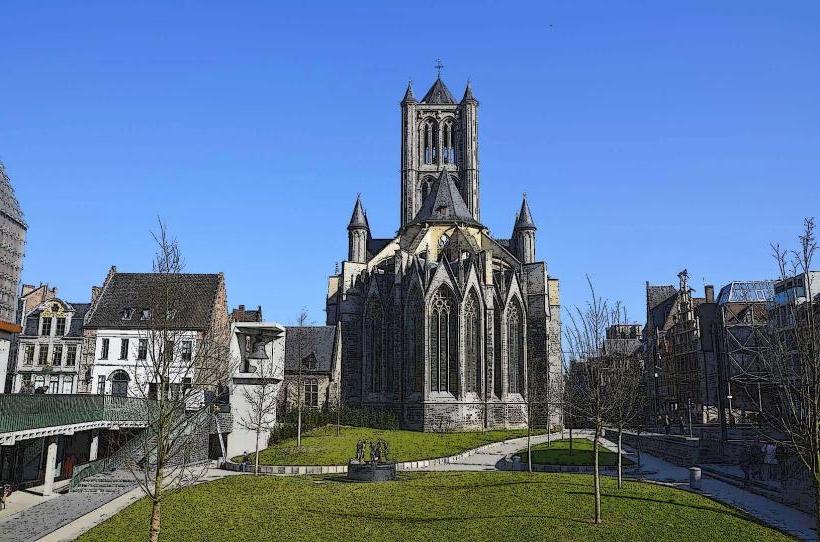
Ghent University is the alma mater of Nobel Prize winners Corneille Heymans (Medicine) and Maurice Maeterlinck (Literature). A verified historical detail is that the Boekentoren was designed by Henry van de Velde to be a "fourth tower" for the city, complementing the medieval skyline of the Belfry, St. Bavo's, and St. Nicholas'.
Nearby Landmarks
St. Peter's Abbey – 0.2km South of the Rectorate
Citadelpark – 0.8km South of the Center
Vooruit (Arts Center) – 0.1km East of the UFO building
Korenmarkt – 0.4km North of the Aula
STAM (Ghent City Museum) – 1.0km Southwest