Landmark: Gobustan Mud Volcanoes
City: Gobustan
Country: Azerbaijan
Continent: Asia
Gobustan Mud Volcanoes, Gobustan, Azerbaijan, Asia
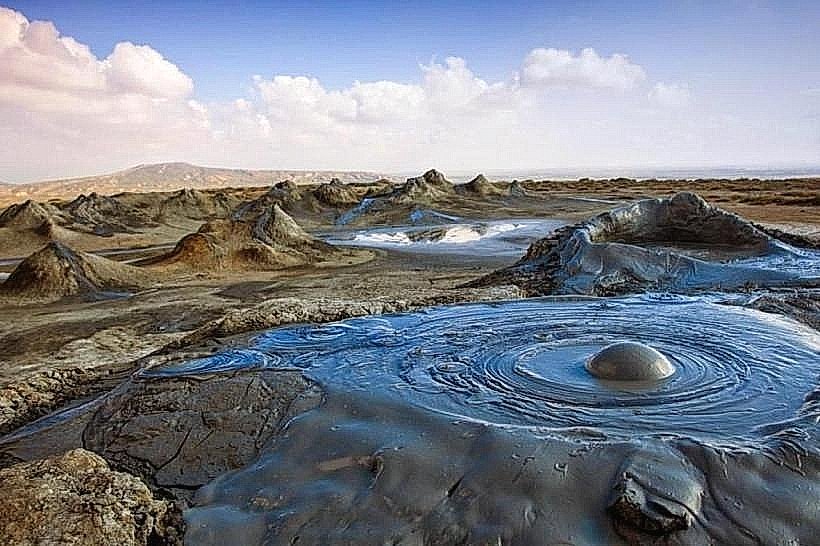
The Gobustan Mud Volcanoes are a geological formation located in the Gobustan National Park, Azerbaijan. This site features numerous active mud volcanoes that periodically erupt.
Visual Characteristics
The landscape is characterized by conical mounds of dried mud, ranging in size from small puddles to structures several meters high. Active volcanoes emit grey, viscous mud, often accompanied by gas bubbles. The surrounding terrain is arid and rocky, with sparse vegetation.
Location & Access Logistics
The site is situated approximately 65 kilometers southwest of Baku. Access is via the M3 highway towards Alat, then turning onto the P23 road towards Gobustan. The final approach to the mud volcanoes is via unpaved tracks, requiring a vehicle with adequate ground clearance or a local guide with appropriate transport. Parking is available at designated points near the main cluster of volcanoes. Public transport to Gobustan National Park is limited; bus services operate to the town of Gobustan, but onward travel to the volcanoes necessitates private transport.
Historical & Ecological Origin
The mud volcanoes are a result of geological processes involving hydrocarbon deposits and underground water. The region is part of the Greater Caucasus fold belt, where tectonic activity influences subsurface fluid movement. These formations are classified as pseudovolcanic activity, driven by gas pressure rather than molten rock.
Key Highlights & Activities
Observation of active mud eruptions is the primary activity. Visitors can walk among the formations. Photography of the unique geological features is common. Guided tours are available from local operators, providing context on the geological processes.
Infrastructure & Amenities
Basic visitor facilities are present at the entrance to Gobustan National Park, including restrooms and a small information center. Shade is minimal within the mud volcano field itself. Cell phone signal (4G/5G) is generally available in the vicinity of the park entrance but can be intermittent closer to the volcanoes. Food vendors are not typically found directly at the mud volcano site; options are available in the town of Gobustan or back towards Baku.
Best Time to Visit
The best time of day for photography is during the early morning or late afternoon when the sun's angle creates distinct shadows. The most favorable months for visiting are April through June and September through October, offering moderate temperatures. Eruptions are unpredictable and can occur at any time.
Facts & Legends
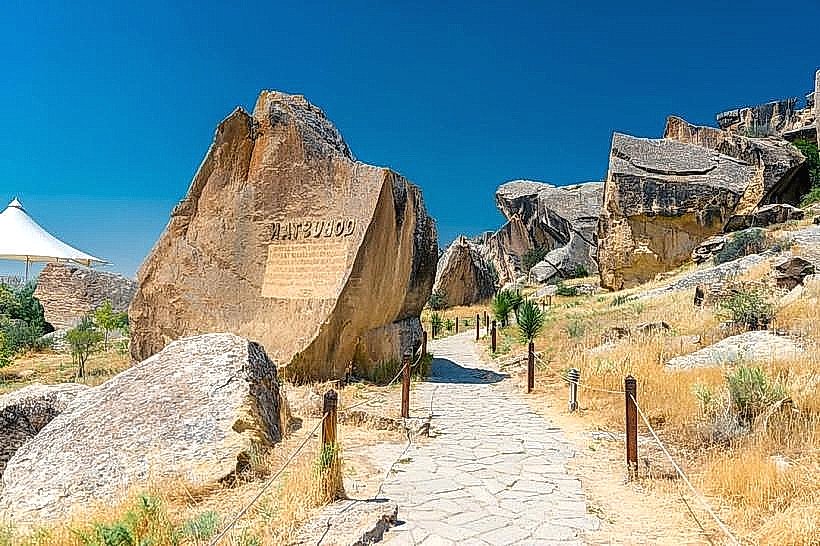
The mud from these volcanoes is believed by some locals to have therapeutic properties. The region is also known for its ancient rock carvings (petroglyphs), which predate the mud volcanoes themselves, indicating a long history of human presence in the area.
Nearby Landmarks
- Gobustan National Park (Petroglyphs) - 1km North
- Bibi-Heybat Mosque - 40km East
- Ateshgah Fire Temple - 50km Northeast
- Yanar Dag (Burning Mountain) - 55km Northeast
- Baku Boulevard - 65km East