Landmark: Hallstatt Village
City: Salzburg
Country: Austria
Continent: Europe
Hallstatt Village, Salzburg, Austria, Europe
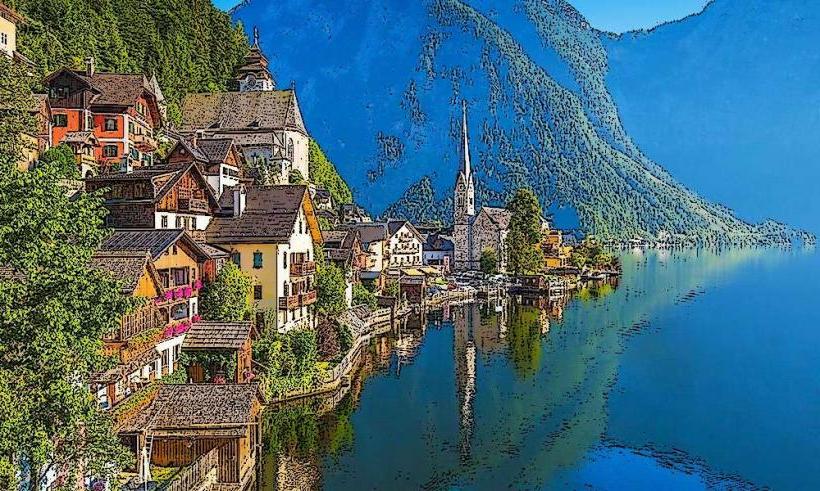
Hallstatt is a historic village on the western shore of Lake Hallstatt in the Salzkammergut region. While frequently accessed from Salzburg, it is located in the state of Upper Austria, approximately 75 km (47 miles) southeast of Salzburg. It is a UNESCO World Heritage site.
Visual Characteristics
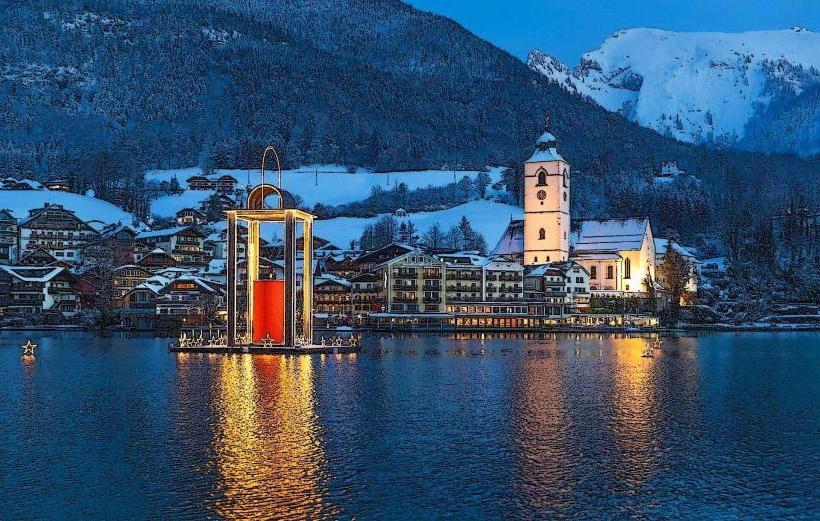
The village is defined by its extreme verticality; traditional 16th-century Alpine houses are built into the steep slopes of the Dachstein massif, often appearing stacked on top of one another. The village features narrow, winding alleys, a central market square with pastel-colored facades, and the iconic spire of the Evangelical Church on the waterfront.
Location & Access Logistics
From Salzburg:
Rail: Train from Salzburg Hbf to Hallstatt station (via Attnang-Puchheim). The station is on the opposite side of the lake; a ferry (Stefanie) meets every train to transport passengers to the village.
Bus: Postbus 150 to Bad Ischl, then train or bus 542/543.
Car: Via the B158 and B145.
Parking: The village center is car-free. Visitors must use designated parking lots (P1, P2) outside the center and use the shuttle service or walk.
Historical & Ecological Origin
Hallstatt is home to the world's oldest salt mine, with salt production dating back over 7,000 years. This wealth led to a distinct archaeological period named the Hallstatt Culture (Early Iron Age, approx. 800–450 BC). Geologically, the village is wedged between the lake and the salt-rich mountains of the Northern Limestone Alps.
Key Highlights & Activities
Hallstatt Salt Mine (Salzwelten): Accessible via funicular; features an underground salt lake and a 64-meter wooden slide.
Skywalk Hallstatt: A viewing platform 350 meters above the village offering a "World Heritage View."
The Ossuary (Beinhaus): Located in St. Michael’s Chapel, it contains over 1,200 human skulls, many hand-painted with floral motifs and dates.
Lake Hallstatt: Popular for electric boat rentals and swimming in summer.
Infrastructure & Amenities
Accessibility: The main lakeside road is level, but most side streets involve steep stairs. The funicular to the salt mine is barrier-free.
Overtourism: Due to high visitor density, the village has implemented capacity management. Early arrival is recommended.
Connectivity: Reliable 5G/4G coverage.
Best Time to Visit
Early Morning: Before 09:00 to avoid the arrival of international tour buses.
Winter: Highly picturesque under snow, though some hiking trails and boat services are restricted.
Shoulder Season: May or September for optimal hiking weather and reduced crowds.
Facts & Legends
A full-scale replica of Hallstatt was built in Huizhou, China, in 2012. Technically, the salt mine is still operational today, with brine transported via the world's oldest pipeline (dating to 1595) to the refinery in Ebensee.
Nearby Landmarks
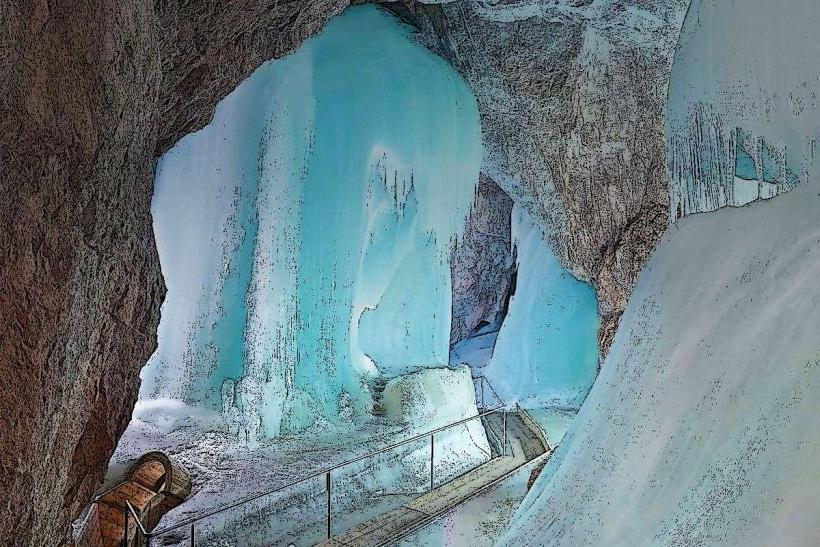
Dachstein Krippenstein – 5 km (Five Fingers viewing platform and Giant Ice Cave)
Bad Ischl – 20 km North (Imperial Villa)
Gosau Lakes – 15 km West
Obertraun – 4 km Southeast (at the opposite end of the lake)