Landmark: Hikkaduwa Coral Reef
City: Hikkaduwa
Country: Sri Lanka
Continent: Asia
Hikkaduwa Coral Reef, Hikkaduwa, Sri Lanka, Asia
The Hikkaduwa Coral Reef is a protected marine sanctuary located off the coast of Hikkaduwa, Sri Lanka. It is a significant area for marine biodiversity and a popular destination for water-based activities.
Visual Characteristics
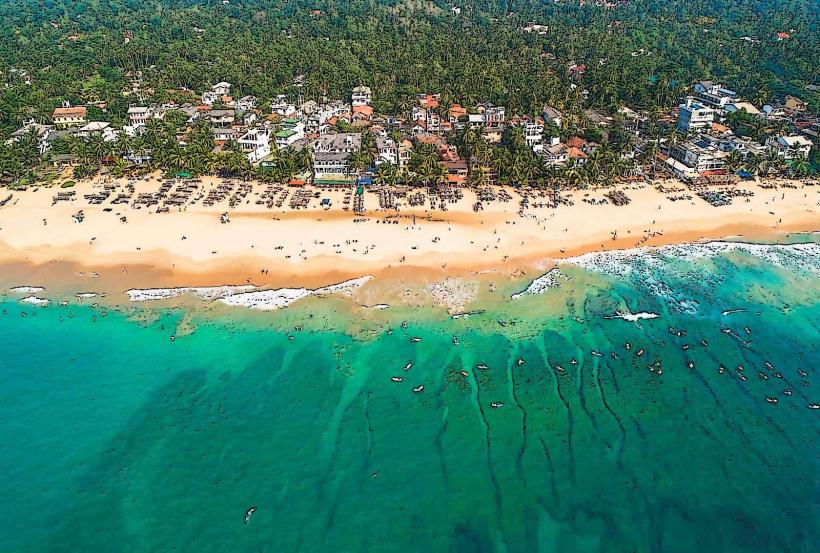
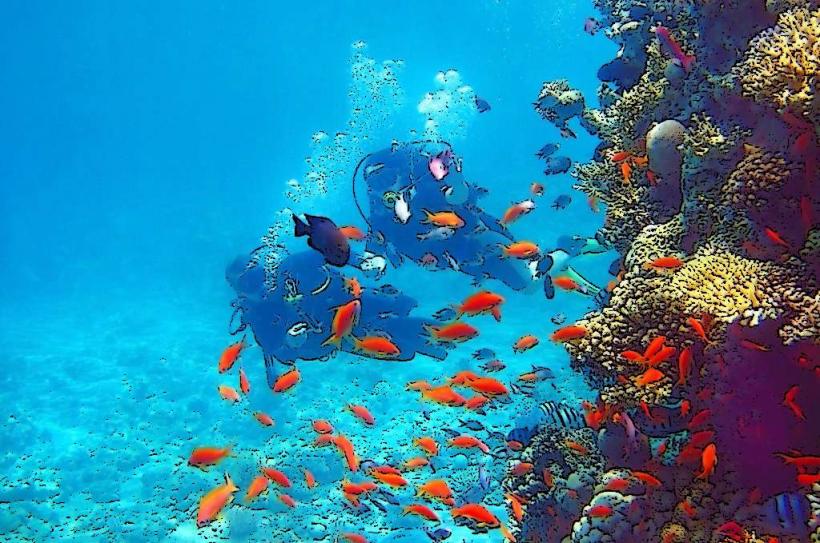
The reef comprises a variety of hard and soft corals, including branching, massive, and encrusting forms. Water clarity varies but is generally good, allowing visibility of reef structures and marine life. The seabed consists of sand and rocky outcrops. Surrounding vegetation is typical of coastal Sri Lanka, with palm trees lining the shore.
Location & Access Logistics
The reef is situated approximately 1.5 kilometers offshore from Hikkaduwa town. Access is primarily via boat from Hikkaduwa Beach. Boat operators can be found along the main Galle Road (A2). The journey to the reef takes approximately 10-15 minutes. There is no direct road access to the reef itself. Parking is available along Galle Road in Hikkaduwa, with various paid parking lots.
Historical & Ecological Origin
The Hikkaduwa Coral Reef is a natural formation, classified as a fringing reef system. Its ecological significance lies in its role as a habitat for a diverse range of marine species. The area was declared a Marine Sanctuary in 1979 to protect its fragile ecosystem from overfishing and damage.
Key Highlights & Activities
Snorkeling and scuba diving are the primary activities. Visitors can observe a variety of reef fish, sea turtles, and coral formations. Glass-bottom boat tours are available for viewing the reef without entering the water. Swimming is possible in designated areas, particularly closer to shore.
Infrastructure & Amenities
Basic amenities are available on the mainland in Hikkaduwa town, including restaurants and shops. Restrooms and changing facilities are typically found at beachside establishments. Cell phone signal (4G) is generally available along the coast. There are no direct amenities on the reef itself.
Best Time to Visit
The best time for visibility and calm seas is generally from November to April, during the dry season. Mornings often offer better light for underwater photography. High tide is generally preferred for snorkeling and diving to ensure adequate water depth over the coral.
Facts & Legends
A notable historical oddity is the significant damage the reef sustained from the 2004 Indian Ocean tsunami, which impacted its structure and biodiversity. Conservation efforts are ongoing to aid its recovery. A local tip is to be aware of boat traffic and to always use a reputable boat operator.
Nearby Landmarks
- Galle Fort (15km South)
- Koggala Lake (20km South)
- Mirissa Whale Watching (30km South)
- Unawatuna Beach (12km South)
- Japanese Peace Pagoda (13km South)