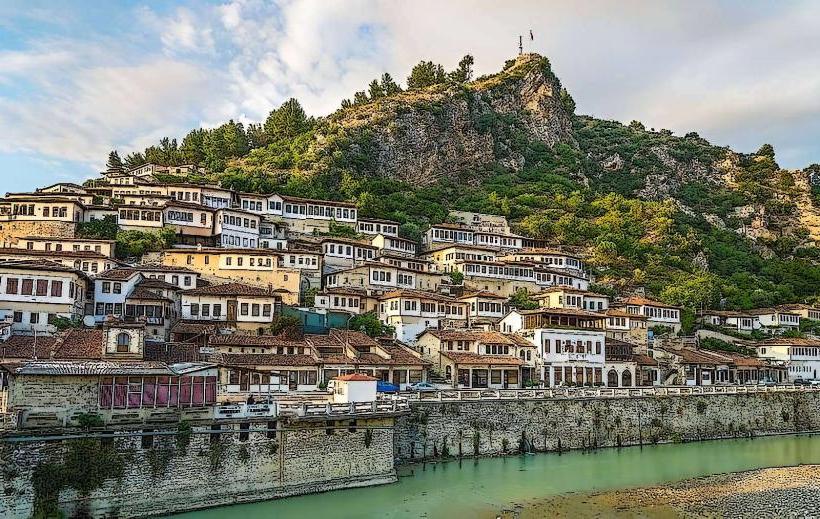
Landmark: Holy Trinity Church
City: Berat
Country: Albania
Continent: Europe
Holy Trinity Church, Berat, Albania, Europe
The Holy Trinity Church is a 13th-century Byzantine church situated on a steep slope within the southern fortifications of Berat-castle_berat" class="underline">Berat Castle. It is widely considered one of the most successful examples of Byzantine architecture in Albania due to its structural proportions and integration with the rugged terrain.
Visual Characteristics
The church is a cross-in-square building featuring a high octagonal dome supported by four columns. Its exterior displays the "cloisonné" masonry technique, which utilizes alternating layers of red brick and light-colored limestone blocks. The windows are framed with decorative brick arches, and the roof is covered in traditional terracotta tiles. The interior contains fragments of 14th-century frescoes and a floor paved with simple stone slabs.
Location & Access Logistics
The structure is located in the southwestern sector of the Berat Castle (Kala) complex, positioned directly above the Mangalem Quarter. It is accessed by entering the main gate of the castle and following the cobblestone paths toward the southern perimeter walls. The "Kala" bus line provides transport from the city center to the castle entrance, after which visitors must complete a 400-meter walk on uneven, steep terrain.
Historical & Ecological Origin
The church was constructed between the late 13th and early 14th centuries during the reign of the Byzantine Emperor Andronikos II Palaiologos. It was built atop a limestone cliff, utilizing the natural elevation for defensive and symbolic purposes. The building has survived multiple seismic events and the atheistic campaigns of the 20th century, retaining its original Byzantine form with minimal Ottoman-era modifications.
Key Highlights & Activities
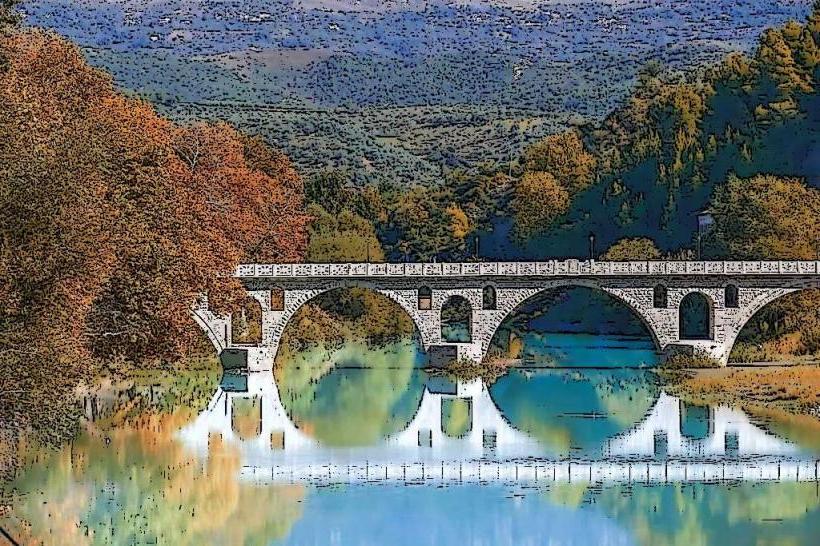
Visitors can walk around the exterior to observe the intricate brickwork and the transition from the square base to the octagonal drum of the dome. The surrounding hillside offers one of the best vantage points for viewing the Gorica Bridge and the Osum River valley. While the interior is often locked to preserve the delicate frescoes, the site is a primary stop for architectural photography and historical tours of the fortress.
Infrastructure & Amenities
There are no modern amenities within the church itself. Public restrooms and food vendors are located near the Onufri National Museum and the residential center of the castle, approximately 250 meters away. 5G cellular signal is stable at the site. Shade is provided by the shadow of the church walls and a few nearby trees, though the approach is largely exposed to the sun.
Best Time to Visit
Photography is optimal in the late afternoon when the setting sun illuminates the western facade and the red brickwork. For clear views of the valley, morning visits are recommended before the heat haze accumulates. The church is accessible year-round, but the steep paths leading to it can be hazardous during rain or frost.
Facts & Legends
The church is built on the ruins of a much older structure, and many of the columns used in the interior were repurposed from ancient Roman or Paleo-Christian buildings. A local "secret" is the presence of an erased inscription on the northern wall that originally mentioned the name of the Byzantine governor who funded the construction.
Nearby Landmarks
Berat Castle Walls: 0.05km South
Onufri National Museum: 0.2km East
St. Mary of Blachernae Church: 0.25km Northeast
Mangalem Quarter: 0.4km South (vertical distance)
Red Mosque Ruins: 0.2km Southeast