Landmark: I-20 Wildlife Preserve
City: Midland
Country: USA Texas
Continent: North America
I-20 Wildlife Preserve, Midland, USA Texas, North America
The I-20 Wildlife Preserve is a protected natural area situated in Midland, Texas, USA.
This preserve encompasses approximately 100 acres of West Texas shrubland and wetland habitats.
Visual Characteristics
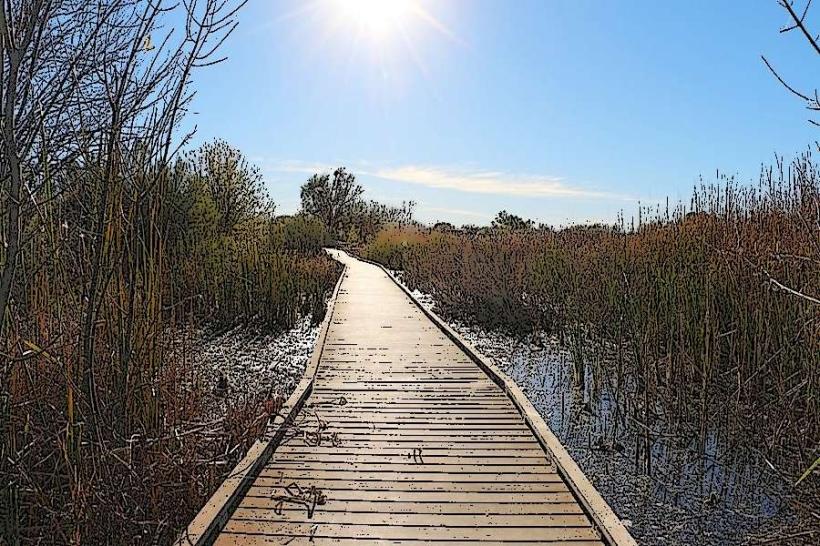
The preserve features a central pond, approximately 5 acres in size, surrounded by native grasses, mesquite trees, and various desert shrubs. Water color varies based on rainfall and sediment levels, typically appearing brown to greenish. The terrain is generally flat with some sandy and gravelly areas.
Location & Access Logistics
The I-20 Wildlife Preserve is located at 2900 South County Road 1205, Midland, Texas. It is approximately 5 miles south of downtown Midland. Access is via County Road 1205, which is paved. A dedicated parking lot is available on-site. No public transport directly serves the preserve.
Historical & Ecological Origin
The preserve was established in 1973 on land formerly owned by the University of Texas System. It functions as a crucial stopover point for migratory birds along the Central Flyway. The wetland habitat is artificial, created by impounding runoff from the adjacent Interstate 20 highway and local drainage.
Key Highlights & Activities
Birdwatching is a primary activity, with over 200 species recorded. Observation blinds are positioned around the pond. Walking trails, approximately 1.5 miles in total length, allow for exploration of the shrubland. Photography of flora and fauna is permitted.
Infrastructure & Amenities
Restrooms are available at the main entrance. Limited shade is provided by mesquite trees and a few constructed shelters. Cell phone signal (4G/5G) is generally available. No food vendors are located within the preserve; nearest options are in Midland.
Best Time to Visit
For birdwatching, early morning (dawn to 10:00 AM) and late afternoon (4:00 PM to dusk) offer the highest activity. Spring (March-May) and Fall (September-November) are optimal for observing migratory species. Summer months can be very hot.
Facts & Legends
The preserve's existence is a direct result of highway runoff management, demonstrating how infrastructure can inadvertently create ecological value. A specific tip for visitors is to bring binoculars, as many bird species are small and well-camouflaged within the dense shrubbery.
Nearby Landmarks
- Permian Basin Petroleum Museum (2.5km North)
- Midland County Horseshoe Arena (3.0km North)
- Centennial Park (4.0km North)
- Wagner & Brown Auditorium (4.5km North)