Landmark: Jinha Beach
City: Ulsan
Country: South Korea
Continent: Asia
Jinha Beach, Ulsan, South Korea, Asia
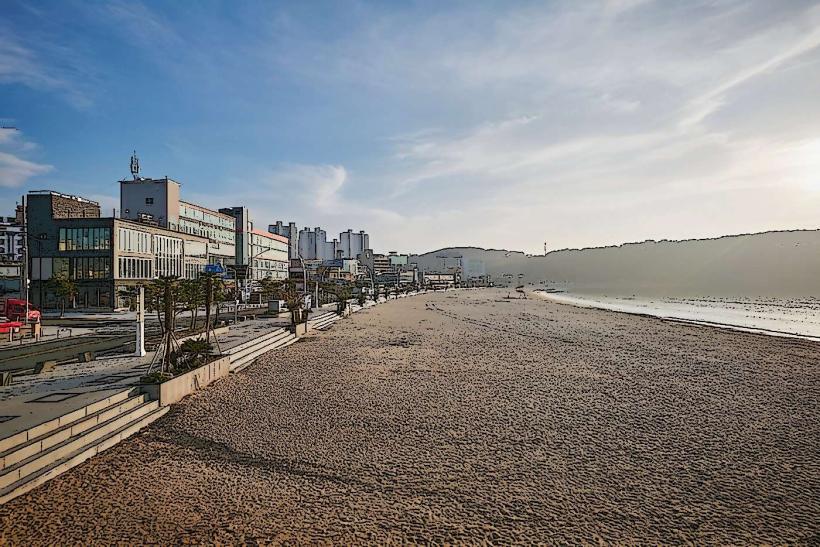
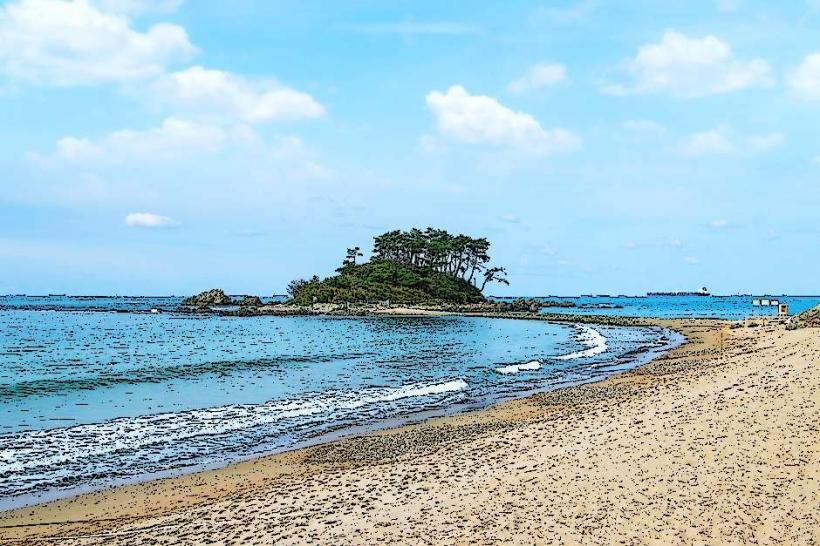
Jinha Beach is a coastal area situated in the Dong-gu district of Ulsan, South Korea. It is a crescent-shaped sandy shoreline bordered by a pine forest.
Visual Characteristics
The beach features fine, light-colored sand. The water is typically clear with moderate wave action. A dense growth of pine trees lines the landward side of the beach, providing a distinct visual boundary.
Location & Access Logistics
Jinha Beach is located approximately 15 kilometers east of Ulsan's city center. Access is via coastal road 31. Parking is available in designated lots adjacent to the beach, with capacity for approximately 200 vehicles. Public transport options include city bus lines 114 and 124, which stop within a 5-minute walk of the beach entrance.
Historical & Ecological Origin
The beach is a natural formation, shaped by coastal erosion and sediment deposition over millennia. The adjacent pine forest is a managed plantation, established to prevent coastal erosion and provide recreational space.
Key Highlights & Activities
Swimming is permitted during the designated summer season. Beach volleyball and sunbathing are common activities. The pine forest offers shaded walking paths.
Infrastructure & Amenities
Restrooms are available near the main parking area. Several food vendors operate during peak season, offering local snacks and beverages. Cell phone signal (4G/5G) is generally strong along the beach and in the immediate vicinity.
Best Time to Visit
The optimal time for visiting is during the summer months (July-August) for swimming. For photography, early morning or late afternoon light offers softer illumination. The beach is accessible year-round.
Facts & Legends
Local lore suggests that the name "Jinha" (진하) derives from the Korean word for "deep," referring to the perceived depth of the sea off its coast, though bathymetric data does not support this claim.
Nearby Landmarks
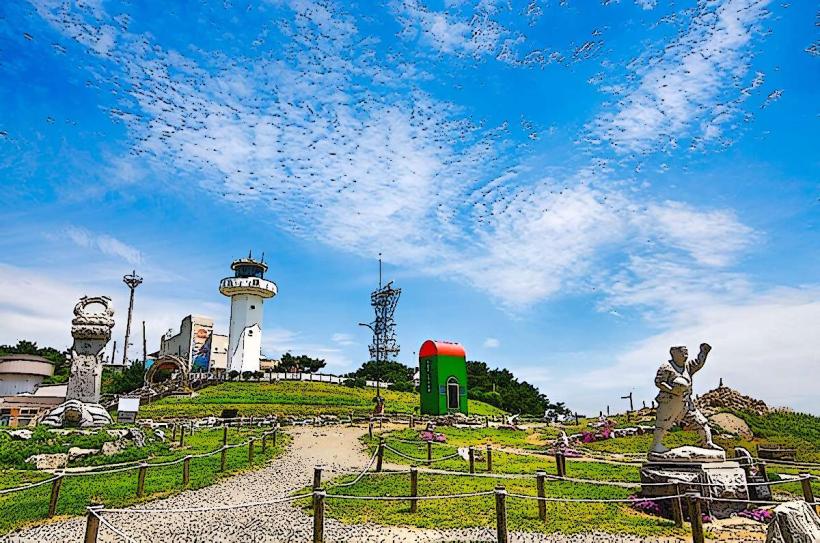
- Daewangam Park (1.2km Northeast)
- Ulsan Grand Park (8.5km West)
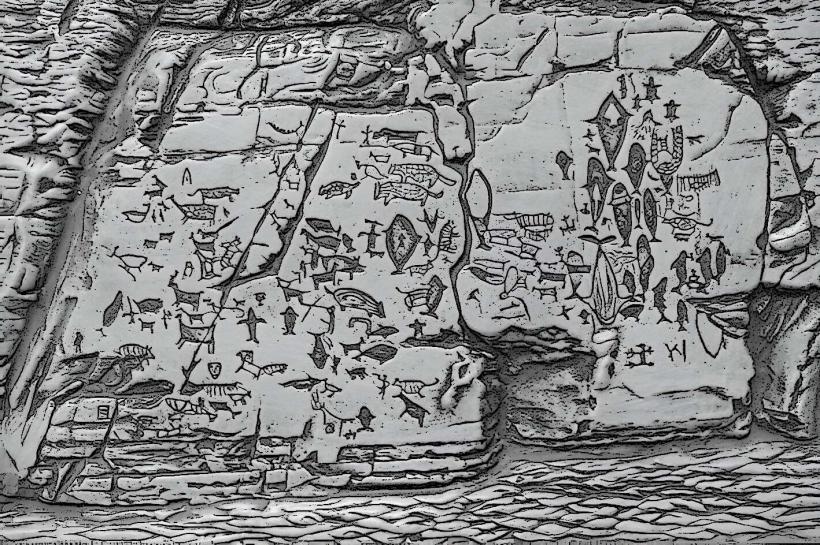
- Bangudae Petroglyphs (25km Northwest)
- Seokguram Grotto (30km Southwest)