Landmark: Jūrkalne Seashore Bluffs
City: Ventspils
Country: Latvia
Continent: Europe
Jūrkalne Seashore Bluffs, Ventspils, Latvia, Europe
Visual Characteristics
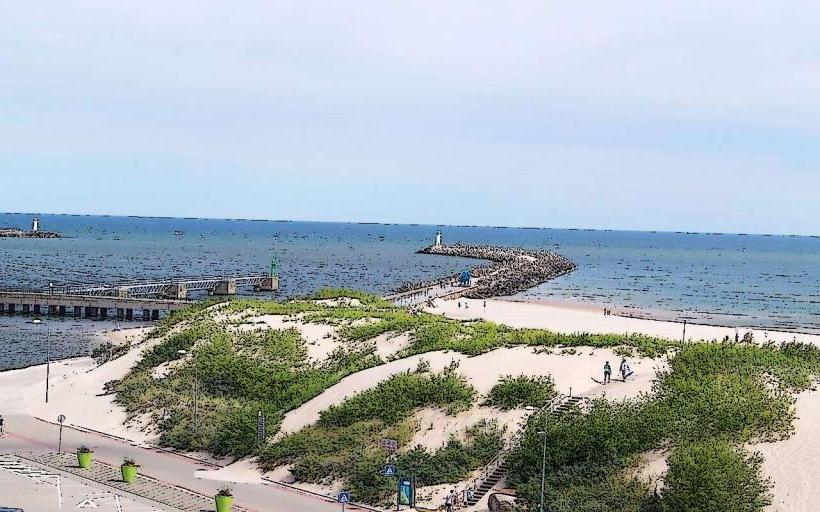
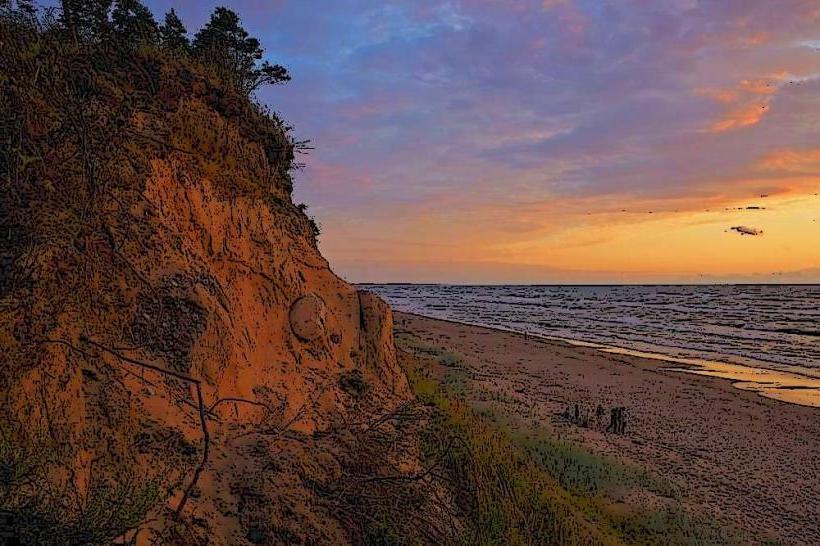
The bluffs consist of steep, sandy cliffs reaching heights of up to 20 meters above sea level. Their exposed faces reveal layers of sand, clay, and gravel, indicative of glacial deposits. The cliff tops are covered with dense pine forests and coastal vegetation, including dune grasses. The adjacent Baltic Sea water typically exhibits a greenish-grey hue, and the beach below is composed of fine to medium-grained sand, often mixed with small pebbles.
Location & Access Logistics
The bluffs are located in Jūrkalne Parish, Ventspils Municipality. From Ventspils city center, access is primarily by vehicle via the P111 regional road, heading south. The drive typically takes about 45-60 minutes. Several small, unpaved parking areas are available near the access points to the beach and bluffs, particularly around the village of Jūrkalne. Public transport options are limited; local bus services connect Jūrkalne with larger towns, but schedules are infrequent and do not provide direct access to all bluff sections.
Historical & Ecological Origin
The Jūrkalne Seashore Bluffs are a geological formation primarily composed of sediments deposited during the last Ice Age. Their current form is a result of continuous erosion by the Baltic Sea, which actively sculpts the coastline. This process exposes the stratified layers of sand and clay, making the bluffs a dynamic example of coastal geomorphology and an important site for understanding post-glacial landscape evolution.
Key Highlights & Activities
Walking along the base of the bluffs on the beach is a primary activity, allowing observation of the cliff face and its erosion patterns. Photography, especially during sunset, is popular due to the dramatic lighting on the cliffs. Birdwatching is possible, particularly during migration seasons. Swimming in the Baltic Sea is an option, though caution is advised due to potential underwater currents and falling debris from the eroding cliffs.
Infrastructure & Amenities
Infrastructure at the Jūrkalne Seashore Bluffs is minimal. There are no dedicated public restrooms directly at the bluff access points; visitors should plan accordingly. Shade is available from the pine forests atop the bluffs, but the beach itself offers limited natural shade. Cell phone signal (4G/5G) is generally available in the area. There are no permanent food vendors directly on the bluffs, but small cafes or shops can be found in the nearby village of Jūrkalne.
Best Time to Visit
The best time to visit for comfortable weather is during the summer months, from June to August, when temperatures are mildest. Spring and autumn offer fewer crowds and unique photographic opportunities with changing light and colors. For photography, late afternoon and sunset provide the most dramatic lighting on the cliff faces. Visiting during low tide allows for a wider beach area for walking along the base of the bluffs.
Facts & Legends
The Jūrkalne Seashore Bluffs are known as one of the most actively eroding coastlines in Latvia, with the cliffs receding by an average of 1 to 3 meters annually. This continuous natural process means the landscape is constantly changing. Local folklore sometimes attributes the rapid erosion to ancient spirits of the sea, reclaiming the land.
Nearby Landmarks
- Jūrkalne Lutheran Church: 1.5km East
- Jūrkalne Village Center: 2km East
- Ošvalki Manor Ruins: 4km Southeast
- Užava Lighthouse: 15km North