Information
Landmark: Kakadu National ParkCity: Darwin
Country: Australia
Continent: Australia
Kakadu National Park, Darwin, Australia, Australia
Kakadu National Park is a protected area in Australia's Northern Territory, located approximately 171 kilometers east of Darwin.
This UNESCO World Heritage site encompasses a vast landscape of wetlands, escarpments, and tropical savannas.
Visual Characteristics
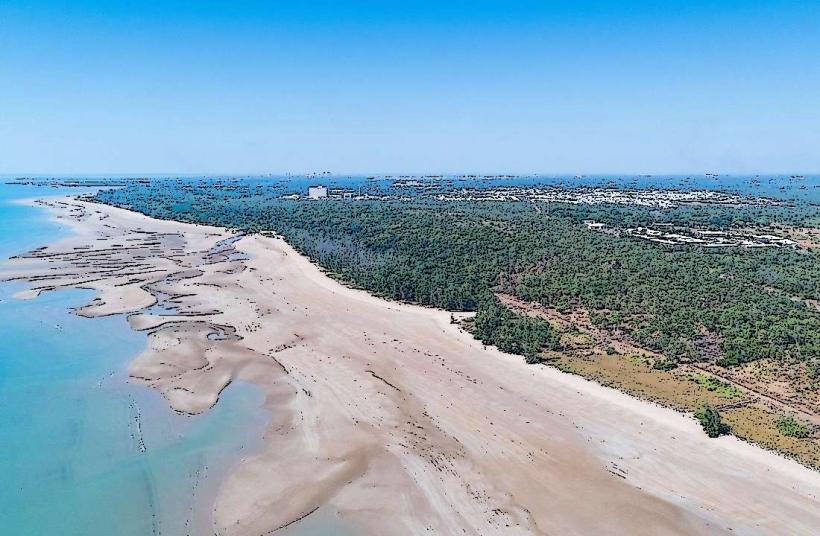
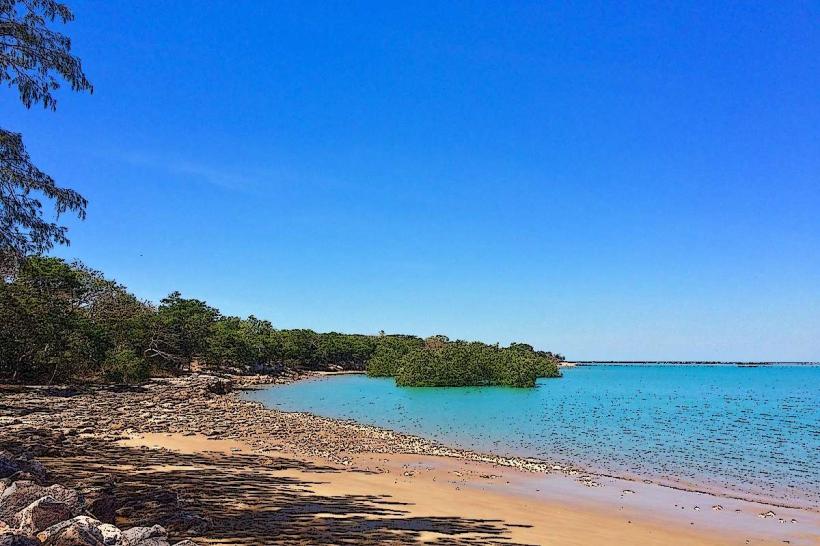
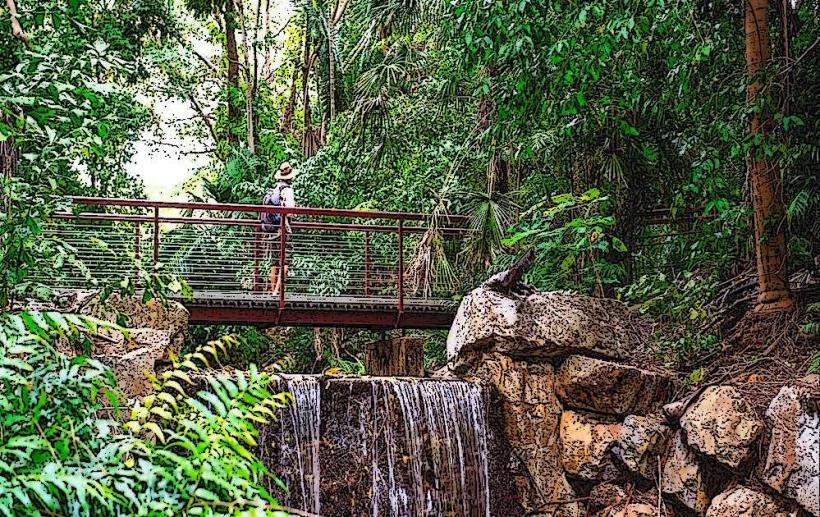
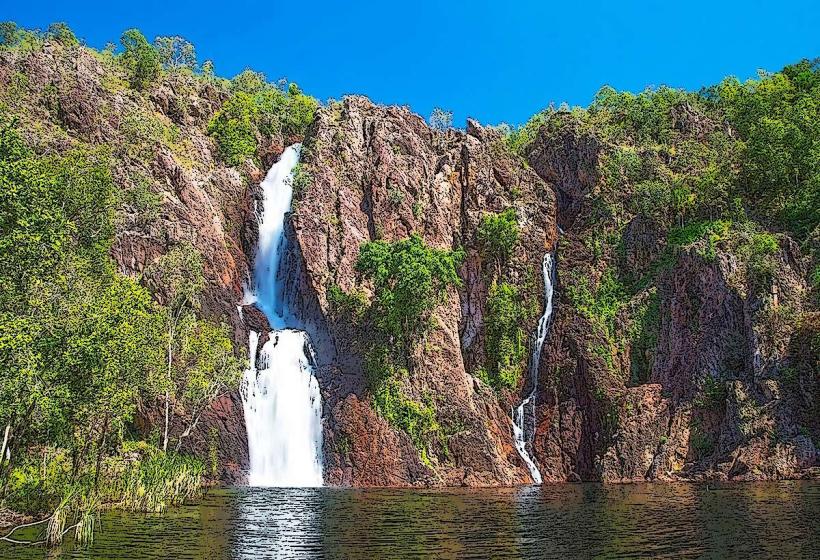
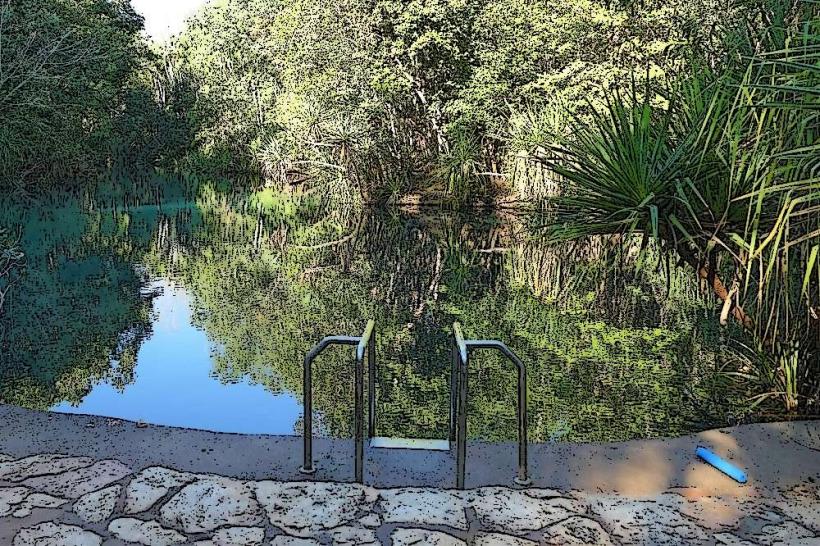
The park features extensive floodplains dominated by freshwater and saltwater wetlands, characterized by dense stands of paperbark trees and pandanus. Rocky escarpments, composed of sandstone, rise dramatically from the plains, featuring sheer cliffs and weathered rock formations. Water bodies range from clear, slow-moving rivers and billabongs to expansive tidal flats. Vegetation varies from monsoon forests in sheltered gorges to open eucalyptus woodlands and savanna grasslands.
Location & Access Logistics
Kakadu National Park is accessible via the Arnhem Highway, which extends east from Darwin. The drive from Darwin to the park entrance at Jabiru is approximately 250 kilometers and takes about 3 hours. Within the park, a network of sealed and unsealed roads provides access to various sites. The Kakadu Highway (also known as the South Alligator River Road and the East Alligator River Road) connects major attractions. 4WD vehicles are recommended for accessing some areas, particularly during the wet season. Parking is available at designated visitor areas and trailheads. Public transport options are limited; organized tours from Darwin are the primary means of access for those without private vehicles.
Historical & Ecological Origin
Kakadu National Park is a site of immense cultural significance, recognized for its continuous human habitation for over 65,000 years. It is home to the Bininj and Mungguy people, who have a deep spiritual connection to the land. Ecologically, the park is a complex mosaic of habitats shaped by geological processes and monsoonal climate patterns. Its formation involves ancient sandstone plateaus and extensive alluvial plains. The wetlands are a critical part of the regional hydrological system, influenced by tidal movements from the Timor Sea.
Key Highlights & Activities
Activities include viewing Aboriginal rock art at sites such as Ubirr and Nourlangie. Hiking is possible on marked trails, including the Jim Jim Falls track and the Twin Falls boardwalk. Boat tours operate on the Yellow Water Billabong for wildlife observation. Swimming is permitted in designated areas, such as Gunlom Falls plunge pool, with caution advised due to saltwater crocodiles in many waterways. Birdwatching is a significant activity due to the park's diverse avian population.
Infrastructure & Amenities
Restrooms are available at major visitor centers and popular sites. Shade is provided by natural vegetation and some constructed shelters at key locations. Cell phone signal (4G/5G) is intermittent and generally unavailable in remote areas; Wi-Fi is available at some accommodation providers. Food and drink options are limited to licensed premises and general stores in settlements like Jabiru and Cooinda, and at some ranger stations.
Best Time to Visit
The dry season, from May to October, offers the most favorable conditions with clear skies and accessible roads. During this period, temperatures range from 20°C to 35°C. The early dry season (May-June) is ideal for viewing waterfalls at their peak. The wet season (November to April) brings heavy rainfall, humidity, and potential road closures, though it offers lush landscapes and fewer visitors. Photography is best in the early morning and late afternoon for softer light, particularly on the escarpments and wetlands.
Facts & Legends
A significant fact is that Kakadu National Park is one of the largest national parks in Australia, covering approximately 19,804 square kilometers. A local belief is that the Rainbow Serpent, a powerful creator being in Aboriginal mythology, shaped much of the landscape, including the waterholes and rock formations.
Nearby Landmarks
- Mary River National Park (50km Southwest)
- Litchfield National Park (180km West)
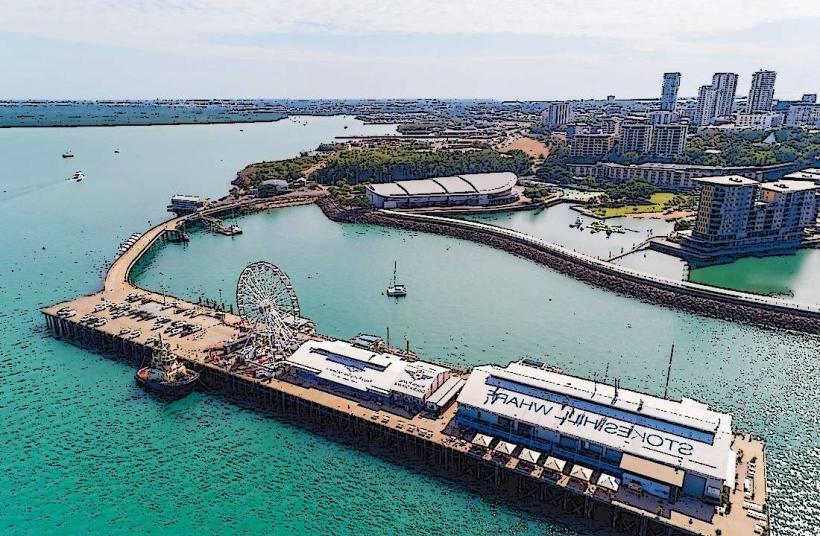
- Darwin Waterfront Precinct (171km West)
- Berry Springs Nature Park (140km West)
- Howard Springs Nature Park (150km West)