Landmark: Lake Metigoshe State Park
City: Dunseith
Country: USA North Dakota
Continent: North America
Lake Metigoshe State Park, Dunseith, USA North Dakota, North America
Lake Metigoshe State Park is a protected area located in the Turtle Mountains of North Dakota, near the Canadian border.
This park encompasses a significant portion of Lake Metigoshe, a glacial lake characterized by its numerous bays and islands.
Visual Characteristics
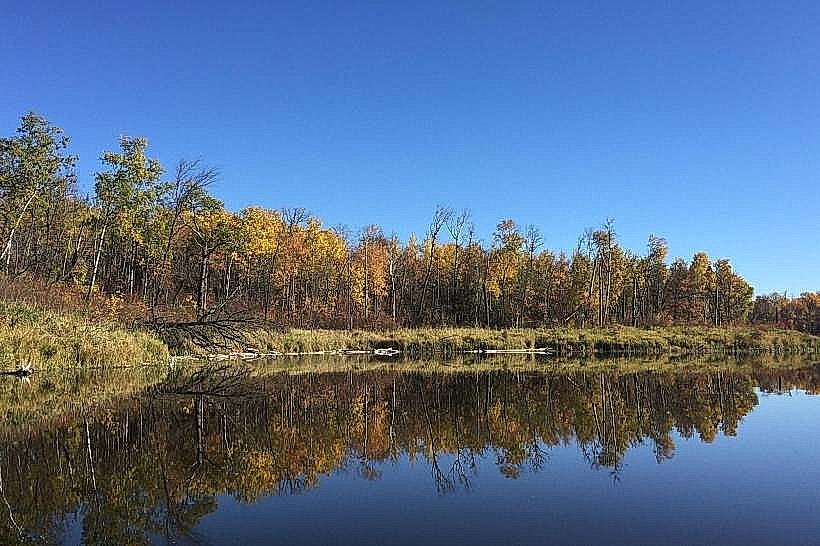
The park features a large, clear lake with a shoreline composed of sand and gravel. Surrounding the lake are rolling hills covered in dense deciduous forest, primarily aspen and oak. The terrain includes rocky outcrops and marshy areas along the lake's edge. The lake itself is a deep blue, with shallower, greener areas near the shore.
Location & Access Logistics
Lake Metigoshe State Park is situated approximately 25 miles (40 km) northwest of Dunseith, North Dakota. Access is via State Highway 43, turning north onto County Road 43. The park entrance is clearly marked. Ample parking is available at the main campground, beach area, and trailheads. No public transport services operate directly to the park.
Historical & Ecological Origin
The park was established in 1937. The lake is a product of glacial activity, specifically the Des Moines Lobe, which carved out the basin and left behind the surrounding moraine topography. The area is classified as a mixed-grass prairie transitioning into deciduous forest, supporting a diverse range of flora and fauna.
Key Highlights & Activities
Activities include boating and fishing on Lake Metigoshe. Designated swimming areas are available at the main beach. Hiking trails, such as the Turtle Mountain Trail (5 km loop) and the Lake Loop Trail (3 km loop), are accessible. The park offers opportunities for birdwatching and wildlife observation. Boat rentals are available seasonally.
Infrastructure & Amenities
Restrooms with flush toilets and showers are located at the main campground and day-use areas. Picnic shelters with tables and grills are provided. Shade is abundant within the forested areas. Cell phone signal (4G) is intermittent within the park, with better reception near the park entrance. No food vendors are located within the park; visitors should bring their own supplies.
Best Time to Visit
The best time for visiting is from late May to early October. For photography, early morning and late afternoon offer optimal lighting conditions due to the angle of the sun. Summer months (June-August) provide the warmest weather for water activities. Lake conditions are generally suitable for boating throughout the open season.
Facts & Legends
A local legend speaks of a "spirit of the lake" that protects the area's wildlife. Historically, the Turtle Mountains were a significant hunting ground for Indigenous peoples for centuries prior to European settlement.
Nearby Landmarks
- International Peace Garden: 15km Northwest
- Rolette County Historical Museum: 20km Southeast
- Bottineau Winter Park: 30km East
- Turtle Mountain Indian Reservation: 25km Southeast