Landmark: Las Salinas de Baní
City: Santo Domingo
Country: Dominican Republic
Continent: North America
Las Salinas de Baní, Santo Domingo, Dominican Republic, North America
Las Salinas de Baní is an active salt production facility utilizing solar evaporation ponds located on the southwestern coast of the Dominican Republic, near the city of Baní. This site is characterized by its extensive shallow basins where seawater is processed to extract salt.
Visual Characteristics
The landscape of Las Salinas de Baní is dominated by a series of interconnected, shallow evaporation ponds that display varying hues from clear blue to vibrant pink and reddish-brown, depending on salinity levels and the presence of halophilic microorganisms. Large mounds of harvested white salt crystals are visible, resembling snowdrifts against the coastal backdrop. The surrounding terrain is generally flat, with sparse coastal vegetation, including mangroves and low-lying shrubs, bordering the salt flats and the adjacent Caribbean Sea.
Location & Access Logistics
Las Salinas de Baní is situated approximately 80 kilometers southwest of Santo Domingo, near the town of Las Calderas and the city of Baní in the Peravia province. To access the site from Santo Domingo, take the Autopista 6 de Noviembre (DR-2) heading west towards Baní. After passing Baní, continue towards the coast following signs for Las Calderas or Playa Salinas. The salt flats are located along the coastal road leading to Playa Salinas. Parking is typically informal alongside the access roads or designated areas near the salt mounds. Public transport involves taking a "guagua" (minibus) from Santo Domingo to Baní, then hiring a local taxi or motoconcho for the remaining 15-20 kilometer journey to the Salinas.
Historical & Ecological Origin
The salt flats of Baní have been utilized for salt production since the colonial era, with methods largely unchanged, relying on natural solar evaporation. The area's geological origin involves a low-lying coastal plain with a shallow water table and high evaporation rates, creating ideal conditions for the formation of natural salt pans. The current configuration is primarily man-made, consisting of a system of dikes and channels designed to control seawater flow into the evaporation ponds. Ecologically, the hypersaline environment supports specialized flora and fauna, including brine shrimp and various migratory bird species.
Key Highlights & Activities
Observing the traditional salt harvesting process is a primary activity, particularly during the dry season when workers are actively collecting salt. Birdwatching is popular, with opportunities to spot species such as flamingos, stilts, and various shorebirds that feed in the brine pools. Photography of the colorful ponds and salt mounds is a common pursuit. Visitors can walk along the dikes separating the ponds, offering close-up views of the salt crystallization.
Infrastructure & Amenities
Infrastructure at Las Salinas de Baní is minimal. There are no formal restrooms or dedicated visitor centers on site. Shade is limited to sparse vegetation. Cell phone signal (4G/5G) is generally available. Basic food and drink vendors may be found near the adjacent Playa Salinas, approximately 1-2 kilometers away, but not directly within the salt production area.
Best Time to Visit
The best time to visit Las Salinas de Baní is during the dry season, typically from November to April, when salt production is most active and the weather is clear. Early morning or late afternoon provides optimal lighting for photography, enhancing the colors of the ponds and reducing harsh shadows. There are no specific high/low tide requirements for visiting the salt flats themselves, as they are controlled ponds, but the adjacent beach is affected by tides.
Facts & Legends
The salt produced at Baní is known locally as "sal marina" and is highly regarded for its purity and mineral content. A unique aspect is the traditional method of harvesting, where salt is manually raked and piled into large mounds, a practice that has been passed down through generations. The pink coloration in some ponds is due to the presence of Dunaliella salina, a type of microalgae that thrives in high-salinity environments and produces beta-carotene.
Nearby Landmarks
- Dunas de Baní: 3km West. A unique desert-like ecosystem with sand dunes reaching up to 35 meters in height.
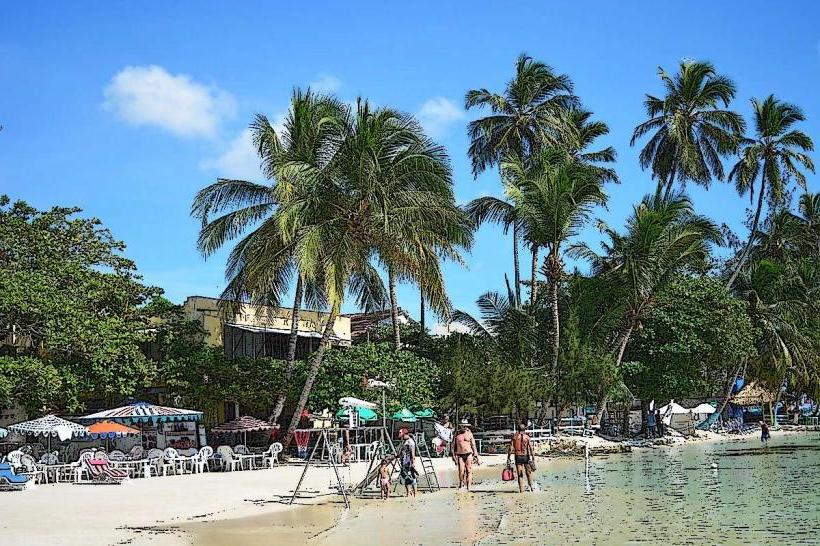
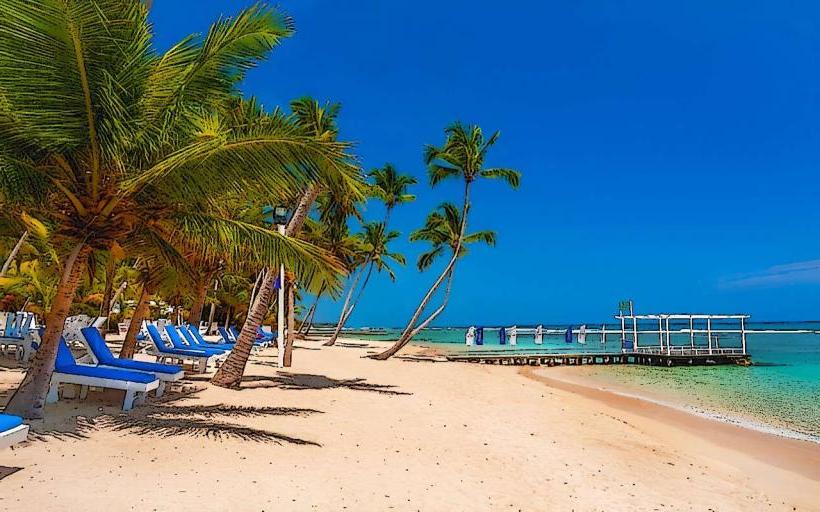
- Playa Salinas: 2km West. A popular beach known for its dark sand and calm waters, adjacent to the salt flats.
- Base Naval de Las Calderas: 4km West. A Dominican Navy base located on the peninsula, offering views of the bay.
- Ojo de Agua: 5km North. A natural freshwater spring that emerges directly into the sea, providing a cool swimming spot.