Landmark: Lewis and Clark National Historical Park
City: Astoria
Country: USA Oregon
Continent: North America
Lewis and Clark National Historical Park, Astoria, USA Oregon, North America
Lewis and Clark National Historical Park is a protected area in Oregon and Washington, commemorating the 1804-1806 Lewis and Clark Expedition's winter encampment and the Pacific Ocean terminus of their journey.
The park encompasses multiple sites, including Fort Clatsop, the expedition's winter quarters, and the Lewis and Clark River, a tributary of the Columbia River.
Visual Characteristics
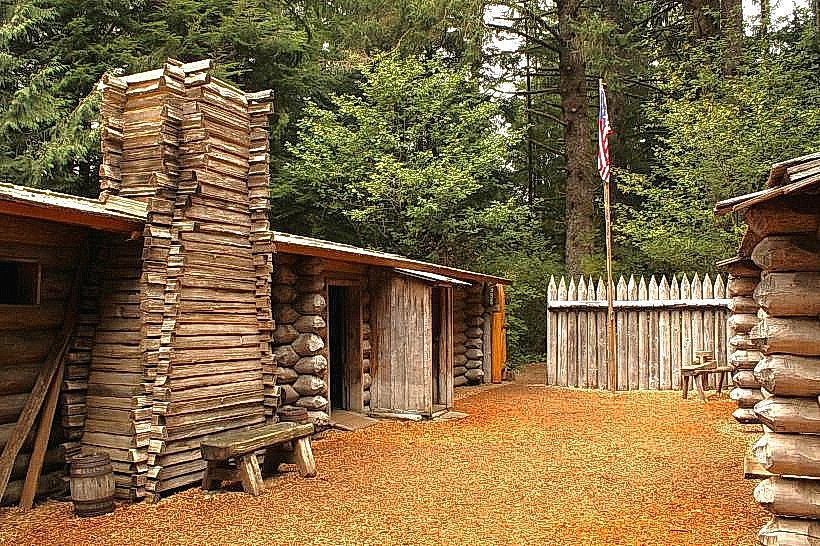
Fort Clatsop is a reconstruction of the expedition's winter encampment, built from rough-hewn logs. The surrounding landscape consists of temperate rainforest, characterized by dense evergreen vegetation, including Douglas fir, western hemlock, and red cedar. The Lewis and Clark River is a tidal estuary, its water color varying with sediment load, typically appearing brown or grey. The terrain is generally flat near the river, with rolling hills further inland.
Location & Access Logistics
Fort Clatsop is located approximately 8km southwest of Astoria, Oregon, accessible via US Route 101 South. Turn east onto Fort Clatsop Road. Parking is available at the Fort Clatsop unit. Public transportation options are limited; the Astoria Riverfront Trolley does not extend to this location. The nearest major airport is Portland International Airport (PDX), approximately 150km east.
Historical & Ecological Origin
Fort Clatsop was constructed by the Corps of Discovery in December 1805, serving as their winter shelter from December 1805 to March 1806. The site is situated within the coastal temperate rainforest biome, an ecosystem shaped by high rainfall and moderate temperatures. The expedition's purpose was to explore the territory acquired in the Louisiana Purchase and find a water route to the Pacific Ocean.
Key Highlights & Activities
Visitors can explore the reconstructed Fort Clatsop, including the barracks, kitchen, and commanding officer's quarters. Ranger-led programs and living history demonstrations are offered seasonally. Hiking trails are available, including the Fort Clatsop Nature Trail (1.2km loop) and portions of the larger Lewis and Clark River Trail. Kayaking and canoeing are possible on the Lewis and Clark River, with access points available.
Infrastructure & Amenities
The Fort Clatsop unit provides restrooms, a visitor center with exhibits, and shaded areas. Cell phone signal (4G/5G) is generally available within the vicinity of the visitor center. Food vendors are not present within the park; visitors should plan to bring their own provisions or utilize facilities in Astoria.
Best Time to Visit
The best time for outdoor activities is during the drier months of July and August. For photography, early morning or late afternoon light offers optimal conditions for the forest and river. The park is accessible year-round, but winter months (November-February) are characterized by significant rainfall.
Facts & Legends
A unique aspect of the expedition's stay at Fort Clatsop was the production of salt from seawater, a vital commodity for preserving food. The Corps of Discovery established a salt-making camp on the coast, approximately 15km south of the fort, to process the abundant ocean water.
Nearby Landmarks
- Fort Astoria (0.5km North)
- Columbia River Maritime Museum (1.5km North)
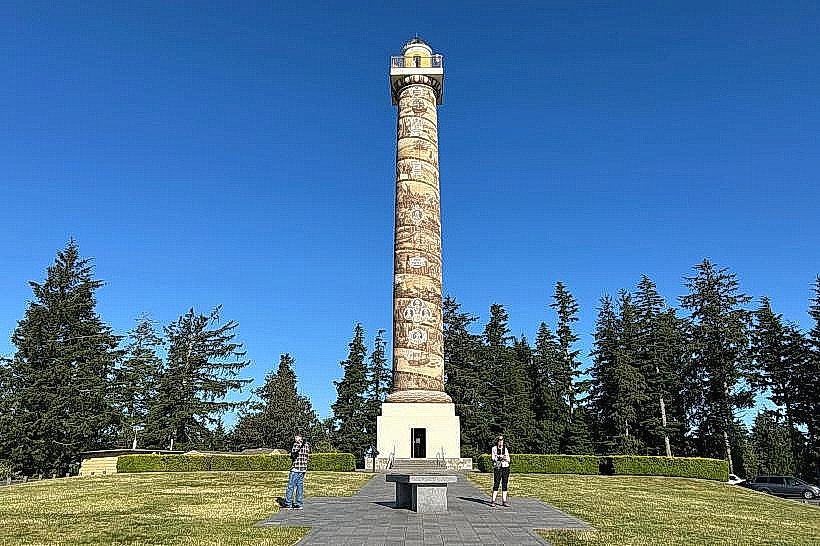
- Astoria Column (3.0km North)
- Cape Disappointment State Park (12.0km Northwest)
- Fort Columbia State Park (15.0km Northeast)