Landmark: Log Cabin Museum
City: Rugby
Country: USA North Dakota
Continent: North America
Log Cabin Museum, Rugby, USA North Dakota, North America
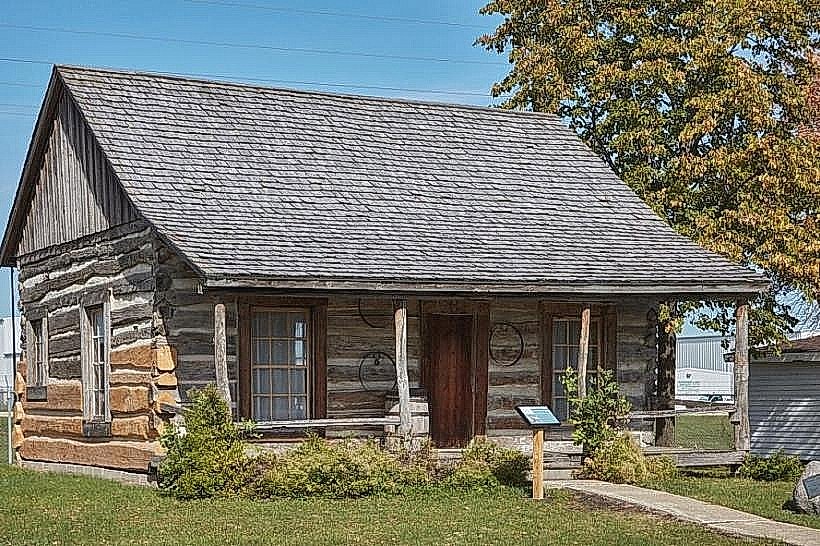
The Log Cabin Museum is a historical structure located in Rugby, North Dakota. It preserves a typical early settler dwelling from the region.
Visual Characteristics
The structure is a single-story cabin constructed from rough-hewn logs, chinked with mud and straw. The roof is made of wooden shingles. The exterior logs are weathered to a gray-brown hue. The cabin measures approximately 16 feet by 20 feet.
Location & Access Logistics
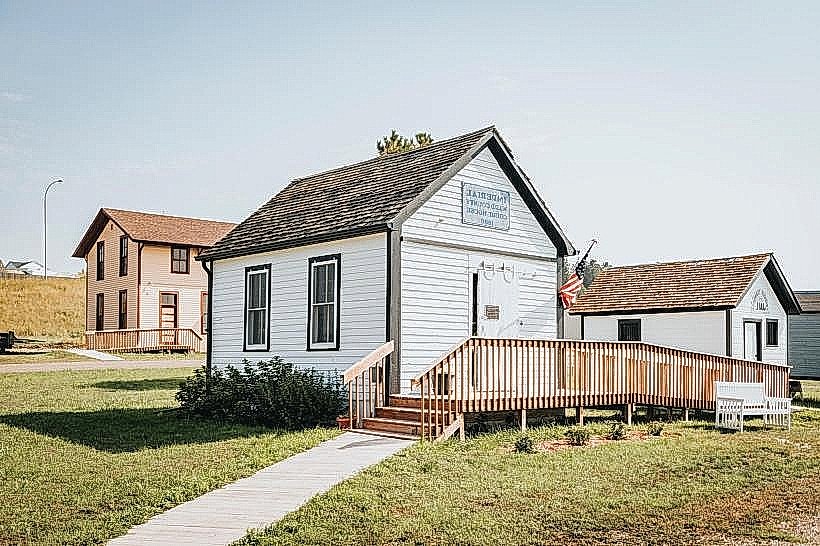
The Log Cabin Museum is situated within Rugby's Pioneer Village, located at 110 2nd Street SE. It is approximately 0.5km South of the Rugby city center. Parking is available on-site within the Pioneer Village grounds. No specific public transport routes directly serve the museum; access is typically via private vehicle.
Historical & Ecological Origin
This cabin is a replica constructed in the early 1970s, designed to represent the typical homesteads built by early settlers in the North Dakota prairie during the late 19th and early 20th centuries. It reflects the construction methods and materials available to pioneers.
Key Highlights & Activities
Visitors can enter the cabin to observe the interior layout and furnishings. Demonstrations of historical domestic tasks may occur on select dates. The cabin serves as an exhibit within the larger Pioneer Village.
Infrastructure & Amenities
Restrooms are available within the Pioneer Village complex. Limited shade is provided by surrounding trees. Cell phone signal (4G/5G) is generally available. Food vendors are not present at the museum itself but may be found in Rugby's downtown area.
Best Time to Visit
The museum is open seasonally from May to September. Mid-morning or late afternoon offers optimal lighting for viewing the cabin's exterior details. Weather is generally most favorable for outdoor exploration during July and August.
Facts & Legends
A common practice for early settlers was to use dried prairie grass or straw for chinking between logs, a technique replicated in this museum structure. This provided insulation against the harsh prairie winters.
Nearby Landmarks
- Pioneer Village (0.1km North)
- Heart of America Library (0.6km North)
- Rolette County Historical Society Museum (0.7km North)
- Central North Dakota Historical Society Museum (0.8km North)