Information
Landmark: Lublin CastleCity: Lublin
Country: Poland
Continent: Europe
Lublin Castle, Lublin, Poland, Europe
Lublin Castle (Zamek Lubelski) is a medieval hilltop fortress and palace complex located on the northern edge of Lublin’s Old Town. It is one of the oldest preserved Royal Residencies in Poland.
Visual Characteristics
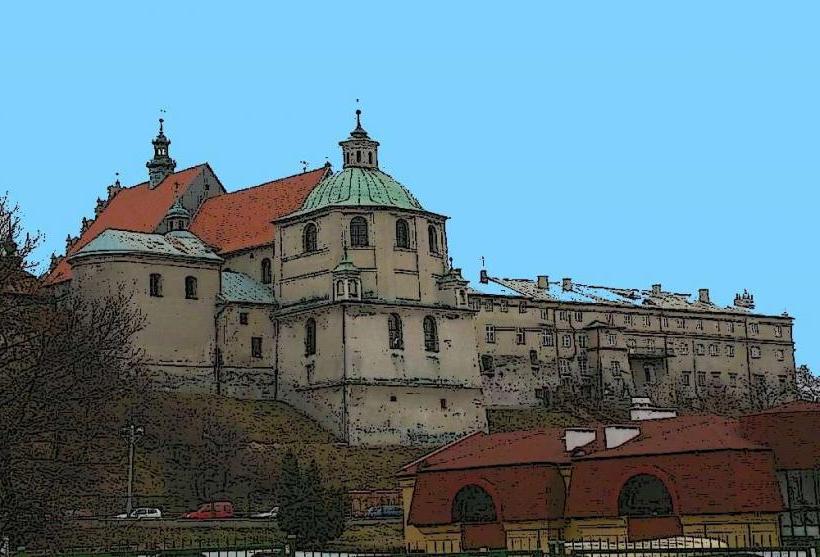
The castle is defined by its massive, white Neo-Gothic facade and crenelated towers, a result of 19th-century reconstruction. Two distinct historical structures contrast with this style: the Donjon, a massive Romanesque stone tower, and the Holy Trinity Chapel, a brick Gothic structure. The castle is situated on a prominent hill, offering a panoramic view of the Old Town and the Podzamcze district.
Location & Access Logistics
Address: ul. Zamkowa 9, 20-117 Lublin.
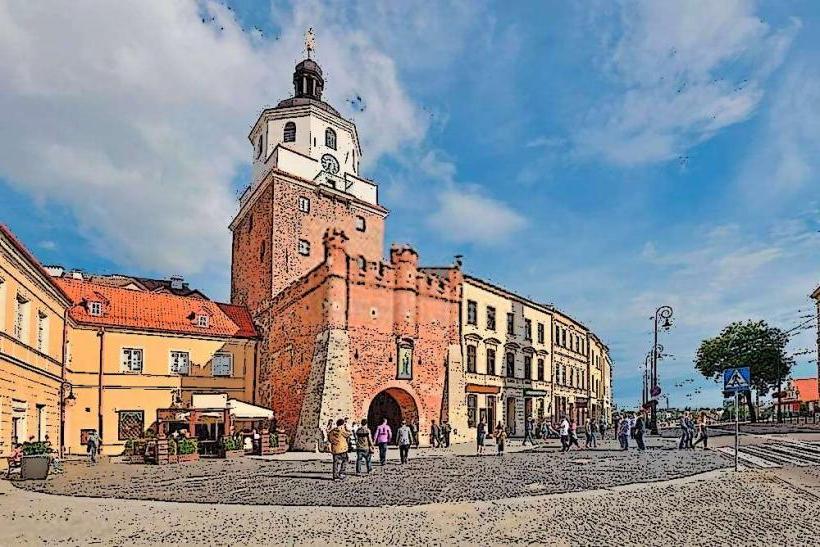
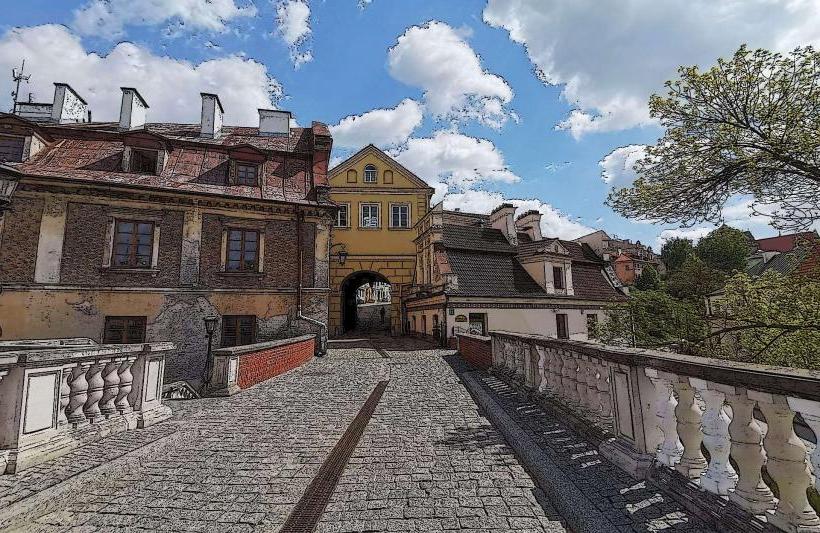
Access: Situated at the end of the Grodzka Gate axis. Access is via a wide stone bridge leading from the Old Town.
Public Transport: Highly accessible via bus and trolleybus (stop: Plac Zamkowy).
Parking: A large paid parking lot is located at the foot of the castle on Plac Zamkowy.
Historical Origin
The original wooden stronghold dates to the 12th century. King Casimir the Great replaced it with a stone castle in the 14th century. It served as a royal residence for the Jagiellonian dynasty and was the site of the signing of the Union of Lublin (1569), which created the Polish-Lithuanian Commonwealth. From 1826 to 1954, the building was used as a prison-first by the Russian Empire, then by the Second Polish Republic, the Gestapo during WWII, and the Soviet-backed NKVD/UB. Since 1957, it has housed the Lublin Museum.
Key Highlights & Collections
Holy Trinity Chapel (Kaplica Trójcy Świętej): A globally significant landmark featuring 15th-century Byzantine-Russian frescoes commissioned by King Władysław II Jagiełło. It is a rare synthesis of Western Gothic architecture and Eastern Orthodox art.
The Donjon: A 13th-century cylindrical tower with walls up to 4 meters thick. It houses an observation deck.
"The Union of Lublin" Painting: A monumental work by Jan Matejko displayed in the museum’s gallery.
National Museum in Lublin: Extensive collections of Polish and European painting, folk art, and militaria.
Infrastructure & Amenities
Connectivity: Strong 5G signal throughout the castle courtyard and Plac Zamkowy.
Accessibility: The castle courtyard and main museum floors are accessible via elevators. The Donjon and parts of the historic chapel require navigating narrow, steep stone stairs.
Facilities: Includes a gift shop, restrooms, and a café.
Best Time to Visit
The museum is closed on Mondays. The courtyard is open daily until dusk. The Holy Trinity Chapel has strict capacity limits; advanced booking is recommended. The castle hill is a primary location for the Night of Culture (Noc Kultury) and the Jagiellonian Fair.
Facts & Legends
The castle prison was notorious for its "Castle Legend"-the "Devil's Paw" (Czarcia Łapa), a burnt handprint on a courtroom table, though the original table is now kept in the museum. A verified historical fact is that the castle was the site of a brutal massacre of prisoners by the retreating Nazis in July 1944.
Nearby Landmarks
Grodzka Gate: 0.2km South
Old Town Market Square: 0.4km South
Donjon Observation Tower: 0.05km (within the complex)
Podzamcze District: 0.1km East