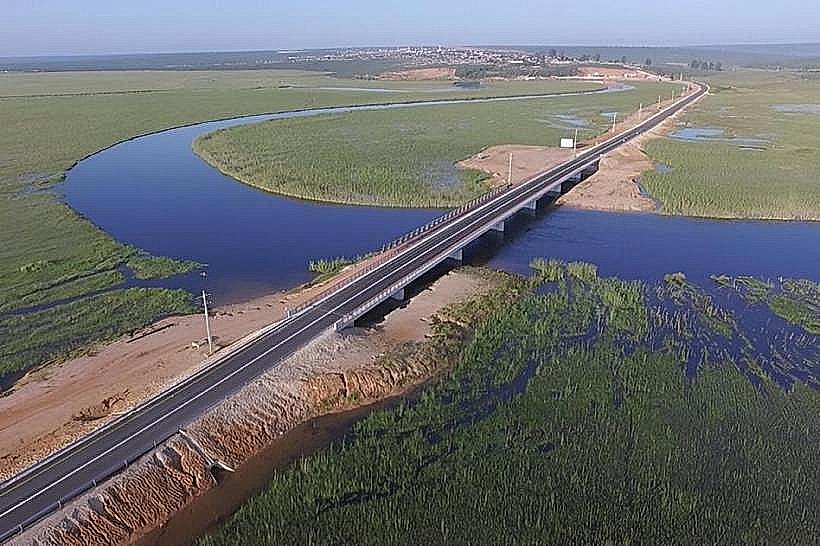
Landmark: Luiana National Park
City: Cuando Cubango
Country: Angola
Continent: Africa
Luiana National Park, Cuando Cubango, Angola, Africa
Luiana National Park is a protected area situated in the Cuando Cubango Province of Angola. It encompasses a significant portion of the Angolan savanna and wetland ecosystems.
Visual Characteristics
The park's terrain is predominantly flat to gently undulating, characterized by extensive floodplains, seasonal swamps, and dry savanna woodlands. Vegetation includes miombo woodlands, acacia species, and riparian forests along watercourses. Water bodies, such as the Cuito and Cubango rivers, are prominent features, with their color varying based on sediment load, typically appearing brown or muddy during the wet season and clearer during the dry season. Wildlife sightings are common, with large mammal herds often visible in open areas.
Location & Access Logistics
Luiana National Park is located in the southeastern part of Cuando Cubango Province. Access is primarily via unpaved roads from the provincial capital, Menongue. The journey from Menongue can take several hours, depending on road conditions, which are often poor, especially during the rainy season (typically November to April). There are no scheduled public transport services directly to the park. Visitors typically require 4x4 vehicles. The nearest airstrip is at Mavinga, approximately 100km from the park's central areas, but it is not regularly serviced.
Historical & Ecological Origin
Luiana National Park was established in 1937 as a game reserve and later designated a national park. Its ecological significance lies in its role as a critical corridor for migratory wildlife and its status as one of the largest protected areas in Angola. The park is part of the Kavango-Zambezi Transfrontier Conservation Area (KAZA TFCA) initiative, aiming to conserve a vast ecosystem spanning multiple countries. The landscape is shaped by fluvial processes and savanna biome dynamics.
Key Highlights & Activities
Activities within Luiana National Park are primarily focused on wildlife viewing and ecological observation. Game drives are conducted on existing tracks, offering opportunities to see elephants, lions, leopards, wild dogs, buffalo, and various antelope species. Birdwatching is also a significant activity due to the park's diverse avian population. Walking safaris are permitted in designated areas under ranger supervision. Fishing is possible in designated river sections during the dry season.
Infrastructure & Amenities
Infrastructure within Luiana National Park is minimal. There are a few basic park ranger posts. Lodging options are limited to rustic campsites or a small number of eco-lodges located on the periphery or within the park boundaries, which require advance booking. Restrooms are generally available at these lodges and campsites. Shade is provided by the natural tree cover in woodland areas. Cell phone signal is unreliable and generally absent in most parts of the park.
Best Time to Visit
The best time to visit Luiana National Park is during the dry season, from May to October. During this period, water sources become concentrated, attracting wildlife to rivers and waterholes, making sightings more probable. The vegetation is less dense, improving visibility. The early morning and late afternoon hours offer the best lighting conditions for photography due to softer light and increased animal activity.
Facts & Legends
A notable historical fact is that Luiana National Park was severely impacted by the Angolan Civil War, leading to significant declines in wildlife populations. Conservation efforts are ongoing to restore the park's ecological integrity. A local legend speaks of ancient spirits guarding the large baobab trees found in the park, believed to bring good fortune to those who show respect to the natural environment.
Nearby Landmarks
- Kavango River (15km West)
- Mavinga National Park (formerly) (40km North)
- Caprivi Strip (Namibia) (60km South)
- Okavango Delta (Botswana) (200km Southeast)
- Chobe National Park (Botswana) (250km East)