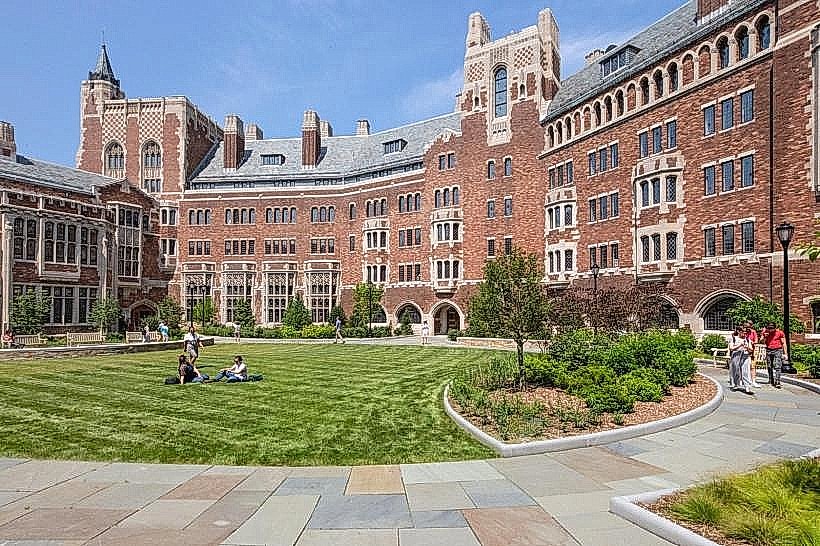
Landmark: Marsh Botanical Garden
City: New Haven
Country: USA Connecticut
Continent: North America
Marsh Botanical Garden, New Haven, USA Connecticut, North America
The Marsh Botanical Garden is a botanical research and public garden located in New Haven, Connecticut. It is part of Yale University.
Visual Characteristics
The garden encompasses approximately 10 acres. It features a diverse collection of plant species organized into distinct sections. Key areas include the Native Plant Collection, the Herb Garden, the Rose Garden, and the Conservatory. The Conservatory is a glass structure housing tropical and subtropical plants, with distinct temperature and humidity zones. Exterior plantings utilize a variety of deciduous and evergreen trees, shrubs, and herbaceous perennials. Soil types vary across the property, supporting specialized plant communities.
Location & Access Logistics
The Marsh Botanical Garden is situated at 65 Central Avenue, New Haven, CT 06511. It is approximately 1.5 miles (2.4 km) southeast of the Yale University Campus. Access is via Central Avenue, which connects to Whitney Avenue (Route 10). Limited on-site parking is available in a designated lot. Public transportation options include the Greater New Haven Transit District (GNH TD) bus routes that service Whitney Avenue and nearby streets. Specific routes include the 213 and 215.
Historical & Ecological Origin
The garden was established in 1900 through a bequest from Othniel C. Marsh, a paleontologist. The initial purpose was to support botanical research and education at Yale. The site itself was formerly part of a larger estate. The ecological focus has evolved over time to include conservation of native species and the study of plant adaptations in various environments, including the specialized ecosystems within the Conservatory.
Key Highlights & Activities
Visitors can explore the outdoor collections, including the seasonal displays in the Rose Garden and the perennial plantings. The Conservatory offers year-round viewing of tropical flora. Educational programs and guided tours are offered on a scheduled basis. Photography is permitted for personal use. Research activities are ongoing and may occasionally restrict access to specific areas.
Infrastructure & Amenities
Restroom facilities are available within the main building and near the Conservatory. Shaded areas are provided by mature trees and covered structures in certain garden sections. Cell phone signal (4G/5G) is generally reliable throughout the outdoor areas and within the main buildings. No on-site food vendors are present; however, dining options are available in the surrounding New Haven neighborhoods.
Best Time to Visit
For optimal viewing of flowering plants, the months of May through October are recommended. Spring (April-May) offers blooming bulbs and early perennials. Summer (June-August) provides peak bloom for many annuals and perennials. Autumn (September-October) features fall foliage. The Conservatory is accessible year-round. For photography, early morning or late afternoon light provides softer illumination.
Facts & Legends
A notable feature is the extensive collection of carnivorous plants housed within the Conservatory, representing diverse genera such as Sarracenia, Nepenthes, and Drosera. The garden also maintains a significant collection of orchids. A specific historical anecdote involves the early efforts to cultivate rare and exotic species, requiring precise environmental controls within the original greenhouses.
Nearby Landmarks
- Peabody Museum of Natural History (0.8km Northwest)
- Yale University Art Gallery (1.2km Northwest)
- New Haven Green (1.5km Northwest)
- East Rock Park (2.5km East)