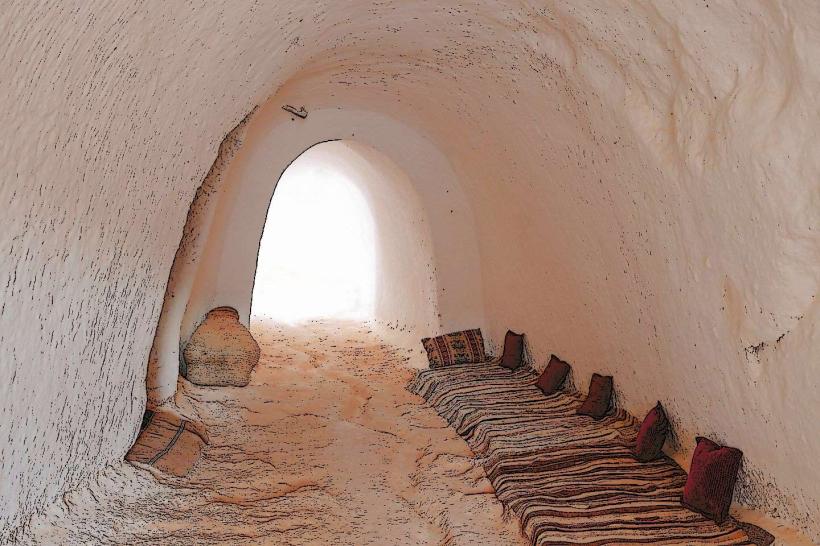
Landmark: Matmata Caves
City: Matmata
Country: Tunisia
Continent: Africa
Matmata Caves, Matmata, Tunisia, Africa
Matmata Caves are a series of subterranean dwellings located in the Matmata region of southern Tunisia.
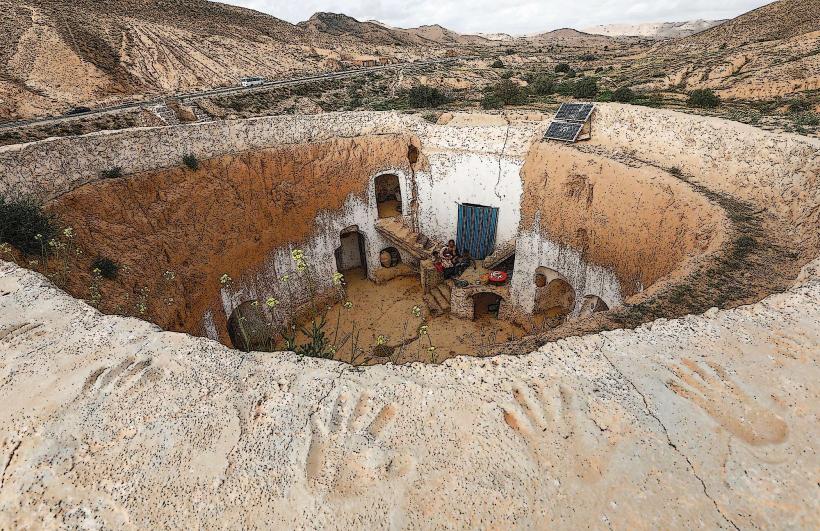
These structures are characterized by their unique underground architecture, carved directly into the soft sandstone hills.
Visual Characteristics
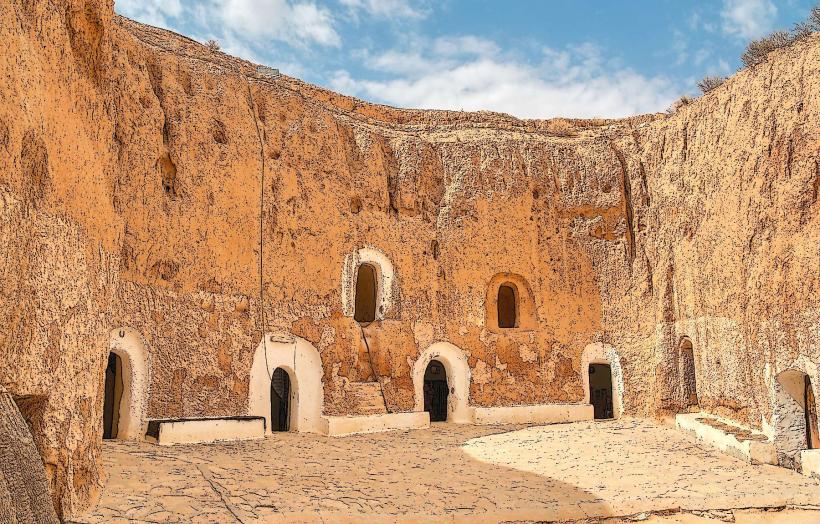
The dwellings consist of a central courtyard, typically circular or rectangular, excavated to a depth of several meters. From this courtyard, numerous rooms, including living spaces, storage areas, and stables, are carved into the surrounding walls. The excavated earth is often piled around the perimeter of the courtyard, forming a low wall. The exterior appearance is minimal, with only small, often arched, entrances visible at ground level, blending into the natural landscape.
Location & Access Logistics
Matmata is situated approximately 40 kilometers west of the coastal city of Gabès. Access is primarily via the P17 highway, which connects Gabès to Kébili. From Gabès, travel west on the P17 for approximately 35 kilometers. The cave dwellings are located within and around the town of Matmata itself. Parking is available in designated areas within the town, often adjacent to the main tourist sites. Public transport options are limited; shared taxis (louages) operate between Gabès and Matmata, with departures from Gabès's main louage station.
Historical & Ecological Origin
The Matmata Caves are believed to have been inhabited by Berber tribes for centuries, possibly dating back to antiquity. Their construction is a direct adaptation to the arid climate and the geological properties of the local sandstone. The underground design provides natural insulation, keeping interiors cool during hot summers and warmer during winter. The specific ecological context is a semi-arid steppe environment.
Key Highlights & Activities
Exploration of the excavated cave dwellings is the primary activity. Visitors can walk through the interconnected rooms and courtyards. Some of the more well-preserved or accessible caves are open to the public, often with local guides providing context. Photography of the interior architecture is permitted. Observing the traditional methods of construction and living is a key aspect of the experience.
Infrastructure & Amenities
Restrooms are available at some of the more established tourist sites within Matmata. Shade is provided by the natural overhang of the excavated structures. Cell phone signal (4G/5G) is generally available within the town. Food vendors and small cafes are located in the central areas of Matmata, offering local refreshments and snacks.
Best Time to Visit
The best time of day for photography is during the morning or late afternoon when the sunlight creates distinct shadows within the courtyards and entrances. The most favorable months for visiting are from October to April, avoiding the extreme heat of the summer months. There are no tide-related considerations for visiting these inland cave dwellings.
Facts & Legends
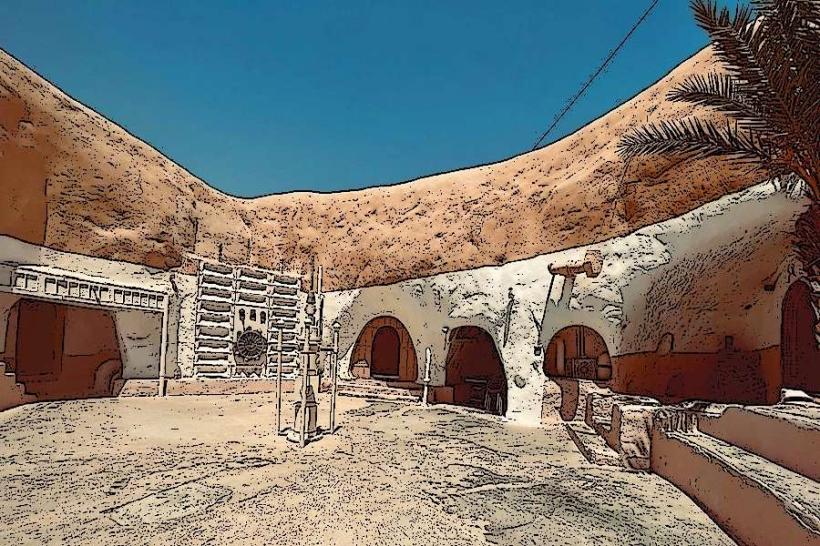
A notable "secret" tip for visitors is to look for the small, often unadorned, openings that serve as entrances; these can be easily missed against the natural terrain. Some of these dwellings were famously used as filming locations for the planet Tatooine in the original Star Wars film, specifically the home of Luke Skywalker's aunt and uncle.
Nearby Landmarks
- Ksar Hadada (15km Southwest)
- Toujane Village (25km Northwest)
- Djebel Dahar (10km East)
- Chott el Djerid (40km West)