Information
Landmark: Ming Xiaoling MausoleumCity: Nanjing
Country: China
Continent: Asia
Ming Xiaoling Mausoleum, Nanjing, China, Asia
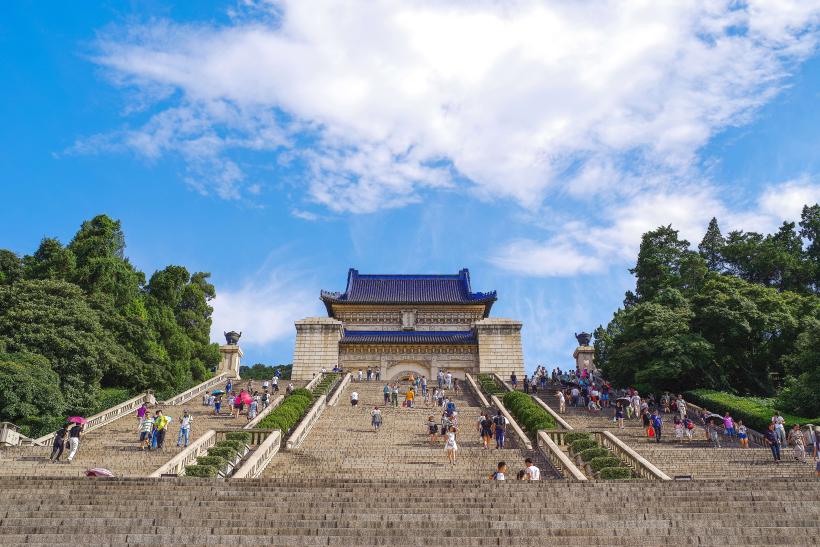
The Ming Xiaoling Mausoleum is the tomb of the Hongwu Emperor, founder of the Ming Dynasty, located in Nanjing, China.
This historical site is situated at the southern foot of Purple Mountain.
Visual Characteristics
The mausoleum complex covers an area of approximately 170 hectares. The primary structures are constructed from granite and brick. The architectural style is characteristic of Ming Dynasty imperial tombs, featuring a central axis with various halls and pavilions. The pathway leading to the tomb is lined with stone sculptures of animals and officials. The main tomb mound is a large, circular earthen mound.
Location & Access Logistics
The mausoleum is located approximately 10 kilometers east of Nanjing's city center. Access is via Zijin Mountain Road. Public transport options include Bus Line 201, which stops directly at the mausoleum entrance. Parking is available at designated lots near the main entrance, with a fee. The nearest metro station is Muxuyuan Station (Line 2), approximately 2 kilometers southwest, requiring a bus or taxi transfer.
Historical & Ecological Origin
Construction of the Ming Xiaoling Mausoleum began in 1381 and was completed in 1405. It was built as the burial site for Zhu Yuanzhang (the Hongwu Emperor) and his empress, Ma Xiuying. The site was chosen for its strategic location and alignment with traditional geomantic principles (feng shui). The surrounding area is part of the Purple Mountain range, a significant geological feature of the region.
Key Highlights & Activities
Visitors can walk the Sacred Way, observing the stone animal sculptures. Exploration of the various halls and pavilions, including the Lingxing Gate and the Tablet Pavilion, is possible. The main tomb mound can be viewed from the exterior. Photography is permitted in most outdoor areas.
Infrastructure & Amenities
Restrooms are available at the main entrance and at several points within the complex. Limited shaded areas are provided by trees and some covered structures. Cell phone signal (4G/5G) is generally available throughout the site. Food vendors and small restaurants are located outside the main entrance and near the parking areas.
Best Time to Visit
For optimal lighting for photography, early morning or late afternoon is recommended. The best months for visiting are April, May, September, and October, when temperatures are moderate and rainfall is less frequent. The site is accessible year-round, with no specific tide requirements.
Facts & Legends
A notable historical oddity is that the mausoleum was extensively damaged and rebuilt multiple times throughout history, particularly during the Taiping Rebellion. Local legend suggests that the sheer scale of the construction was intended to deter tomb robbers, with many hidden chambers rumored to exist.
Nearby Landmarks
- Zhongshan Mountain National Park (0.2km North)
- Presidential Palace (8.5km West)
- Nanjing Massacre Memorial Hall (9.0km West)
- Confucius Temple (10.5km West)
- Nanjing Museum (8.0km West)