Landmark: Mitad del Mundo
City: Quito
Country: Ecuador
Continent: South America
Mitad del Mundo, Quito, Ecuador, South America
Mitad del Mundo is a monument and complex located in the canton of San Antonio de Pichincha, approximately 26 kilometers north of Quito, Ecuador.
Visual Characteristics
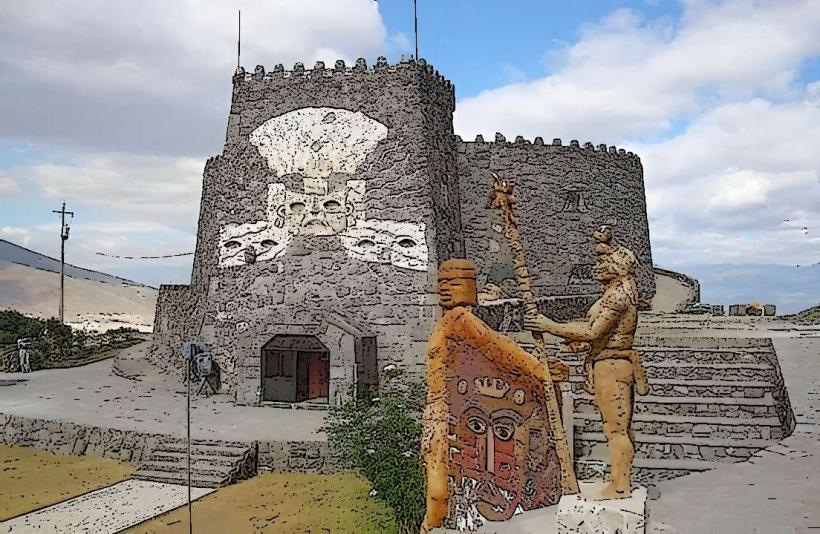
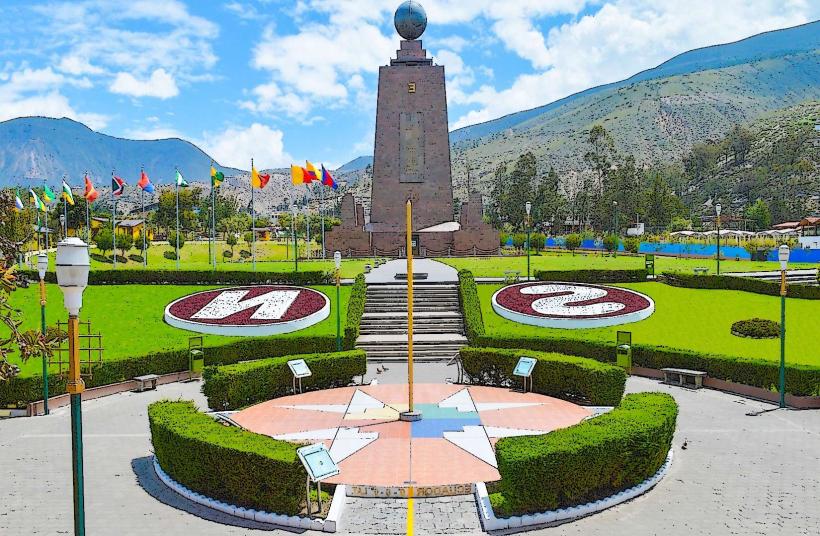
The central monument is a concrete obelisk topped with a globe, standing 30 meters high. It is painted white with a red line encircling its base. The complex features a central plaza with a yellow line painted across it, representing the Equator. Surrounding the monument are various exhibition halls and structures constructed from concrete and local stone.
Location & Access Logistics
Mitad del Mundo is situated 26 kilometers north of Quito's city center. Access is via the Manuel Córdova Galarza highway (E28). Public transportation options include local bus lines such as "Mitad del Mundo" buses departing from the Ofelia terminal in Quito. Parking is available on-site for private vehicles.
Historical & Ecological Origin
The monument was constructed between 1979 and 1982 by the Prefectura de Pichincha. It was built to commemorate the location of the Equator, determined by the French Geodesic Mission in the 18th century. Ecologically, the site is situated within the Andean highlands, characterized by its high altitude and specific microclimate.
Key Highlights & Activities
Visitors can stand with one foot in the Northern Hemisphere and the other in the Southern Hemisphere on the painted line. The complex includes the Ethnographic Museum, the Intiñan Solar Museum (a separate attraction adjacent to the main complex), and various scientific exhibits related to the Equator. Demonstrations of Coriolis effect phenomena are conducted.
Infrastructure & Amenities
Restrooms are available within the complex. Shaded areas are provided by the monument and surrounding buildings. Cell phone signal (4G/5G) is generally reliable. Food vendors and restaurants are located within the Mitad del Mundo complex and in the immediate vicinity.
Best Time to Visit
The best time of day for photography is typically mid-morning or late afternoon to avoid harsh overhead sunlight. The dry season, from June to September, offers the most consistent weather. High tide or low tide is not a relevant factor for this inland location.
Facts & Legends
A local belief suggests that standing on the Equator line can influence one's balance. The Intiñan Solar Museum, located nearby, offers a separate experience with demonstrations that highlight the unique gravitational effects at the Equator, though these are often presented with anecdotal rather than strictly scientific explanations.
Nearby Landmarks
- Intiñan Solar Museum (0.1km West)
- Pululahua Geobotanical Reserve (4km Northwest)
- San Antonio de Pichincha town center (1km East)
- Rumiñahui Volcano (15km Southwest)