Information
Landmark: National Wildlife Visitor Center (Patuxent Research Refuge)City: Prince Georges County
Country: USA Maryland
Continent: North America
National Wildlife Visitor Center (Patuxent Research Refuge), Prince Georges County, USA Maryland, North America
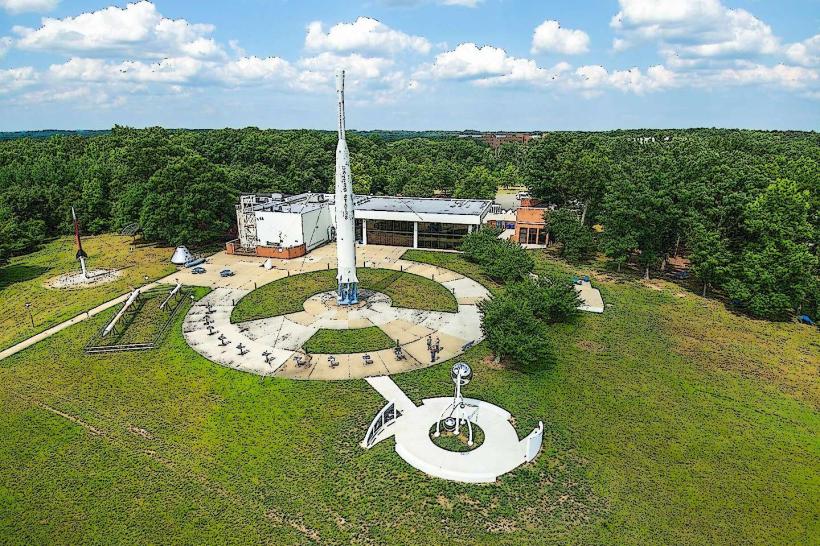
The National Wildlife Visitor Center is located within the Patuxent Research Refuge in Prince George's County, Maryland. It serves as an educational and interpretive facility for the refuge.
Visual Characteristics
The Visitor Center is a two-story structure constructed primarily of brick and wood. Its design incorporates large windows to maximize natural light and views of the surrounding environment. The building's exterior colors are earth tones, blending with the natural landscape. The architectural style is functional and modern, with a focus on environmental integration.
Location & Access Logistics
The National Wildlife Visitor Center is situated at 10901 Whetstone Road, Laurel, MD 20708. It is approximately 15 miles south of Baltimore and 20 miles northeast of Washington D.C. Access is via Maryland Route 97 (Georgia Avenue) and then onto Whetstone Road. Ample free parking is available on-site. Public transportation options are limited; the nearest MARC train station is in Laurel, requiring a taxi or rideshare service for the final leg.
Historical & Ecological Origin
The Patuxent Research Refuge was established in 1936 as the first national wildlife research center. The Visitor Center itself was constructed later to provide public access and educational programming related to the refuge's conservation and research efforts. The refuge encompasses diverse habitats including forests, wetlands, and fields, supporting a wide array of wildlife species.
Key Highlights & Activities
Visitors can explore interactive exhibits detailing local flora and fauna, conservation science, and the history of the refuge. A 2-mile paved interpretive trail, the Wildlife Observation Trail, is accessible from the Visitor Center, offering opportunities for wildlife viewing. Educational programs and ranger-led walks are offered seasonally. Observation decks provide elevated views of the surrounding wetlands.
Infrastructure & Amenities
Restrooms are available within the Visitor Center. Shaded areas are provided by the building's overhangs and nearby trees. Cell phone signal (4G/5G) is generally available but can be intermittent in certain areas of the refuge. No food vendors are located directly at the Visitor Center; visitors should bring their own food and beverages.
Best Time to Visit
The best time of day for photography is generally in the early morning or late afternoon when lighting is softer and wildlife activity is often higher. The months of April through October offer the most pleasant weather for outdoor exploration. High tide is not a specific requirement for visiting the center or its immediate trails.
Facts & Legends
The Patuxent Research Refuge is home to the U.S. Geological Survey's Patuxent Wildlife Research Center, a leading institution in wildlife science. A unique aspect of the refuge is its role in the recovery efforts for endangered species, including the red-cockaded woodpecker and the Maryland darter. Visitors often report sightings of white-tailed deer, various waterfowl, and numerous bird species.
Nearby Landmarks
- Fort Meade Museum (3.5km Northwest)
- Howard County Center for the Arts (4.2km West)
- Savage Mill (4.8km West)
- Merriweather Post Pavilion (4.9km West)