Landmark: Notre Dame de Strasbourg
City: Strasbourg
Country: France
Continent: Europe
Notre Dame de Strasbourg, Strasbourg, France, Europe
The Strasbourg Cathedral (Cathédrale Notre-Dame de Strasbourg) is a masterpiece of Gothic architecture and the primary landmark of Strasbourg, France. Constructed between 1015 and 1439, it held the title of the world's tallest building from 1647 to 1874.
Visual Characteristics
The cathedral is constructed from pink Vosges sandstone, giving it a distinct reddish-pink hue that shifts according to lighting conditions. Its most striking feature is its asymmetrical silhouette, characterized by a single 142-meter spire on the north side, while the south tower remains flat. The western facade is heavily decorated with thousands of stone figures and features a 15-meter-wide rose window.
Location & Access Logistics
The site is located at Place de la Cathédrale, 67000 Strasbourg. The historic center (Grande Île) is pedestrian-only; the nearest tram stops are "Homme de Fer" (Lines A, B, C, D, F) or "Langstross Grand'Rue" (Lines A, D).
Hours: Daily 08:30–11:15 and 12:45–17:45.
Platform Access: Climbing the 330 steps to the viewing platform (66 meters high) requires a separate ticket (approx. €8).
Astronomical Clock: Access to the clock show is strictly controlled and typically occurs at 12:00 (tickets required).
Historical & Ecological Origin
The current structure sits on the site of a previous Roman temple and a Carolingian cathedral. The foundations were built on a marshy area near the Ill River, requiring an innovative system of oak piles driven into the water table. The architectural transition from Romanesque (the choir and south transept) to High Gothic (the nave and facade) is visible in the evolution of the stone masonry.
Key Highlights & Activities
Astronomical Clock: A 16th-century Renaissance masterpiece that features a perpetual calendar and automated figures (The Four Ages of Life, the Apostles) that perform a parade daily at 12:30.
The Spire: An intricate openwork stone structure that was a feat of medieval engineering.
Stained Glass: 12th to 14th-century windows, including the "Emperor Windows" in the north aisle.
The Pillar of Angels: A central pillar in the south transept depicting the Last Judgment with exceptional sculptural detail.
Infrastructure & Amenities
Public restrooms are located on the Place du Château, adjacent to the cathedral. The surrounding square is the dense commercial heart of the city, containing the historic Maison Kammerzell and numerous traditional Alsatian "Winstubs." High-density 5G coverage is available in the plaza, though signal strength drops significantly inside the thick sandstone nave.
Best Time to Visit
Optimal lighting for the pink sandstone facade occurs at sunset. For the interior, visiting during a sunny morning allows the light to filter through the southern stained-glass windows. December is the peak visitor period, as the cathedral serves as the backdrop for the world-famous Christkindelsmärik (Christmas Market).
Facts & Legends
A local legend explains the lack of a second spire: the "Devil" is said to be trapped inside the cathedral or waiting outside on the wind, which is why the square is notoriously drafty. A historical fact: Victor Hugo famously described the building as a "giant and delicate marvel" and a "prodigy of the colossal and the real."
Nearby Landmarks
Palais Rohan – 0.1km South
Maison Kammerzell – 0.05km North
Musée de l'Œuvre Notre-Dame – 0.1km South
Place Gutenberg – 0.2km West
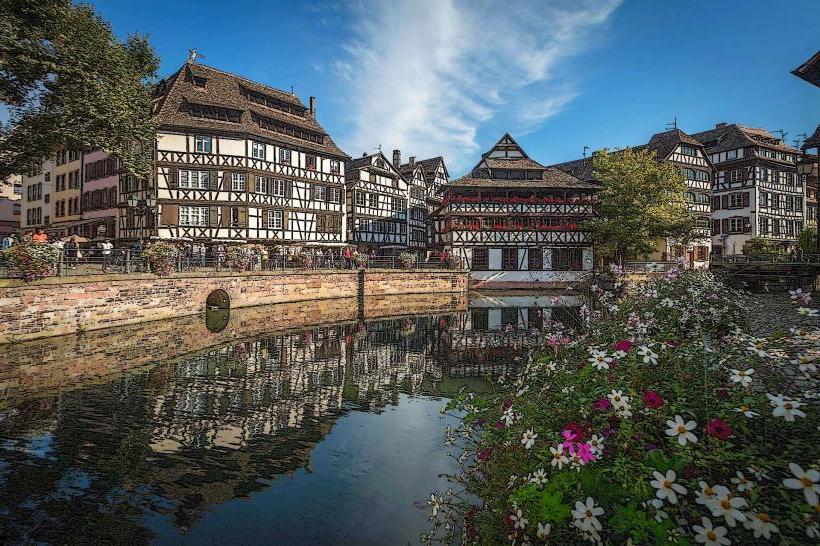
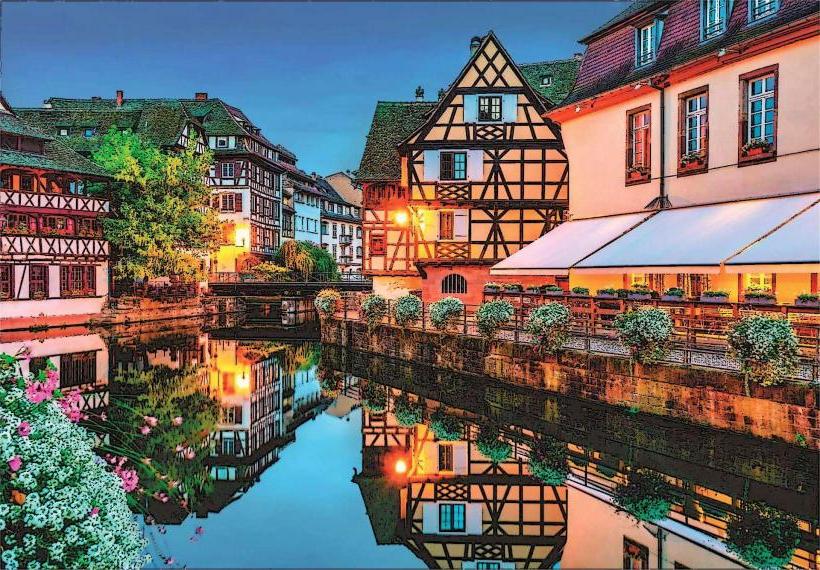
Petite France District – 0.7km Southwest