Landmark: Parque Natural Laguna de los Padres
City: La Plata
Country: Argentina
Continent: South America
Parque Natural Laguna de los Padres, La Plata, Argentina, South America
Parque Natural Laguna de los Padres is a protected natural area located west of the city of Mar del Plata, Argentina.
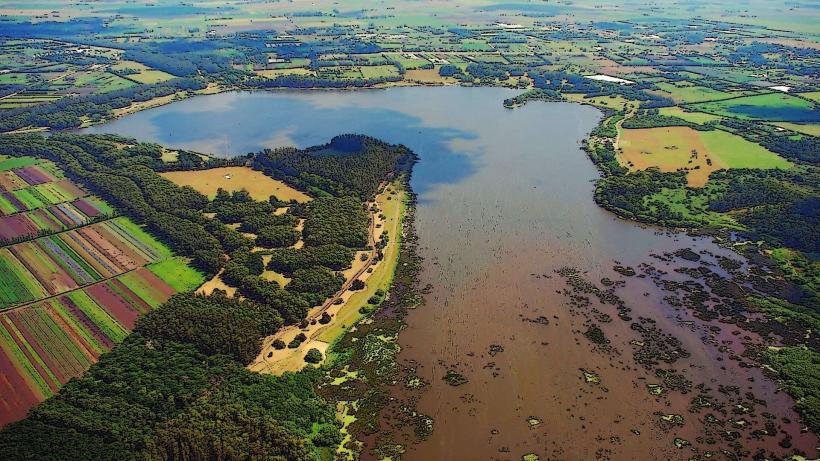
This park encompasses a lagoon and surrounding natural landscape, serving as a conservation zone.
Visual Characteristics
The park's primary feature is the Laguna de los Padres, a body of freshwater with variable water levels. The surrounding terrain consists of rolling hills, grasslands, and scattered woodlands. Vegetation includes native grasses, shrubs, and trees such as eucalyptus and pine. Birdlife is a significant visual element, with numerous species present throughout the park.
Location & Access Logistics
The park is situated approximately 15 kilometers west of Mar del Plata's city center. Access is via Provincial Route 226. Turn south onto the unpaved access road marked for the park. Parking is available at designated areas near the main entrance and visitor center. Public transport options are limited; bus line 510 from Mar del Plata may stop near the park entrance, requiring a walk of approximately 1 kilometer to the main facilities.
Historical & Ecological Origin
The area's ecological origin is a shallow depression that collects rainwater and runoff, forming the lagoon. Historically, the land was part of estancias (ranches) before being designated as a protected area to preserve its natural resources and biodiversity. The lagoon itself is a remnant of ancient riverbeds and geological processes characteristic of the Argentine Pampas.
Key Highlights & Activities
Activities include birdwatching, nature photography, and walking on designated trails. The park offers opportunities for observing local fauna in its natural habitat. Fishing is permitted in designated zones during specific seasons, subject to regulations. Educational programs are sometimes offered at the visitor center.
Infrastructure & Amenities
Basic infrastructure includes a visitor center with information displays, restrooms, and picnic areas with tables and some shaded structures. Cell phone signal (4G) is generally available but can be intermittent within the park's more remote sections. No food vendors are permanently located within the park; visitors should bring their own provisions.
Best Time to Visit
For birdwatching, early morning and late afternoon offer the highest activity. The best months for pleasant weather are typically September through November (spring) and March through May (autumn). Water levels in the lagoon can fluctuate significantly, impacting accessibility to certain areas; check local conditions if planning activities dependent on water depth.
Facts & Legends
A local legend speaks of a submerged indigenous settlement within the lagoon, though no archaeological evidence has been found to support this. A verified historical fact is that the park was established to protect the habitat of the southern river otter (Lontra longicaudis), a species that has seen population declines in other regions.
Nearby Landmarks
- Parque Camet (12km East)
- Museo Municipal de Ciencias Naturales "Lorenzo Scaglia" (14km East)
- Torreón del Monje (16km East)
- Playa Grande (17km East)