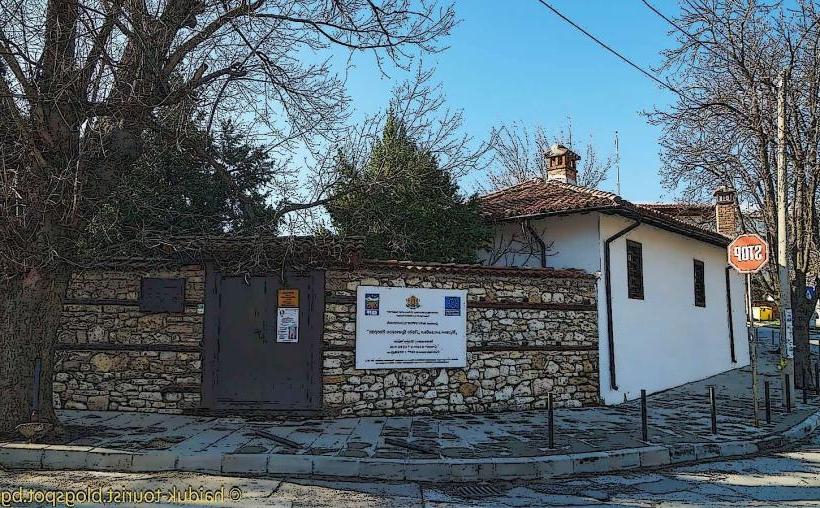
Landmark: Prehistoric Settlement of Blagoevgrad
City: Blagoevgrad
Country: Bulgaria
Continent: Europe
Prehistoric Settlement of Blagoevgrad, Blagoevgrad, Bulgaria, Europe
The Prehistoric Settlement of Blagoevgrad, identified as the ancient Thracian settlement of Scaptopara, is located in the Gramada district and the Zelen Dol junction area. The site contains stratigraphic layers dating back to the Neolithic, Chalcolithic, and Early Bronze Ages, situated on a terrace above the Struma River.
Visual Characteristics
The archaeological remains consist of dry-stone foundations, mud-brick debris, and compacted earthen floors. Excavated features include pit dwellings and rectangular houses with charred timber post-holes. The surrounding soil is predominantly alluvial clay and gravel, typical of the Struma river basin. Artifacts visible in the regional museum from this site include dark-polished ceramics, flint tools, and anthropomorphic clay figurines.
Location & Access Logistics
The site is located 4km west of Blagoevgrad city center. Access is via the A3 Struma Motorway or the E79 main road, specifically near the Zelen Dol interchange. While the primary excavations were rescue operations for motorway construction, the structural remains are situated near the local road connecting Blagoevgrad to the village of Zelen Dol. Parking is limited to roadside shoulders or unpaved turnouts.
Historical & Ecological Origin
Initial habitation dates to the 6th millennium BC (Neolithic). The site functioned as a permanent agricultural settlement due to the fertile floodplains of the Struma River and the proximity to thermal springs. It later evolved into the Thracian settlement of Scaptopara, documented in the 3rd century AD via the Scaptopara Inscription, a petition to Emperor Gordian III.
Key Highlights & Activities
Academic study focuses on the transition between the Neolithic and Bronze Age cultures in the Balkan peninsula. Visitors can view the salvaged artifacts and architectural reconstructions at the Blagoevgrad Regional Historical Museum. Field observation of the site allows for an understanding of the strategic positioning of prehistoric communities relative to water sources and trade routes.
Infrastructure & Amenities
The archaeological site itself lacks visitor infrastructure, shade, or restrooms. 5G cell phone signal is excellent due to its proximity to the city and motorway. All logistical needs, including food, water, and medical services, are located 4km east in the city of Blagoevgrad.
Best Time to Visit
Optimal visiting conditions occur in late spring (May-June) or early autumn (September-October) to avoid the high temperatures of the Struma valley. Morning light is best for observing the topographical features of the settlement mound. Museum visits are recommended during standard operating hours, Tuesday through Saturday.
Facts & Legends
The site is famous for the Scaptopara Inscription, a 167-line Greek text on a marble slab. The text reveals a legal grievance filed by local villagers against Roman soldiers and officials who were illegally requisitioning resources and exhausting the village's hospitality during the local trade fair and at the nearby thermal baths.
Nearby Landmarks
Blagoevgrad Regional Historical Museum - 4.2km East
Varosha Old Town Quarter - 4.5km East
Park "Bachinovo" - 7km East
Struma River Bridge - 1.5km South
The Cross Memorial (Blagoevgrad) - 5.5km East