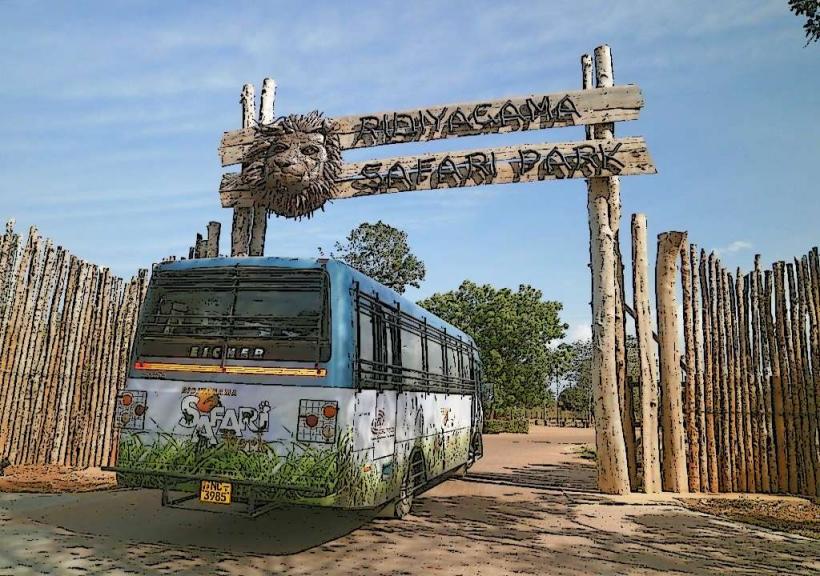
Landmark: Ridiyagama Safari Park
City: Hambantota
Country: Sri Lanka
Continent: Asia
Ridiyagama Safari Park, Hambantota, Sri Lanka, Asia
Ridiyagama Safari Park is a zoological garden located in the Hambantota District of Sri Lanka. It is designed to replicate natural habitats for a variety of animal species.
Visual Characteristics
The park features large, enclosed zones simulating different ecosystems. These include grassland areas with scattered trees, forested sections, and water bodies. Fencing is primarily chain-link and concrete barriers, with some naturalistic rock formations and artificial water features within enclosures.
Location & Access Logistics
The park is situated approximately 15 kilometers north of Hambantota town. Access is via the A2 highway, turning onto the B43 road towards Ridiyagama. Ample parking is available on-site. Public transport options are limited; bus routes from Hambantota to Ridiyagama village exist, followed by a short walk or tuk-tuk ride to the park entrance.
Historical & Ecological Origin
Ridiyagama Safari Park was established by the Department of Wildlife Conservation of Sri Lanka. Construction began in the early 2010s, with the park officially opening in phases. Its ecological purpose is to provide a controlled environment for the conservation and display of wildlife, including species native to Sri Lanka and those from other regions.
Key Highlights & Activities
Visitors can observe animals from safari vehicles on designated routes. Specific zones house elephants, lions, and various bird species. Walking paths are available in certain sections, offering closer views of smaller exhibits. Feeding sessions are scheduled daily for select animals.
Infrastructure & Amenities
Restrooms are located near the main entrance and at designated rest stops within the park. Shade is provided by natural tree cover in some areas and by covered seating structures. Cell phone signal (4G) is generally available within the park. Food vendors operate at the entrance area, offering snacks and beverages.
Best Time to Visit
The best time of day for animal viewing is typically early morning (08:00-10:00) or late afternoon (15:00-17:00) when animals are more active. The dry season, from May to September, offers the most favorable weather conditions with minimal rainfall.
Facts & Legends
A unique aspect of the park's design is the integration of a large man-made reservoir, which serves both as a water source for animals and a habitat for aquatic birds. Visitors are advised to remain inside safari vehicles at all times when in animal zones.
Nearby Landmarks
Hambantota Town Center (15km South)
Bundala National Park (25km East)
Kalametiya Bird Sanctuary (30km East)
Ussangoda National Park (40km West)