Information
Landmark: Roman BathsCity: Durres
Country: Albania
Continent: Europe
Roman Baths, Durres, Albania, Europe
The Roman Baths of Durrës are a preserved archaeological complex located in the center of the city, situated within the perimeter of the ancient city of Dyrrhachium. They represent the primary surviving example of Roman thermal engineering and public infrastructure in the region.
Visual Characteristics
The site consists of several excavated chambers featuring brick and stone walls. The most prominent architectural element is the hypocaust system, which includes small brick pillars (pilae) that supported the suspended floors to allow for underfloor heating. Fragments of original marble flooring, ceramic water pipes, and traces of mosaic decoration are visible within the calidarium (hot room) and frigidarium (cold room) sections.
Location & Access Logistics
The baths are located on Rruga Egnatia, approximately 0.2km northwest of Sheshi Liria (Freedom Square). The site is situated behind the Aleksandër Moisiu Theatre and is accessible via a short pedestrian path from the main street. Public transport users can reach the site via a 10-minute walk from the central bus station or the port. Public underground parking is available at Sheshi Liria.
Historical & Ecological Origin
Constructed in the 2nd century AD during the Roman Imperial period, the baths were part of a larger complex that served the administrative and social needs of Dyrrhachium. The site was discovered in 1960 during the construction of the adjacent theatre. Geologically, the ruins are set into the coastal sedimentary layers typical of the Durrës peninsula.
Key Highlights & Activities
Visitors can observe the structural remains of the Roman heating system and the layout of the various bathing chambers. The site is an open-air archaeological park with informational signage detailing the function of each room. It is a common stop on historical walking tours focusing on the city's Roman heritage.
Infrastructure & Amenities
The site is an unmanaged open-air archaeological zone with no dedicated visitor center or restrooms. 5G cellular coverage is consistent throughout the area. Shade is provided by the adjacent theatre building and nearby trees. Full amenities, including restrooms and food vendors, are available within 0.1km in the surrounding city center.
Best Time to Visit
The ruins are accessible 24 hours a day as they are integrated into the urban fabric. For photography, the midday sun provides the best illumination into the excavated pits to capture the detail of the hypocaust pillars. Spring and autumn are the preferred seasons for visiting due to mild temperatures.
Facts & Legends
The baths were part of a sophisticated urban network that received water from the 15km-long Hadrianic aqueduct, which transported water from the Erzen River to the city. A unique feature of this site is the integration of Roman ruins directly into the foundation level of the modern 20th-century theatre, illustrating the multi-layered urban stratigraphy of Durrës.
Nearby Landmarks
Aleksandër Moisiu Theatre: 0.01km East
Sheshi Liria (Freedom Square): 0.2km Southeast
Byzantine Forum (Macellum): 0.15km North
St. Astius Church: 0.1km South
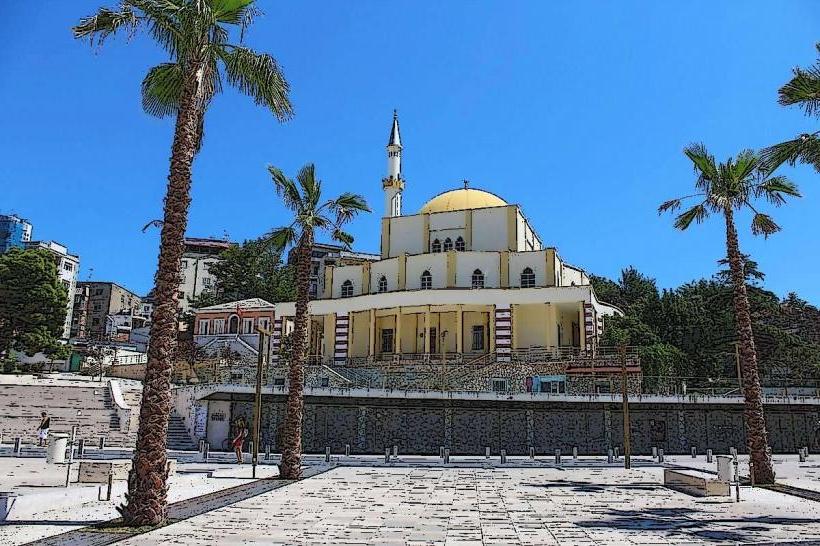
Great Mosque of Durrës: 0.25km Southeast