Landmark: Royal Tyrrell Museum
City: Calgary
Country: Canada
Continent: North America
Royal Tyrrell Museum, Calgary, Canada, North America
The Royal Tyrrell Museum is a paleontological research and public education institution located in Drumheller, Alberta, Canada.
It is situated within the Canadian Badlands, approximately 135 kilometers northeast of Calgary.
Visual Characteristics
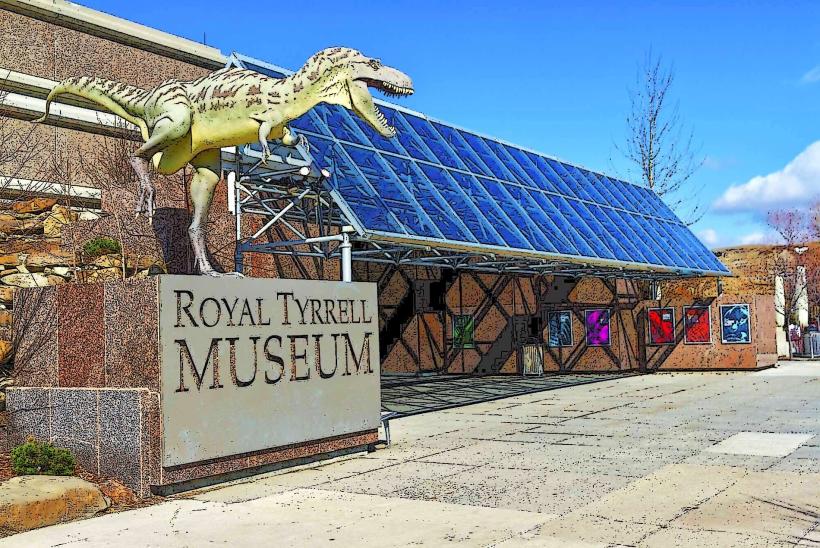
The museum building is constructed primarily from concrete and glass, designed to integrate with the surrounding coulee landscape. Its exterior features angular lines and earth tones that complement the sedimentary rock formations. The interior houses extensive fossil displays, including mounted dinosaur skeletons and dioramas.
Location & Access Logistics
To reach the Royal Tyrrell Museum from Calgary, take Highway 9 Northeast for approximately 115 kilometers to the town of Drumheller. From Drumheller, follow Highway 576 West for 6.5 kilometers. The museum is clearly signposted. Ample free parking is available on-site, including designated areas for RVs and tour buses. Public transport options directly to the museum are limited; visitors typically rely on private vehicles or organized tours from Calgary.
Historical & Ecological Origin
The museum was established in 1985 and officially opened in 1990, evolving from the Provincial Museum of Alberta's Tyrrell Museum of Palaeontology. Its location in Drumheller is significant due to the rich Cretaceous period fossil beds found in the Red Deer River valley, which have yielded numerous dinosaur discoveries. The surrounding landscape is characterized by eroded sandstone, shale, and coal seams, representing millions of years of geological history.
Key Highlights & Activities
Visitors can explore exhibits detailing dinosaur evolution, prehistoric life, and the geology of Alberta. Specific displays include the "Dinosaur Hall," showcasing a comprehensive collection of dinosaur fossils, and the "Cretaceous Garden," an outdoor exhibit. The museum offers guided tours focusing on specific themes and time periods. Fossil casting demonstrations are conducted daily.
Infrastructure & Amenities
Restrooms are available on all levels of the museum. Indoor seating areas provide opportunities for rest. Shade is available in designated outdoor picnic areas. Cell phone signal (4G/5G) is generally reliable within the museum building and immediate vicinity. Food services, including a cafeteria and gift shop, are located on the main level.
Best Time to Visit
The museum is open year-round. For optimal lighting conditions within the exhibits, visiting during daylight hours is recommended. The months of July and August typically offer the warmest weather for exploring the outdoor areas, though this period also coincides with peak visitor numbers. Spring (April-May) and Fall (September-October) provide milder temperatures and fewer crowds.
Facts & Legends
The museum is named after Joseph Burr Tyrrell, a geologist and explorer who discovered the first complete Tyrannosaurus Rex skeleton in Canada in 1892 near Drumheller. A unique tip for visitors is to look for the small, often overlooked, fossilized footprints embedded in the concrete pathways around the museum's exterior, remnants of ancient creatures preserved in the local stone.
Nearby Landmarks
- Royal Tyrrell Museum Dinosaur Trail (0.1km North)
- Hoodoos Trail (6.2km Southeast)
- Atlas Coal Mine National Historic Site (10.5km Southwest)
- Midland Provincial Park (0.3km West)
- Drumheller's World's Largest Dinosaur (6.5km East)