Landmark: Salamis Theatre
City: Famagusta
Country: Cyprus
Continent: Europe
Salamis Theatre, Famagusta, Cyprus, Europe
The Salamis Theatre is an ancient Roman theatre located within the archaeological site of Salamis, approximately 8 kilometers north of Famagusta, Cyprus.
Visual Characteristics
The theatre is constructed primarily from local limestone and imported marble, exhibiting a weathered light grey to beige coloration. Its design follows classical Roman theatre architecture, featuring a semi-circular seating area (cavea) with multiple tiers. The current remains include a largely restored lower section of the cavea, the orchestra pit, and foundational elements of the stage building (scaenae frons). The structure originally accommodated around 15,000 spectators and stood as a prominent feature of the ancient city.
Location & Access Logistics
The Salamis Theatre is situated within the ancient city of Salamis archaeological park. Access is typically via the D30 road, which connects Famagusta to the northern coastal areas. From Famagusta city center, the site is approximately 8-9 km north. On-site parking is available at the main entrance of the Salamis archaeological park. Public transport options are limited; private vehicle or taxi hire is the most common method of reaching the site.
Historical & Ecological Origin
The theatre was originally constructed during the Augustan period, dating to the late 1st century BC or early 1st century AD. It underwent significant reconstruction and expansion during the 1st and 2nd centuries AD under Roman rule. Its primary purpose was to host theatrical performances, public assemblies, and gladiatorial contests for the inhabitants of ancient Salamis. The structure suffered severe damage from earthquakes in the 4th century AD.
Key Highlights & Activities
Visitors can explore the restored seating tiers (cavea) and walk across the orchestra. The remnants of the stage building provide insight into Roman theatrical architecture. Occasional cultural events and performances are held within the theatre, particularly during warmer months.
Infrastructure & Amenities
Restroom facilities are available near the main entrance of the Salamis archaeological site. Shade within the theatre itself is limited, though some trees are present in the wider archaeological park. Cell phone signal (4G/5G) is generally reliable throughout the area. Small kiosks or cafes offering refreshments are typically located near the site's main entrance.
Best Time to Visit
The best time for photography is during the early morning or late afternoon to capture softer light and minimize harsh shadows. The most favorable months for visiting are April to May and September to October, when temperatures are mild. Summer months (June-August) can be very hot, making early morning visits preferable. The site is not affected by tidal conditions.
Facts & Legends
Many of the marble architectural elements from the Salamis Theatre were repurposed in later Byzantine constructions, including the nearby St. Barnabas Monastery. The theatre's original capacity of approximately 15,000 spectators underscores the importance and size of ancient Salamis as a Roman provincial capital.
Nearby Landmarks
- Salamis Gymnasium: 0.3km West
- Salamis Roman Agora: 0.4km North-West
- Salamis Roman Baths: 0.5km North
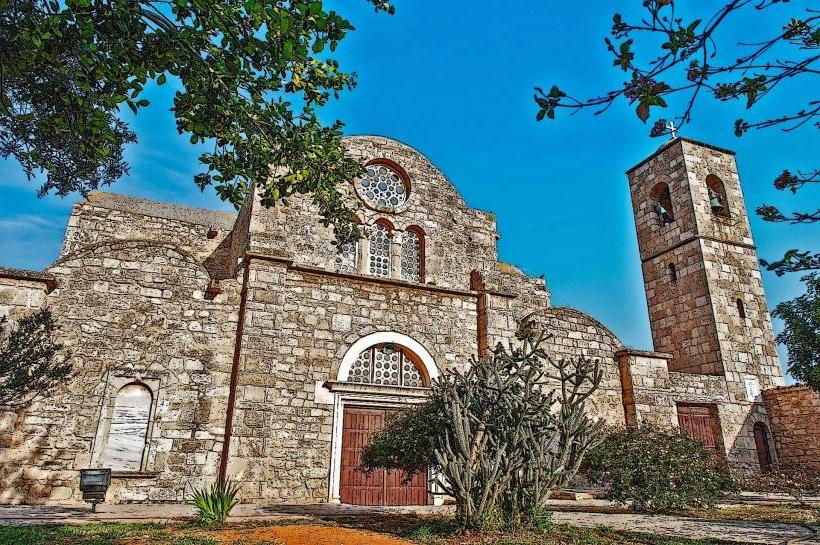
- St. Barnabas Monastery and Icon Museum: 2.5km West
- Enkomi-Alasia Archaeological Site: 4km South-West