Landmark: Santa Bárbara Fortress
City: Trujillo
Country: Honduras
Continent: North America
Santa Bárbara Fortress, Trujillo, Honduras, North America
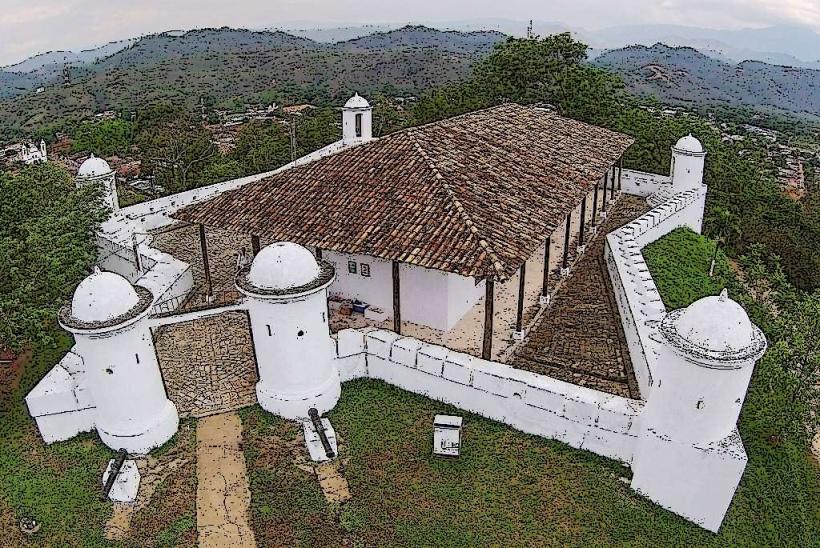
Santa Bárbara Fortress is a historical fortification situated on a promontory overlooking the Caribbean Sea in Trujillo, Honduras.
This defensive structure was constructed to protect the port and town from maritime threats.
Visual Characteristics
The fortress is primarily constructed from coral stone and limestone. Its walls are substantial, with an average thickness of 1.5 meters. The structure features a central courtyard, several bastions, and a main keep. The exterior color is a weathered grey, indicative of its age and exposure to the elements. The architectural style is predominantly Spanish colonial military, characterized by its robust and functional design.
Location & Access Logistics
Santa Bárbara Fortress is located approximately 1 kilometer east of the Trujillo city center. Access is via the CA-13 highway, turning onto Calle de la Fortaleza. The road leading to the fortress is paved. Parking is available at the base of the fortress, with capacity for approximately 20 vehicles. Public transport options are limited; local taxis are the most direct method of reaching the site from Trujillo.
Historical & Ecological Origin
Construction of Santa Bárbara Fortress began in 1550 and was completed in 1600. It was designed by Spanish military engineers to defend against pirate raids and potential invasions. The site was chosen for its strategic elevated position offering clear views of the bay and surrounding coastline.
Key Highlights & Activities
Visitors can explore the ramparts and bastions, offering panoramic views of Trujillo Bay. The central courtyard contains remnants of former barracks and storage areas. Interpretive signage details the fortress's history and its role in regional defense. Photography of the architectural features and the coastal landscape is permitted.
Infrastructure & Amenities
Restrooms are available near the entrance. Limited shade is provided by the fortress walls and a few strategically placed trees within the courtyard. Cell phone signal (4G) is generally available at the site. No food vendors are located directly at the fortress; options are available in Trujillo town.
Best Time to Visit
The best time of day for photography is in the late afternoon, approximately 2-3 hours before sunset, for optimal lighting on the stone structures and sea views. The driest months are typically from January to April, offering the most pleasant weather conditions for exploration.
Facts & Legends
A local legend suggests that a hidden tunnel once connected the fortress to a secret cove, used for smuggling valuable goods and for escape during sieges. While no definitive evidence of such a tunnel has been found, the story persists among older residents.
Nearby Landmarks
- Punta Castilla (2.5km Southeast)
- Trujillo Bay (0.8km West)
- Colón Museum (1.2km West)
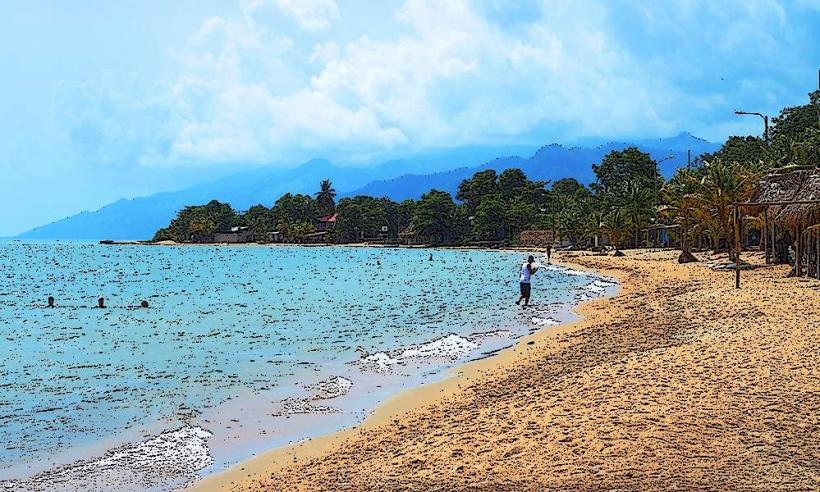
- Playa Trujillo (1.5km West)