Landmark: Singing Sand Dunes
City: Dunhuang
Country: China
Continent: Asia
Singing Sand Dunes, Dunhuang, China, Asia
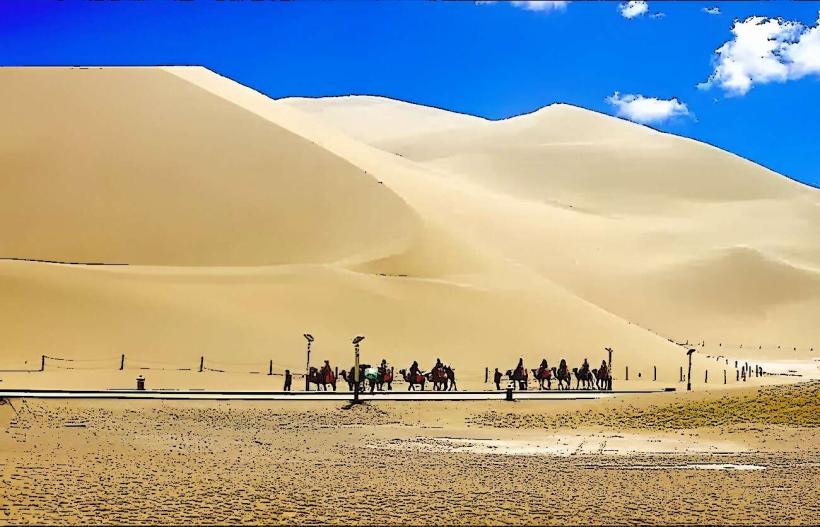
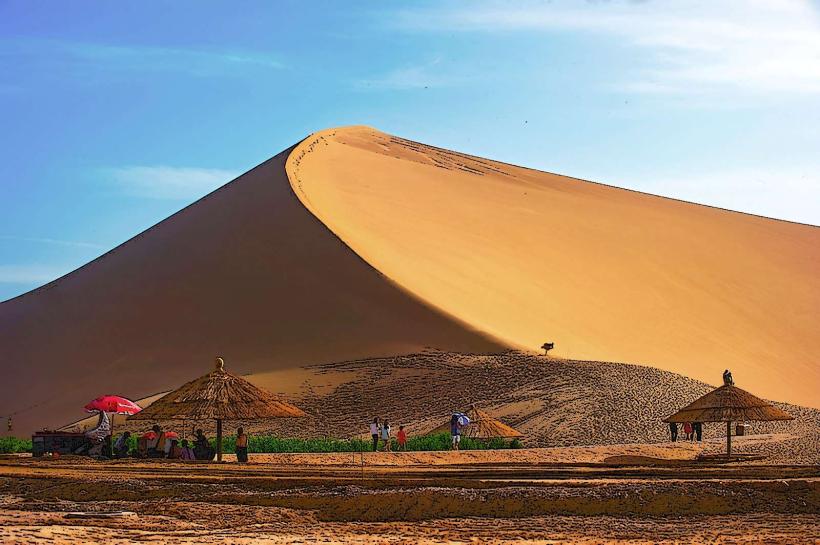
The Singing Sand Dunes are a geological formation located near Dunhuang, Gansu Province, China. They are characterized by their significant height and the acoustic phenomenon they produce.
Visual Characteristics
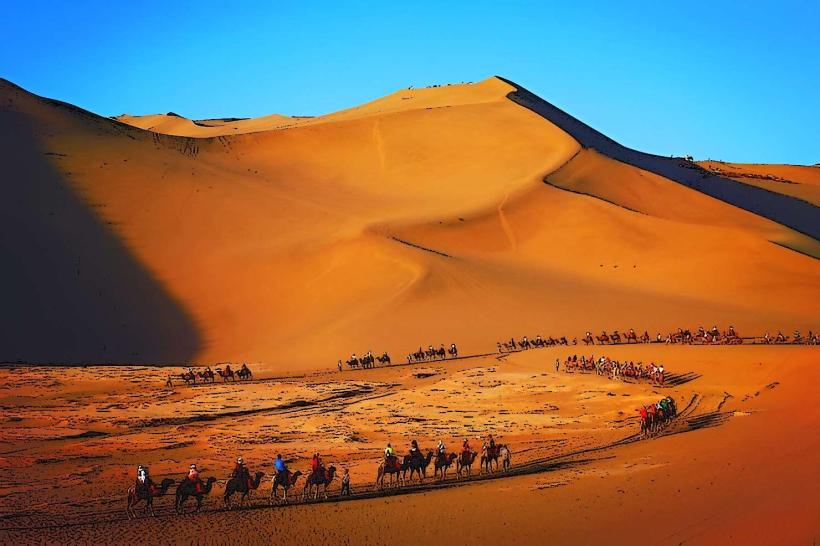
The dunes are composed of fine, dry sand, primarily quartz. Their coloration ranges from pale yellow to light brown, varying with sunlight intensity. The largest dune, Mingshashan (Echoing Sand Mountain), reaches an approximate height of 170 meters. The sand exhibits a fine, granular texture.
Location & Access Logistics
The Singing Sand Dunes are situated approximately 5 kilometers south of Dunhuang city center. Access is primarily via local taxis or pre-arranged tour vehicles. Public bus routes do not directly service the dune area. Limited parking is available at the base of the dunes, managed by local operators. The journey from Dunhuang city typically takes 15-20 minutes by road.
Historical & Ecological Origin
These dunes are part of the Gobi Desert's shifting sand formations, shaped by prevailing winds over millennia. Their formation is a result of aeolian processes, where wind transports and deposits sand particles. The acoustic phenomenon, or "singing," is attributed to the friction of sand grains sliding down the dune faces under specific atmospheric conditions.
Key Highlights & Activities
Activities include sand sliding (using wooden boards), camel rides across the dune crests, and paragliding. Visitors can walk to the summit of Mingshashan for panoramic views. The "singing" sound is most audible when sand cascades down the leeward slopes.
Infrastructure & Amenities
Basic facilities are present at the base of the dunes, including restrooms and small food stalls selling water and snacks. Shade is minimal on the dunes themselves. Cell phone signal (4G) is generally available in the vicinity.
Best Time to Visit
For optimal lighting conditions and photography, early morning (sunrise) and late afternoon (sunset) are recommended. The best months for visiting are April through October, avoiding the extreme cold of winter. The "singing" phenomenon is more likely to occur during dry, windy conditions.
Facts & Legends
A local legend states that the sound of the dunes is the voice of a dragon trapped beneath the sand. Scientifically, the sound is produced by the uniform size and shape of the sand grains, allowing them to vibrate collectively as they slide.
Nearby Landmarks
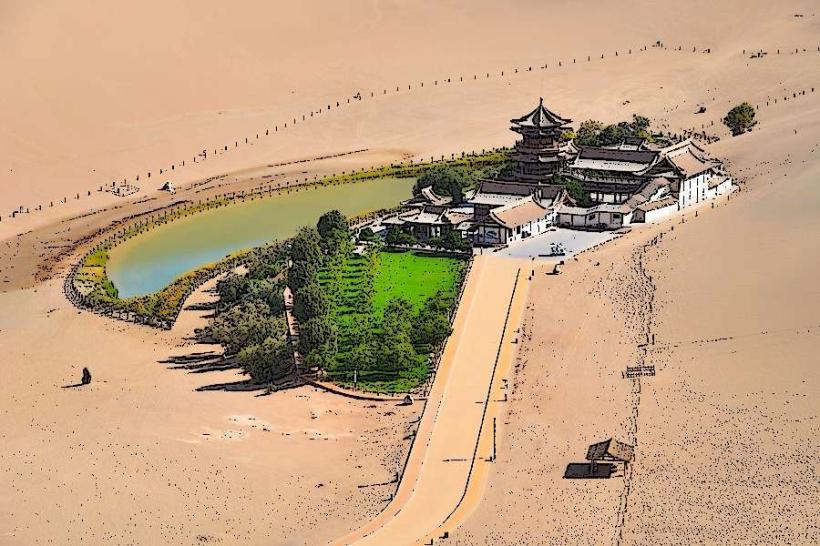
- Crescent Spring (Yueyaquan): 5km North
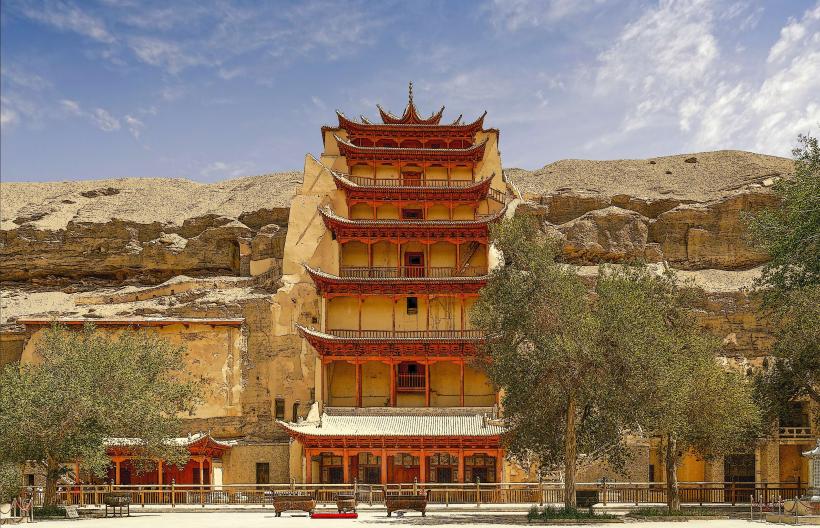
- Mogao Caves: 25km Northeast
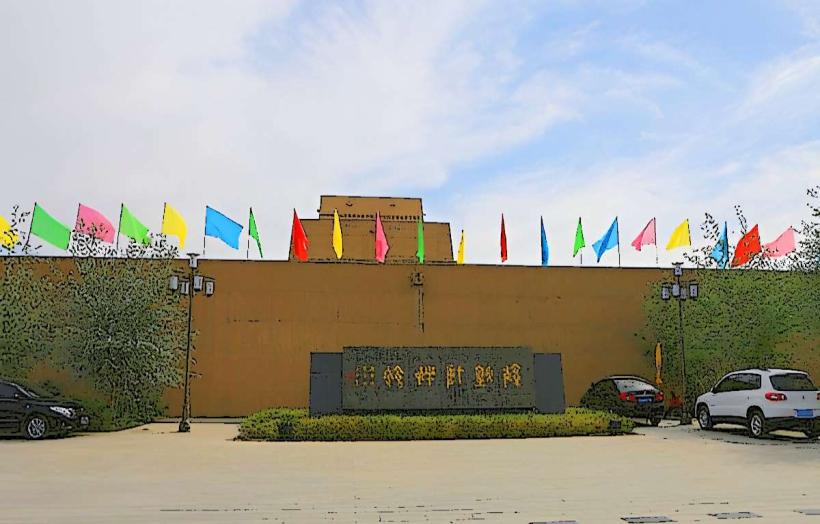
- Dunhuang City Museum: 4km North
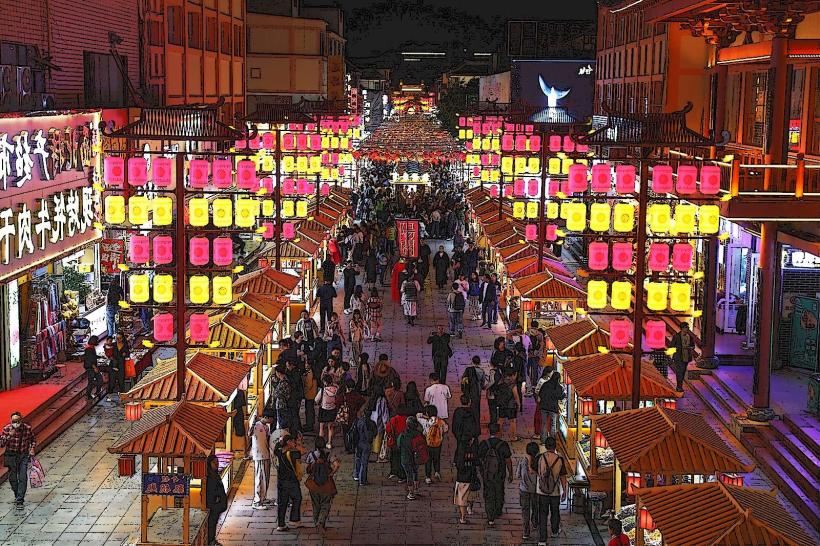
- Shazhou Night Market: 4km North