Information
Landmark: Špilberk CastleCity: Brno
Country: Czech Republic
Continent: Europe
Špilberk Castle, Brno, Czech Republic, Europe
Špilberk Castle is a 13th-century royal castle and fortress situated on a prominent hilltop in the center of Brno, Czech Republic. It serves as the primary seat of the Brno City Museum and is historically recognized as the "Prison of Nations," having functioned as one of the most feared penitentiaries in the Austro-Hungarian Empire.
Visual Characteristics
The fortress is defined by massive brick-and-stone Baroque defensive walls, deep dry moats, and a central courtyard. The architectural style is a transition from Gothic foundations to Baroque military engineering. Key features include the dark, vaulted underground casemates and the white facade of the inner castle buildings, topped with a distinctive observation tower.
Location & Access Logistics
The castle is located at Špilberk 210/1. It is situated on a steep hill surrounded by Špilberk Park. Access is primarily pedestrian via several uphill paths starting from Husova Street or Pellicova Street. The nearest tram stop is Šilingrovo náměstí (lines 5, 12). While the park is accessible 24/7, vehicle access to the castle plateau is restricted to authorized personnel; public parking is available at the "Domini park" or "Besední dům" garages at the foot of the hill.
Historical & Ecological Origin
Founded in the mid-13th century by King Ottokar II of Bohemia, it was originally a Gothic royal castle. It was converted into a massive Baroque fortress in the 17th and 18th centuries to resist Swedish and Napoleonic sieges. The hill itself is composed of metamorphic rocks (phyllites), providing a solid natural defensive position overlooking the Svratka and Svitava river valleys.
Key Highlights & Activities
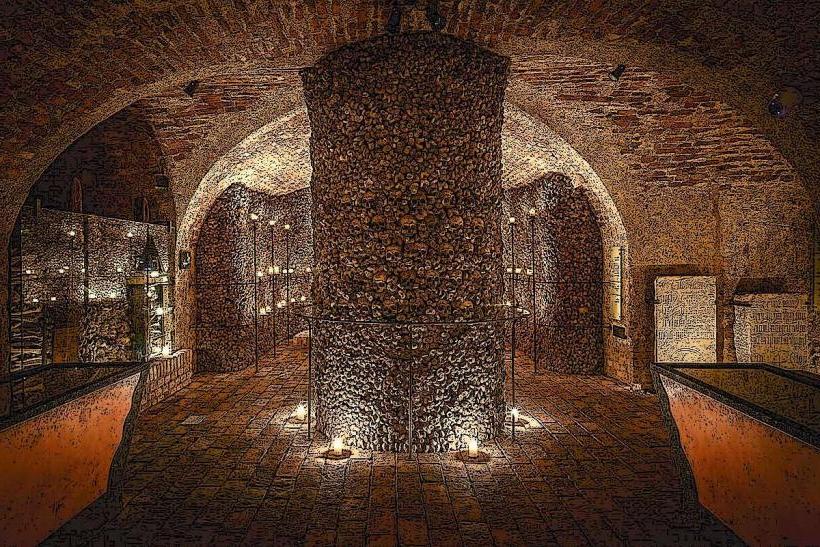
Visitors can explore the "Casemates," a network of dark, barrel-vaulted tunnels used as barracks and later as a high-security prison for political dissidents. The lookout tower provides a 360-degree view of the Brno skyline. The Brno City Museum inside the castle hosts exhibitions on the city's history, architecture, and fine arts. During summer, the courtyard serves as a venue for open-air theater and music festivals.
Infrastructure & Amenities
Public restrooms are located in the main courtyard and near the ticket office. The surrounding park offers significant shade and numerous benches. 5G and 4G cellular signals are consistent throughout the grounds. Amenities include a castle restaurant with outdoor seating, a snack kiosk, and a museum gift shop located in the entrance area.
Best Time to Visit
The castle grounds and park are open year-round, while museum interiors and casemates generally operate from 09:00 to 17:00 (extended to 18:00 in summer). The late afternoon "golden hour" is the optimal time for photography of the fortress walls and the city panorama. Sunset viewing from the southern ramparts is a common local activity.
Facts & Legends
During the 18th and 19th centuries, the prison held famous revolutionaries, including Italian Carbonari and Hungarian Jacobins. A local legend involves the "Špilberk bell," which rings at 11:00 AM instead of noon-a tradition originating from the 1645 Swedish siege when the defending general declared the city would surrender at midday, prompting the bell-ringer to strike early and deceive the invaders into retreating.
Nearby Landmarks
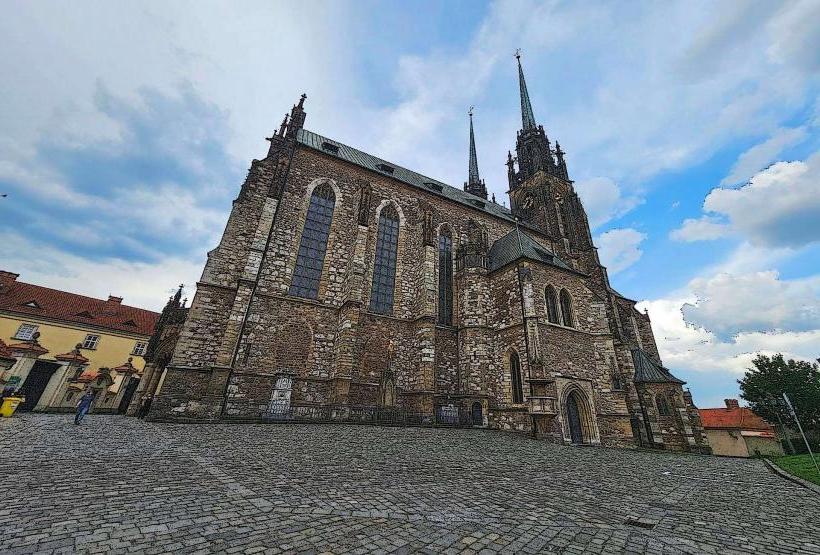
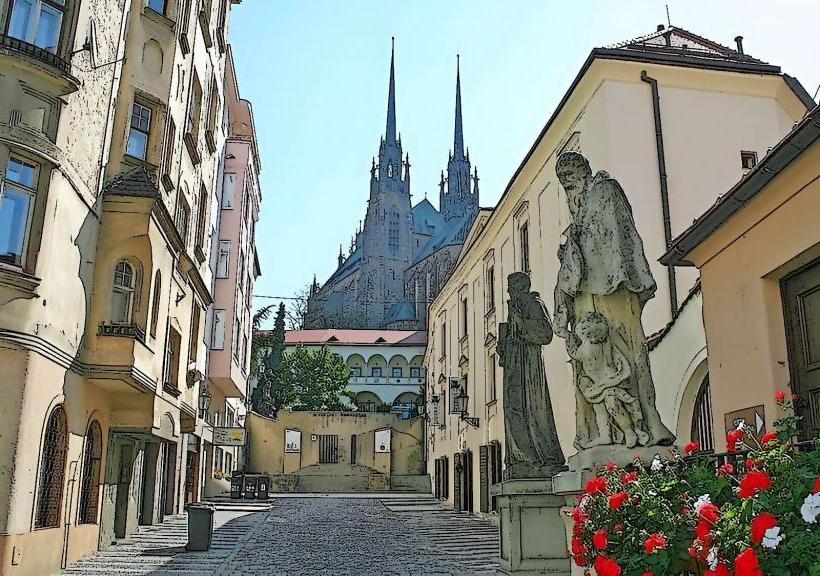
St. Peter and Paul Cathedral – 0.6km Southeast
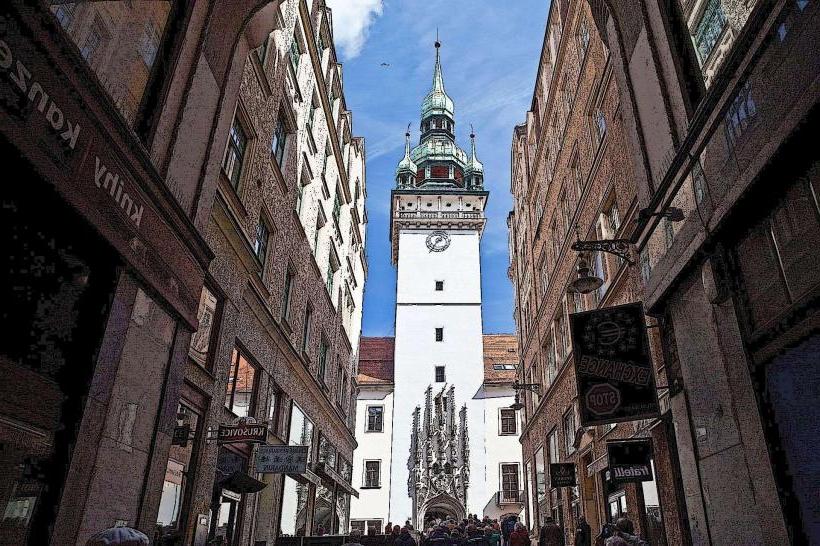
Old Town Hall – 0.5km East
Liberty Square (Náměstí Svobody) – 0.7km Northeast
Moravian Gallery (Husova) – 0.3km East
St. Michael's Church – 0.4km East