Landmark: St. George's Cathedral
City: Bijeljina
Country: Bosnia and Herzegovina
Continent: Europe
St. George's Cathedral, Bijeljina, Bosnia and Herzegovina, Europe
St. George's Cathedral (Crkva Svetog Đorđa) is the oldest Orthodox church in Bijeljina and serves as a major architectural and spiritual landmark in the Semberija region. It is the cathedral church of the Eparchy of Zvornik and Tuzla.
Visual Characteristics
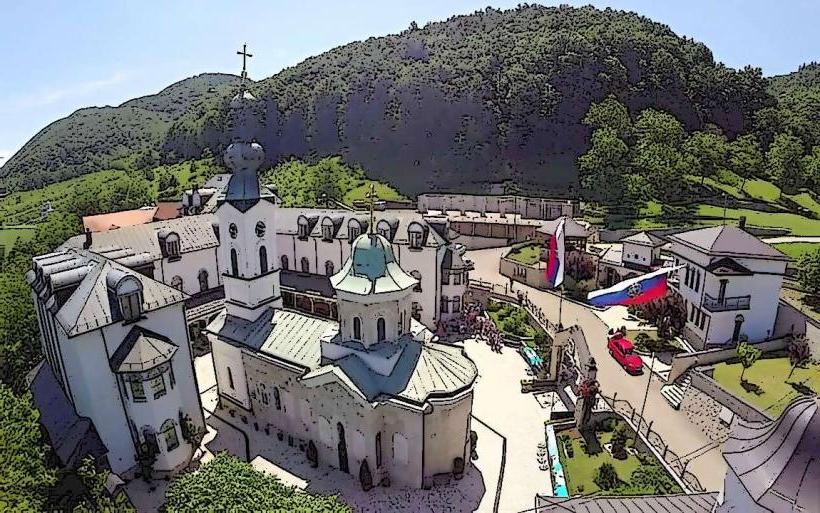
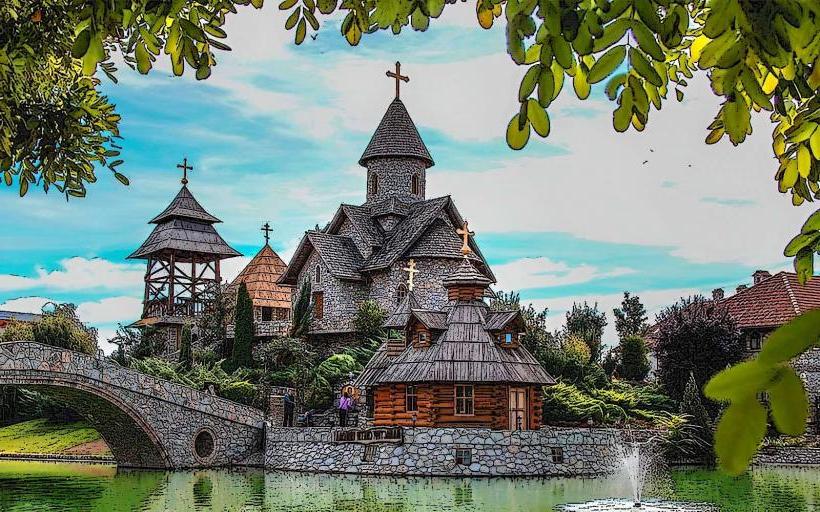
The cathedral is a large, single-dome basilica built in the Russo-Byzantine and Neoclassical styles. Its exterior is characterized by white and cream-colored plaster with prominent decorative cornices. The most striking feature is its tall, multi-tiered bell tower topped with a golden, bulbous dome. The interior is richly decorated with a massive gilded iconostasis and extensive frescoes covering the walls and central dome, primarily illuminated by large arched windows and a central chandelier.
Location & Access Logistics
The cathedral is located at Ulica Svetog Save, approximately 500 meters north of the main city square (Trg Kralja Petra I Karađorđevića). It is situated within a landscaped courtyard protected by an ornate iron fence. Pedestrian access is direct from the sidewalk. Street parking is available in the surrounding "Zone 2" areas, and the site is a 10-minute walk from the city center pedestrian zone.
Historical & Ecological Origin
Construction of the current cathedral began in 1869 and was completed in 1872, during the final decade of Ottoman rule in Bosnia. It was built on the site of an older, smaller wooden church. The building survived several conflicts, including World War I and II, though it underwent significant restoration in the late 20th century to repair environmental wear and damage. It sits on the flat, stable alluvial soil of the Semberija plain.
Key Highlights & Activities
The Iconostasis: A masterwork of woodcarving and religious art, featuring icons painted in the late 19th-century traditional style.
Bell Tower View: While not always open to the public, the tower is one of the highest points in the city, historically used for observing the surrounding plains.
Liturgical Services: The cathedral is active, holding daily morning and evening services, with the most elaborate ceremonies occurring during the Feast of St. George (Đurđevdan).
Church Yard: The quiet, paved courtyard contains a small memorial area and administrative buildings of the parish.
Infrastructure & Amenities
The cathedral grounds include a small shop selling candles, icons, and religious literature. Public restrooms are located in the auxiliary parish building within the courtyard. 5G and 4G cellular signals are excellent. The surrounding neighborhood is residential and quiet, but several cafes and the city library are within a 3-minute walk.
Best Time to Visit
The cathedral is best visited in the morning during the liturgy (usually 08:00 or 09:00) to experience the acoustic quality of the choir, or in the late afternoon when the setting sun hits the golden dome. It is a central site for Christmas (January 7) and Easter celebrations, attracting large crowds. Respectful attire is required for entry (shoulders and knees covered).
Facts & Legends
A historical point of interest is that the permit for the church's construction was granted by the Ottoman Sultan Abdulaziz, reflecting the shifting religious liberties of the mid-19th century. Local history suggests that the church bells, when first installed, were among the loudest in the region and could be heard in neighboring villages across the border in Serbia.
Nearby Landmarks
Filip Višnjić Library (0.2km South)
Museum of Semberija (0.4km South)
Atik Mosque (0.6km South)
Bijeljina City Park (0.7km Southwest)
Monastery of St. Basil of Ostrog (0.4km East)