Landmark: Stari Grad (Old Town)
City: Travnik
Country: Bosnia and Herzegovina
Continent: Europe
Stari Grad (Old Town), Travnik, Bosnia and Herzegovina, Europe
The Old Town of Travnik (Stari Grad) refers to the historical urban core of the city, encompassing the medieval fortress and the surrounding Ottoman-era administrative and commercial districts. It is recognized as a National Monument of Bosnia and Herzegovina due to its unique concentration of "Vizier-era" architecture.
Visual Characteristics
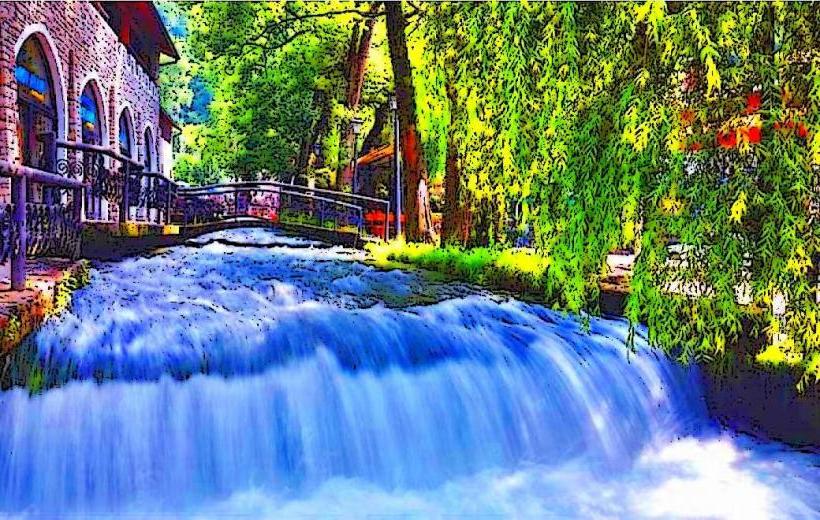
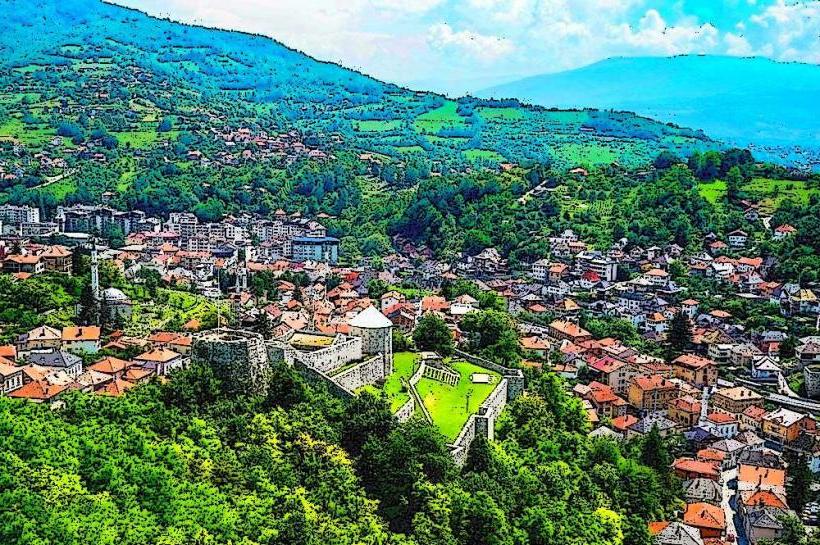
The area is defined by a vertical and horizontal layers of history. Vertically, the massive limestone walls of the Travnik Fortress dominate the northern skyline. Horizontally, the district features narrow, cobblestone streets, white-plastered "čardaklija" houses with wooden protrusions (doksat), and numerous stone-built mosques and clock towers. The landscape is bisected by the Henduša and Lašva river systems, integrated into the urban design through stone bridges and water channels.
Location & Access Logistics
Stari Grad is centered around the Plava Voda spring and the Sulejmanija Mosque, stretching from the base of the fortress to the modern Bosanska street. It is the primary tourist zone of Travnik. Access is via the M-5 highway. Visitors generally use the "Žitarnica" or "Plava Voda" public parking lots and explore the district on foot, as many streets are narrow or pedestrianized.
Historical & Ecological Origin
The Old Town developed in two stages: the medieval period (14th–15th century) focused on the fortress for defense, followed by the Ottoman period (16th–19th century) when it became the seat of the Bosnian Pashaluk. Ecologically, the town is built on the karst slopes of Mount Vlašić. The abundance of spring water (Plava Voda) influenced the placement of residential and commercial quarters, leading to a "water-centric" urban layout rare in other Bosnian cities.
Key Highlights & Activities
Commemorative Architecture: Includes two clock towers, numerous mosques, and the only colored mosque (Sulejmanija) in the country.
Cultural Exploration: The Regional Museum and Birth House of Ivo Andrić provide historical context.
Gastronomy: The area is the primary location for traditional Travnik ćevapi and Vlašić cheese tasting.
The Fortress: Accessible via a stone bridge, offering the definitive panoramic view of the Old Town layout.
Infrastructure & Amenities
The district is high-density and well-equipped for tourism. It contains numerous hotels, guest houses, and traditional restaurants. Public restrooms are located near Plava Voda and the museum. 5G and 4G cellular signals are robust. The terrain varies from level pedestrian zones to steep, stone-paved inclines near the fortress.
Best Time to Visit
Late spring and early autumn provide the most favorable weather for walking. The Old Town is particularly evocative in the early morning when the mountain mist from Vlašić often settles in the valley, or at night when the fortress and clock towers are illuminated.
Facts & Legends
Travnik is the only city in Bosnia and Herzegovina that possesses two clock towers-one in the Upper Town (Gornja Čaršija) and one in the Lower Town (Donja Čaršija)-symbolizing the historical administrative rivalry and wealth of the local districts.
Nearby Landmarks
Travnik Fortress – 0.1km North
Plava Voda – 0.2km West
Sulejmanija (Many-Colored) Mosque – 0.3km South
Birth House of Ivo Andrić – 0.5km Southwest
Mount Vlašić – 20km North