Information
Landmark: Thracian Tomb of MezekCity: Haskovo
Country: Bulgaria
Continent: Europe
Thracian Tomb of Mezek, Haskovo, Bulgaria, Europe
The Thracian Tomb of Mezek is a 4th-century BC beehive tomb (tholos) located on the outskirts of Mezek village, 11 km east of Svilengrad. It is recognized as one of the largest and most architecturally intact Mycenaean-style tombs in the Balkan Peninsula, buried beneath a 15-meter-high burial mound known as Maltepe.
Visual Characteristics
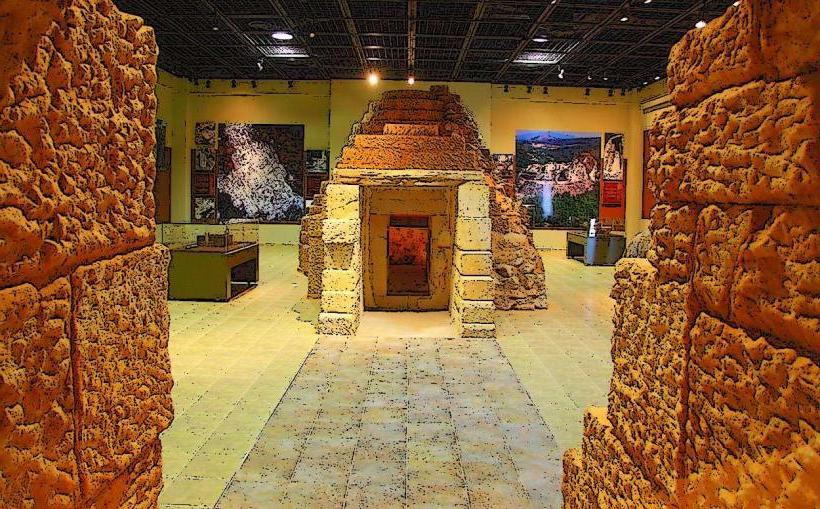
The structure is built from large, precisely cut limestone blocks joined without mortar (dry masonry). It consists of a 20.65-meter-long corridor (dromos), two rectangular vestibules, and a circular burial chamber with a conical (corbelled) dome reaching a height of 4.30 meters. The interior floor is paved with stone slabs, and the burial chamber contains a stone sarcophagus and two monolithic stone beds.
Location & Access Logistics
The site is accessed via the A1 Trakia Motorway, transitioning to the A4 Maritsa Motorway toward Svilengrad. From Svilengrad, follow the local road to Mezek village. The tomb is situated on the western edge of the village with a paved road leading to a dedicated parking area. Regional buses serve Svilengrad, from where local taxis or infrequent village buses provide transit to Mezek.
Historical & Ecological Origin
Construction dates to the middle of the 4th century BC. It served as a monumental family tomb for a high-ranking Thracian aristocrat of the Odrysian Kingdom. The tomb remained in use until the early 3rd century BC. Geologically, the site is positioned in the transitional zone between the Sakar Mountains and the Thracian Valley, utilizing local yellow-greenish limestone.
Key Highlights & Activities
Visitors can walk through the entire length of the dromos to reach the central burial chamber. Holographic projections and informative displays inside the tomb demonstrate how the original burials were arranged. Walking trails connect the tomb to the nearby Mezek Fortress, and the surrounding mound offers views of the Arda River valley.
Infrastructure & Amenities
The site features a modern visitor center with a ticket office, souvenir shop, and restrooms. The interior of the tomb is equipped with automated electric lighting. 5G and 4G cell phone signals are stable. While the tomb interior is naturally cool, the exterior area is exposed; benches and shade are available at the visitor center. Food and drink are sold in Mezek village, 500 meters away.
Best Time to Visit
The tomb is open year-round, but the best months are April through October for pleasant walking weather. Photography of the mound and entrance is optimal in the late afternoon. The interior temperature remains a constant 18°C to 20°C, providing a climate-controlled environment regardless of outdoor weather conditions.
Facts & Legends
The tomb was discovered by local peasants in 1931. During the initial excavation, a life-sized bronze statue of a wild boar weighing 177 kg was found; the original is now in Istanbul, but a replica stands in the center of Mezek. Local lore suggests the mound was a hiding place for treasures, but scientific excavation revealed that the tomb had been used for multiple burials over several generations.
Nearby Landmarks
Mezek Medieval Fortress – 1.2km West
The Deaf Stones (Gluhite Kamani) Sanctuary – 18km Northwest
Svilengrad Old Bridge (Mustafa Pasha Bridge) – 11km East
Katarzyna Estate – 4km South
The Rock Church of Mihalich – 22km Northeast