Landmark: Thracian Tomb of Pomorie
City: Pomorie
Country: Bulgaria
Continent: Europe
Thracian Tomb of Pomorie, Pomorie, Bulgaria, Europe
The Thracian Tomb of Pomorie is an ancient burial mound located on the outskirts of Pomorie, Bulgaria.
This unique monument dates back to the 2nd-3rd century AD and served as a mausoleum for a wealthy Thracian family.
Visual Characteristics
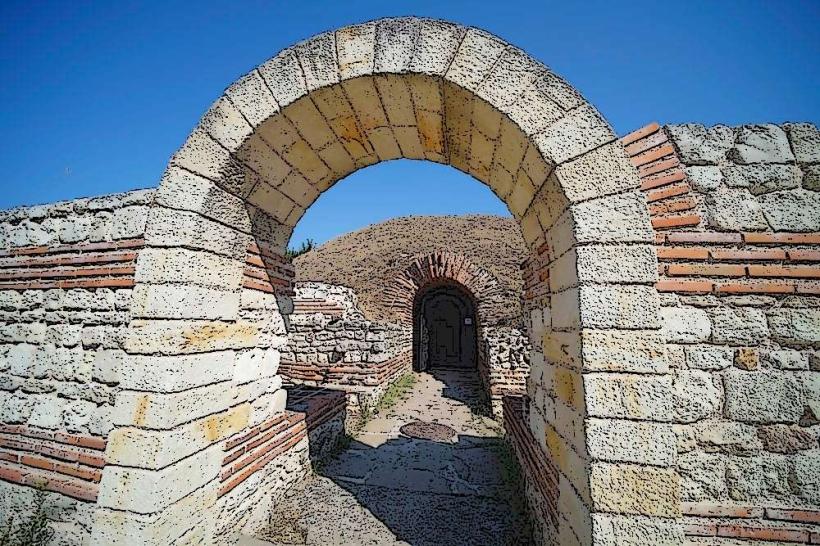
The tomb is characterized by a circular burial chamber constructed from large, precisely cut stone blocks. A long, rectangular corridor leads to the central chamber. The exterior is a mound of earth, now partially overgrown with vegetation. The internal walls of the chamber are smooth and undecorated.
Location & Access Logistics
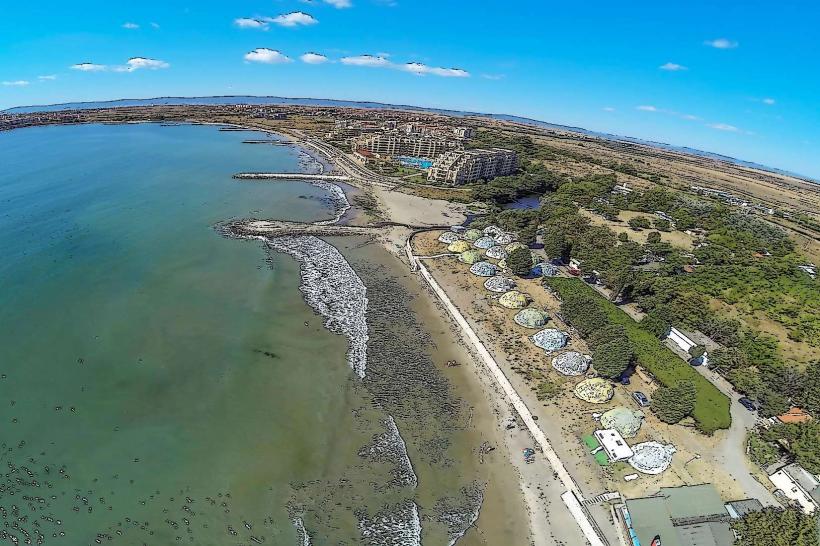
The Thracian Tomb is situated approximately 3 kilometers west of the Pomorie city center. Access is via the main road E87 (Burgas-Varna highway). Turn off at the clearly marked sign for the "Thracian Tomb." Parking is available on-site in a designated gravel lot. Public transport options are limited; the nearest bus stop is approximately 1.5 kilometers away on the E87, requiring a walk.
Historical & Ecological Origin
This structure is a Thracian burial mound, constructed in the Hellenistic period, likely between the 2nd and 3rd centuries AD. It is believed to have been built as a mausoleum for a prominent Thracian noble or family. The tomb is an example of Thracian monumental architecture, adapted from Roman influences.
Key Highlights & Activities
Visitors can enter the tomb and explore the central burial chamber and the access corridor. Photography inside the tomb is permitted. Educational signage provides historical context. The surrounding area offers open space for walking.
Infrastructure & Amenities
A small information kiosk is present at the site, often staffed during peak tourist season. Restrooms are available near the parking area. Shade is minimal outside the tomb itself. Cell phone signal (4G/5G) is generally good in the vicinity.
Best Time to Visit
The best time of day for visiting is during the morning or late afternoon to avoid the midday sun, as there is limited shade. The months of May through September offer the most favorable weather conditions for outdoor exploration. No tide considerations apply.
Facts & Legends
Local legend suggests the tomb was built to house the remains of a Thracian king who possessed immense wealth. Archaeological findings indicate the presence of grave goods, supporting the theory of a high-status burial. The tomb's construction method, using large, interlocking stones without mortar, is a testament to advanced ancient engineering.
Nearby Landmarks
- Pomorie Salt Museum (1.5km East)
- Lake Pomorie (2km Northeast)
- Church of the Transfiguration (3km East)
- St. George's Monastery (4km East)