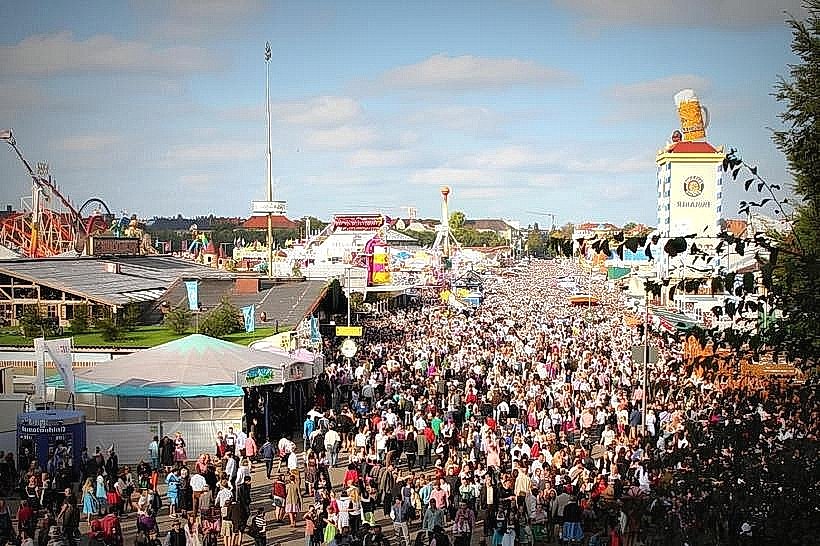
Landmark: Tulsa State Fair
City: Tulsa
Country: USA Oklahoma
Continent: North America
Tulsa State Fair, Tulsa, USA Oklahoma, North America
The Tulsa State Fair is an annual public exhibition held in Tulsa, Oklahoma, USA. It is one of the largest fairs in the state, featuring agricultural displays, entertainment, and carnival rides.
Visual Characteristics
The fairgrounds cover an area of approximately 100 acres. Structures include large exhibition halls constructed from steel and concrete, a central arena, and numerous temporary carnival ride installations. The grounds are paved with asphalt and concrete, with open grassy areas interspersed. Lighting is provided by a network of permanent poles and temporary strings of lights during event hours.
Location & Access Logistics
The Tulsa State Fair is located at 4145 E 21st St, Tulsa, OK 74114, approximately 5 kilometers east of downtown Tulsa. Access is primarily via I-44 (Turner Turnpike) and US-64 (Broken Arrow Expressway). Numerous parking lots are available on-site, with fees typically charged during the fair. Public transport options include Tulsa Transit bus routes 108 and 111, which stop near the fairgrounds.
Historical & Ecological Origin
The Tulsa State Fair originated in 1913 as the Tulsa County Free Fair. It was established to promote agriculture and industry within the region. The current fairgrounds site has been utilized for this purpose for decades, evolving from its agricultural roots to a multi-faceted public event. The land itself is part of the Osage Plains, characterized by gently rolling terrain and mixed prairie vegetation prior to development.
Key Highlights & Activities
Activities include viewing agricultural exhibits (livestock, produce, crafts), attending live music performances on multiple stages, participating in carnival rides, and exploring food vendor offerings. Competitive events such as rodeos and demolition derbies are also scheduled. Educational exhibits focusing on science, technology, and local history are present.
Infrastructure & Amenities
Restrooms are available throughout the fairgrounds. Shaded areas are provided by permanent structures and temporary tents. Cell phone signal (4G/5G) is generally reliable within the main fair areas. Multiple food vendors operate on-site, offering a variety of concessions.
Best Time to Visit
The fair typically runs for 11 days in late September and early October. For optimal crowd management, weekdays are generally less congested than weekends. Early afternoon offers good lighting for photography of the grounds and rides before sunset. Specific event times for concerts and competitions should be checked on the official fair schedule.
Facts & Legends
A notable historical fact is the fair's consistent operation, even during periods of economic hardship, highlighting its importance to the Tulsa community. A local anecdote suggests that the original site was chosen due to its proximity to a natural spring, though this is not officially documented as a primary reason for its selection.
Nearby Landmarks
- Mohawk Park (1.5km North)
- Tulsa Botanic Garden (3.0km Northeast)
- Philbrook Museum of Art (3.5km West)
- Woodward Park (4.0km West)
- Gathering Place (4.5km Southwest)